


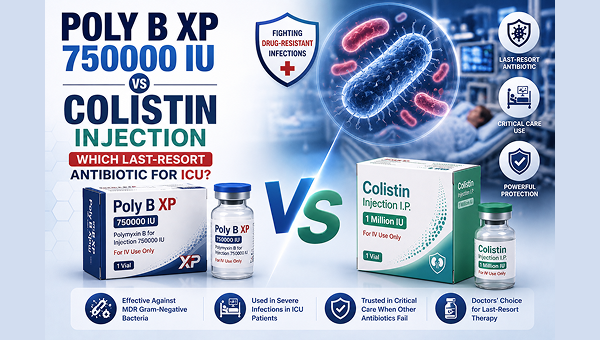




Poly B XP 750000 IU vs Colistin Injection
Jun 30, 2026
Introduction
The growing prevalence of multidrug-resistant (MDR) bacterial infections has become one of the greatest challenges in modern critical care medicine. Intensive Care Units (ICUs) frequently manage patients with severe infections caused by bacteria that no longer respond to commonly prescribed antibiotics. These infections are associated with increased morbidity, prolonged hospital stays, higher healthcare costs, and greater mortality risks. As antibiotic resistance continues to rise worldwide, last-resort antibiotics have become increasingly important for treating life-threatening infections when standard therapies are no longer effective.
Among these critical medicines, Polymyxin B (Poly B XP 750000 IU) and Colistin Injection are widely used against serious Gram-negative bacterial infections caused by multidrug-resistant organisms. Because both belong to the polymyxin class of antibiotics and are commonly prescribed in hospital settings, healthcare professionals often compare their pharmacological characteristics and clinical applications. However, choosing between these medicines requires careful consideration of infection type, microbiology results, kidney function, and current treatment guidelines rather than assuming one is universally superior.
This comprehensive guide compares Poly B XP 750000 IU vs Colistin Injection, explains the differences between Polymyxin B vs Colistin, discusses their role as Last-Resort Antibiotics, and outlines important factors doctors consider when selecting appropriate ICU Antibiotics for critically ill patients.
Understanding Last-Resort Antibiotics
What Are Last-Resort Antibiotics?
Last-resort antibiotics are medicines reserved for treating severe bacterial infections that no longer respond to commonly used antibiotics. They are generally prescribed only when laboratory testing confirms multidrug-resistant bacteria or when other treatment options have failed. Their careful use helps preserve their effectiveness and supports global antimicrobial stewardship efforts.
Why Are They Used in ICU Patients?
Patients admitted to intensive care units often have weakened immune systems, complex medical conditions, invasive devices such as ventilators and central venous catheters, and prolonged hospital stays. These factors increase the likelihood of developing infections caused by multidrug-resistant organisms. Last-resort antibiotics provide an important therapeutic option for managing these life-threatening infections under close medical supervision.
Common Drug-Resistant Bacteria They Target
Poly B XP 750000 IU and Colistin are commonly used against selected multidrug-resistant Gram-negative bacteria, including:
-
Carbapenem-resistant Acinetobacter baumannii (CRAB): Frequently associated with ventilator-associated pneumonia and bloodstream infections.
-
Carbapenem-resistant Pseudomonas aeruginosa (CRPA): A difficult-to-treat pathogen responsible for pneumonia, bloodstream infections, urinary tract infections, and wound infections.
-
Carbapenem-resistant Enterobacterales (CRE): A group of bacteria resistant to multiple antibiotics and often linked with severe healthcare-associated infections.
These organisms are among the leading causes of difficult-to-treat infections in hospital ICUs and require culture-guided treatment decisions.
What Is Poly B XP 750000 IU?
Product Overview
Poly B XP 750000 IU is a prescription-only injectable antibiotic containing Polymyxin B as its active ingredient. It belongs to the polymyxin class of antibiotics and is reserved for severe multidrug-resistant Gram-negative bacterial infections in hospital settings.
| Attribute | Details |
| Active Ingredient | Polymyxin B |
| Strength | 750000 IU |
| Dosage Form | Injection |
| Drug Class | Polymyxin Antibiotic |
| Hospital Use | Yes |
| Prescription Required | Yes |
How Poly B XP Works
Polymyxin B acts directly on susceptible Gram-negative bacteria by binding to the outer membrane of the bacterial cell. This interaction disrupts the integrity of the cell membrane, increasing its permeability and causing leakage of essential cellular contents. As a result, the bacteria lose their structural stability and eventually die.
Because Polymyxin B is administered in its active form, it begins exerting antibacterial activity after administration. However, its use is generally limited to carefully selected patients because it may cause significant adverse effects, including kidney and neurological toxicity. For this reason, treatment should always be guided by culture and susceptibility testing whenever possible.
What Is Colistin Injection?
Product Overview
Colistin Injection generally contains Colistimethate Sodium, which belongs to the same polymyxin antibiotic class. Like Polymyxin B, it is reserved for severe infections caused by susceptible multidrug-resistant Gram-negative bacteria.
| Attribute | Details |
| Generic Name | Colistimethate Sodium |
| Drug Class | Polymyxin Antibiotic |
| Dosage Form | Injection |
| Hospital Use | Yes |
| Prescription Required | Yes |
How Colistin Works
Unlike Polymyxin B, Colistin is administered as Colistimethate Sodium, an inactive prodrug. After administration, the body gradually converts it into active colistin. The active form damages the bacterial outer membrane, leading to disruption of membrane integrity and bacterial cell death.
This mechanism makes Colistin effective against selected multidrug-resistant Gram-negative organisms, although dosing and pharmacokinetics differ from those of Polymyxin B. Because of these differences, clinicians consider several patient-specific factors before selecting one medicine over the other.
Poly B XP 750000 IU vs Colistin Injection: Quick Comparison
| Feature | Poly B XP 750000 IU | Colistin Injection |
| Active Ingredient | Polymyxin B | Colistimethate Sodium |
| Drug Class | Polymyxin Antibiotic | Polymyxin Antibiotic |
| Dosage Form | Injection | Injection |
| Common ICU Use | Yes | Yes |
| Prescription Required | Yes | Yes |
Both medicines belong to the polymyxin antibiotic class and are used primarily in hospitals for treating severe multidrug-resistant Gram-negative infections. However, they differ in their active ingredients, pharmacology, dosing characteristics, and certain clinical considerations, making individualized treatment decisions essential.
Approved Uses of Poly B XP and Colistin
Healthcare professionals may prescribe either medicine based on microbiological evidence, infection severity, and clinical guidelines.
Ventilator-Associated Pneumonia (VAP)
Patients requiring prolonged mechanical ventilation may develop VAP caused by resistant Gram-negative bacteria. Depending on culture results, either Polymyxin B or Colistin may be considered as part of the treatment strategy.
Hospital-Acquired Pneumonia (HAP)
Hospital-acquired pneumonia remains one of the most common ICU infections. When multidrug-resistant pathogens are identified, polymyxin antibiotics may be included in treatment plans according to institutional protocols.
Bloodstream Infections
Severe bloodstream infections caused by susceptible multidrug-resistant organisms may require prompt initiation of appropriate intravenous antibiotics, including polymyxins in selected cases.
Complicated Urinary Tract Infections
Certain complicated urinary tract infections caused by resistant Gram-negative bacteria may require intravenous treatment with last-resort antibiotics based on susceptibility testing.
Intra-Abdominal Infections
Patients with severe intra-abdominal infections due to resistant bacteria may receive polymyxin antibiotics as part of combination therapy when recommended by infectious disease specialists.
Poly B XP vs Colistin: Key Differences
Active Ingredient
Poly B XP contains Polymyxin B, whereas Colistin Injection generally contains Colistimethate Sodium.
Drug Activation
One of the most important pharmacological differences is how the medicines become active.
-
Polymyxin B is administered in its active form.
-
Colistin is administered as colistimethate sodium, an inactive prodrug that is converted to active colistin after administration.
This distinction influences dosing strategies and pharmacokinetic behaviour.
Pharmacokinetic Differences
Although both medicines belong to the same antibiotic class, they differ in absorption, conversion, distribution, and elimination characteristics. These pharmacokinetic differences influence how physicians individualize dosing regimens based on the patient's clinical status, kidney function, and infection type.
Clinical Considerations
Selection between Polymyxin B vs Colistin depends on multiple patient-specific and microbiological factors rather than a simple preference for one medicine. Infectious disease specialists evaluate laboratory results, infection site, organ function, and current evidence-based recommendations before initiating therapy.
ICU Prescribing Practices
In modern ICU practice, antibiotic selection is guided by antimicrobial stewardship principles. Physicians aim to prescribe the narrowest effective therapy while minimizing toxicity and reducing the risk of further antimicrobial resistance.
When Might Doctors Prefer Poly B XP?
The decision to prescribe Poly B XP 750000 IU is always based on an individualized clinical assessment rather than a fixed preference. Infectious disease specialists and intensivists consider the patient's condition, microbiology reports, organ function, and current treatment guidelines before selecting therapy.
Severe Bloodstream Infections
Patients with bloodstream infections caused by susceptible multidrug-resistant Gram-negative bacteria may receive Polymyxin B as part of their treatment plan. Rapid and appropriate antibiotic therapy is essential because bloodstream infections can progress quickly to septic shock and multiple organ dysfunction if left untreated.
ICU Patients with Confirmed MDR Gram-Negative Bacteria
When laboratory culture and antibiotic susceptibility testing confirm organisms such as carbapenem-resistant Acinetobacter baumannii, Pseudomonas aeruginosa, or Enterobacterales that remain susceptible to polymyxins, physicians may consider Poly B XP as one component of the treatment strategy.
Situations Where Polymyxin B Is Appropriate
Poly B XP may be selected in situations where evidence-based guidelines, microbiological findings, and patient-specific clinical factors support its use. The medicine is often administered as part of comprehensive ICU management, which may include supportive care, infection source control, fluid management, and monitoring by a multidisciplinary healthcare team.
When Might Doctors Prefer Colistin Injection?
Colistin Injection also has an important place in the management of severe multidrug-resistant bacterial infections. The decision to prescribe Colistin depends on the patient's clinical condition and the characteristics of the infection.
Certain Urinary Tract Infections
Because colistimethate sodium is converted into active colistin and is excreted through the kidneys, physicians may consider it in selected complicated urinary tract infections caused by susceptible multidrug-resistant organisms, depending on current treatment recommendations and microbiology findings.
Clinical Scenarios Based on Guideline Recommendations
National and international treatment guidelines assist physicians in determining whether Colistin is appropriate for specific infections. These recommendations are continuously updated based on emerging resistance patterns and clinical evidence.
Patient-Specific Considerations
Age, body weight, kidney function, previous antibiotic exposure, allergy history, and the severity of illness all influence whether Colistin is selected. Individualized treatment planning remains the foundation of safe and effective antibiotic therapy.
Side Effects Comparison
Like many potent antibiotics, both medicines can cause adverse effects. Careful monitoring during treatment helps reduce the risk of complications.
| Side Effect | Poly B XP | Colistin |
|---|---|---|
| Kidney Toxicity | Possible | Possible |
| Neurotoxicity | Possible | Possible |
| Muscle Weakness | Possible | Possible |
| Allergic Reactions | Rare | Rare |
Monitoring During Treatment
Patients receiving Last-Resort Antibiotics require close medical supervision throughout therapy. Healthcare professionals typically monitor:
-
Kidney function tests
-
Neurological assessment
-
Electrolyte levels
-
Clinical response to treatment
-
Vital signs and laboratory investigations
Regular assessment allows clinicians to adjust treatment when necessary and identify potential adverse effects at an early stage.
How Doctors Choose Between Poly B XP and Colistin
Choosing between Poly B XP 750000 IU vs Colistin Injection involves careful clinical decision-making rather than selecting one medicine as universally superior.
Type of Infection
The location and severity of infection play an important role. Pneumonia, bloodstream infections, urinary tract infections, and intra-abdominal infections may each require different treatment considerations.
Bacterial Culture & Antibiotic Susceptibility
Microbiology culture reports and antibiotic susceptibility testing remain the gold standard for selecting appropriate antibiotics. These tests help determine whether the bacteria are susceptible to Polymyxin B, Colistin, or alternative treatment options.
Kidney Function
Both medicines require careful consideration in patients with impaired kidney function. Physicians monitor renal function before and during treatment to optimize dosing and reduce toxicity.
Patient Weight
Body weight is an important factor when calculating individualized antibiotic doses, especially in critically ill patients.
Previous Antibiotic Exposure
A patient's prior antibiotic history may influence bacterial resistance patterns and subsequent treatment choices.
National & International Treatment Guidelines
Doctors also rely on recommendations from recognized organizations and hospital antimicrobial stewardship programs when prescribing ICU Antibiotics.
Safe Use of Last-Resort Antibiotics
The increasing prevalence of antimicrobial resistance highlights the importance of using Last-Resort Antibiotics responsibly.
Why Self-Medication Is Dangerous
These medicines should never be used without medical supervision. Self-medication may delay appropriate treatment, increase toxicity risks, and contribute to antibiotic resistance.
Importance of Hospital Supervision
Both Poly B XP and Colistin are administered in hospital settings where patients can receive continuous monitoring, laboratory investigations, and supportive care.
Antibiotic Stewardship
Antibiotic stewardship promotes responsible antibiotic use by ensuring patients receive the right medicine, at the correct dose, for the appropriate duration. These programs help preserve the effectiveness of critical antibiotics.
Preventing Antibiotic Resistance
Hospitals reduce resistance through strict infection-control measures, hand hygiene, surveillance programs, isolation precautions, and evidence-based antibiotic prescribing.
Why Choose Shabbir Medical Hall for Critical Care Medicines?
For hospitals, healthcare professionals, and eligible patients seeking genuine prescription medicines, Shabbir Medical Hall offers dependable pharmaceutical services backed by decades of experience.
Trusted Since 1920
Why healthcare providers choose Shabbir Medical Hall:
-
Genuine Prescription Medicines
-
ICU & Critical Care Products
-
Reliable Availability
-
Competitive Pricing
-
Prescription Verification
-
Secure Packaging
-
Nationwide Delivery
-
Hospital & Institutional Supply
-
Dedicated Customer Support
Looking for Poly B XP 750000 IU or Colistin Injection?
Shabbir Medical Hall supplies genuine critical-care medicines with prescription verification, professional assistance, and reliable delivery across India for hospitals, healthcare institutions, and eligible patients.
Frequently Asked Questions
1. What is the difference between Poly B XP 750000 IU and Colistin Injection?
Poly B XP contains Polymyxin B, while Colistin Injection usually contains colistimethate sodium, which converts into active colistin after administration. Both belong to the polymyxin antibiotic class but differ in pharmacological characteristics, dosing considerations, and certain clinical applications.
2. Which antibiotic is better for ICU patients: Poly B XP or Colistin?
Neither medicine is universally better. The choice depends on the infection site, bacterial susceptibility, kidney function, patient characteristics, and evidence-based clinical guidelines. Treatment decisions should always be made by experienced healthcare professionals.
3. Are Poly B XP and Colistin used for multidrug-resistant infections?
Yes. Both medicines are commonly reserved for severe multidrug-resistant Gram-negative bacterial infections when standard antibiotics are ineffective. Their use is generally guided by culture results, susceptibility testing, and specialist clinical judgment.
4. Do Poly B XP and Colistin require a prescription?
Yes. Both medicines are prescription-only antibiotics intended for hospital use. They should be administered under the supervision of qualified healthcare professionals with appropriate laboratory monitoring throughout treatment.
5. What are the common side effects of these antibiotics?
Potential side effects include kidney toxicity, nerve-related symptoms, muscle weakness, dizziness, and allergic reactions. Patients receiving these medicines require close monitoring so healthcare providers can identify and manage complications promptly.
6. Where can I buy genuine Poly B XP or Colistin Injection in India?
Licensed pharmacies such as Shabbir Medical Hall can supply genuine prescription medicines after verifying a valid prescription. Purchasing from trusted pharmacies helps ensure medicine authenticity, professional support, and compliance with applicable regulations.
Conclusion
The comparison of Poly B XP 750000 IU vs Colistin Injection demonstrates that both medicines play a vital role in treating severe multidrug-resistant Gram-negative bacterial infections in hospital and ICU settings. Although they share a similar therapeutic purpose, they differ in active ingredients, pharmacological properties, and dosing considerations. The choice between Polymyxin B vs Colistin should never be based on assumptions of superiority but instead on microbiology results, infection site, kidney function, patient-specific factors, and current clinical guidelines. Appropriate prescribing, careful monitoring, and responsible antimicrobial stewardship are essential to maximize treatment effectiveness while helping preserve the usefulness of these important Last-Resort Antibiotics. When obtaining critical-care medicines, choosing a trusted pharmacy such as Shabbir Medical Hall ensures access to genuine products, prescription verification, professional assistance, and dependable nationwide supply.
Recent Post
Taffic 90mg vs Ticagrelor Leeford 90mg: Same Molecule, Different Brands Compared
Ticagrelor vs Clopidogrel: Which Antiplatelet Medicine Is Better After Acute Coronary Syndrome (ACS)
Rivajon 20mg vs Clexane 40mg: Rivaroxaban vs Enoxaparin for DVT
DVT, Pulmonary Embolism & AFib: A Complete Guide to Rivaroxaban Therapy
Empaworth 25mg vs Farxiga 10mg
Empagliflozin for Heart Failure with Reduced Ejection Fraction (HFrEF)
Empaworth 10mg vs Empaworth 25mg
Type 2 Diabetes Treatment in 2026
Humog 150 HP vs Gonal-F 150 IU

Female Infertility Treatment