


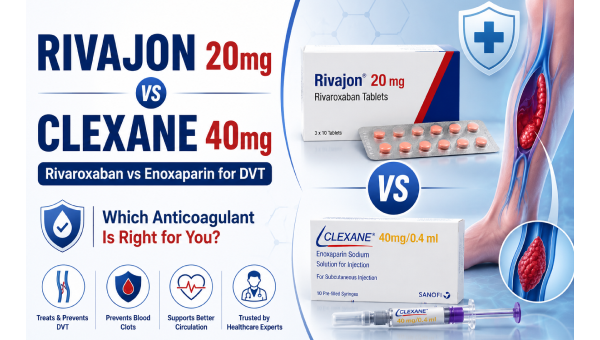




Rivajon 20mg vs Clexane 40mg: Rivaroxaban vs Enoxaparin for DVT
Jul 15, 2026
Introduction
Deep Vein Thrombosis (DVT) is a serious medical condition that occurs when a blood clot forms in a deep vein, most commonly in the legs. If left untreated, the clot can travel to the lungs and cause a Pulmonary Embolism (PE), a potentially life-threatening complication. Early diagnosis and appropriate anticoagulant therapy are essential to reduce the risk of clot progression and recurrence.
Two commonly prescribed anticoagulants for DVT are Rivajon 20mg (Rivaroxaban) and Clexane 40mg (Enoxaparin). Although both medicines help prevent harmful blood clots, they differ in how they are administered, how they work, and the clinical situations in which they are commonly used.
In this guide, we'll compare Rivajon 20mg vs Clexane 40mg, explain their differences, discuss their approved uses, safety considerations, and help you understand why the choice between them should always be based on your healthcare provider's recommendation.
What Is Deep Vein Thrombosis (DVT)?
Understanding DVT
Deep Vein Thrombosis (DVT) occurs when a blood clot develops in one of the body's deep veins, usually in the lower leg, thigh, or pelvis. The clot can partially or completely block blood flow, causing pain, swelling, and discomfort.
Although DVT often affects the legs, blood clots can also develop in other deep veins. Early diagnosis and treatment are important because untreated clots may break away and travel through the bloodstream.
Why DVT Requires Prompt Treatment
DVT should never be ignored. Without treatment, the clot may become larger or move to the lungs, resulting in a pulmonary embolism. Timely anticoagulant therapy helps prevent the clot from growing and reduces the risk of serious complications.
Doctors also aim to prevent recurrent blood clots and long-term damage to the affected veins through appropriate treatment and follow-up care.
Risks of Untreated DVT
If left untreated, Deep Vein Thrombosis can lead to several complications, including:
- Pulmonary Embolism (PE): A clot travels to the lungs and blocks blood flow.
- Recurrent Blood Clots: Patients with one episode of DVT have an increased risk of future clotting events.
- Post-Thrombotic Syndrome: Long-term damage to the veins may cause chronic leg pain, swelling, skin discoloration, and ulcers.
Because these complications can significantly affect quality of life, prompt medical attention is essential whenever DVT is suspected.
What Is Rivajon 20mg (Rivaroxaban)?
Product Overview
Rivajon 20mg contains Rivaroxaban, a Direct Oral Anticoagulant (DOAC) that helps prevent and treat blood clots. It is available as an oral tablet and is commonly prescribed for eligible patients with DVT, Pulmonary Embolism, and certain heart conditions associated with an increased risk of stroke.
Generic Name: Rivaroxaban
Drug Class: Direct Oral Anticoagulant (DOAC)
Dosage Form: Oral Tablet
Prescription Medicine: Yes
How Rivaroxaban Works
Rivaroxaban works by blocking Factor Xa, a key protein involved in the blood-clotting process. By inhibiting this protein, it reduces the body's ability to form harmful blood clots.
It is important to understand that Rivaroxaban does not dissolve existing clots. Instead, it helps prevent existing clots from growing larger while reducing the likelihood of new clots forming. Over time, the body's natural processes gradually break down the clot.
What Is Clexane 40mg (Enoxaparin)?
Product Overview
Clexane 40mg contains Enoxaparin Sodium, a Low Molecular Weight Heparin (LMWH) that is administered by subcutaneous (under-the-skin) injection. It is widely used in hospitals and outpatient settings for preventing and treating blood clots.
Generic Name: Enoxaparin Sodium
Drug Class: Low Molecular Weight Heparin (LMWH)
Dosage Form: Prefilled Injection
Prescription Medicine: Yes
How Enoxaparin Works
Enoxaparin enhances the activity of the body's natural anticoagulant protein called Antithrombin III. This action reduces the activity of clotting factors, particularly Factor Xa, helping prevent harmful blood clot formation.
Like Rivaroxaban, Enoxaparin does not dissolve existing clots. Its primary role is to stop clots from enlarging and reduce the risk of new clot formation while the body's natural healing processes work to break down the clot.
Rivajon 20mg vs Clexane 40mg – Quick Comparison
| Feature | Rivajon 20mg | Clexane 40mg |
| Generic Name | Rivaroxaban | Enoxaparin Sodium |
| Drug Class | Direct Oral Anticoagulant (DOAC) | Low Molecular Weight Heparin (LMWH) |
| Dosage Form | Oral Tablet | Prefilled Injection |
| Administration | By Mouth | Subcutaneous Injection |
| Prescription Required | Yes | Yes |
Approved Uses of Rivaroxaban and Enoxaparin
Although Rivajon and Clexane belong to different anticoagulant classes, both are approved for preventing and treating blood clots in appropriate patients.
Treatment of Deep Vein Thrombosis (DVT)
Both medicines are commonly prescribed for the treatment of DVT. The choice depends on factors such as the patient's clinical condition, kidney function, and whether oral or injectable therapy is more appropriate.
Prevention of Pulmonary Embolism (PE)
By preventing harmful clot formation and reducing clot progression, both medicines help lower the risk of pulmonary embolism in eligible patients.
Prevention of Blood Clots After Orthopedic Surgery
Patients undergoing hip or knee replacement surgery have a higher risk of developing blood clots. Depending on the clinical situation, doctors may prescribe either Rivaroxaban or Enoxaparin to reduce this risk.
Other Approved Clinical Uses
Depending on approved indications and current clinical guidelines, these medicines may also be used for:
- Prevention of recurrent venous thromboembolism (VTE)
- Selected cardiovascular conditions
- Hospitalized patients at increased risk of clot formation
- Other situations where anticoagulant therapy is clinically indicated
Rivaroxaban vs Enoxaparin: Key Differences
Although both medicines reduce harmful blood clot formation, they differ in several important ways.
Oral Tablet vs Injection
One of the biggest differences is how they are administered.
- Rivajon 20mg is taken by mouth as an oral tablet.
- Clexane 40mg is given as a subcutaneous injection.
Many patients prefer oral tablets for long-term treatment because they are easier to take at home. However, injections may be more suitable in certain clinical situations.
Mechanism of Action
Rivaroxaban directly blocks Factor Xa, while Enoxaparin enhances the activity of Antithrombin III, which then inhibits Factor Xa and other clotting proteins.
Although they work differently, both medicines reduce the formation of harmful blood clots.
Onset and Duration of Action
Both medicines begin working relatively quickly after administration. However, the duration of action and dosing schedule vary depending on the medicine, the indication being treated, and the patient's kidney function.
Home Use vs Hospital Use
Rivaroxaban is commonly prescribed for outpatient treatment because it is taken orally. Enoxaparin is frequently initiated in hospitals but may also be continued at home if patients or caregivers are trained to administer the injections safely.
Monitoring Requirements
Routine INR monitoring is generally not required with either Rivaroxaban or Enoxaparin. However, healthcare providers may monitor kidney function, complete blood counts, or other laboratory tests depending on the patient's condition and duration of treatment.
When Might Doctors Prescribe Rivajon 20mg?
Long-Term DVT Treatment
Rivajon 20mg may be prescribed for eligible patients who require ongoing anticoagulant therapy after the initial treatment phase of Deep Vein Thrombosis or Pulmonary Embolism.
Outpatient Management
Because it is an oral tablet, Rivajon is often a convenient option for patients who can safely continue treatment at home under regular medical supervision.
Patients Suitable for Oral Therapy
Doctors may consider Rivajon for patients who are able to take oral medication, have appropriate kidney function, and meet the approved prescribing criteria. The decision is always individualized based on the patient's overall health, bleeding risk, and treatment goals.
When Might Doctors Prescribe Clexane 40mg?
The decision to prescribe Clexane 40mg (Enoxaparin) depends on the patient's medical condition, the urgency of treatment, and current clinical guidelines. Because it is administered by injection, Clexane is commonly used in hospital settings and in specific situations where injectable anticoagulation is preferred.
Initial Hospital Treatment
Clexane is frequently used during the initial treatment of Deep Vein Thrombosis (DVT) and Pulmonary Embolism (PE). Its rapid onset of action makes it a valuable option when immediate anticoagulation is required.
Surgical Patients
Patients undergoing orthopedic surgeries, such as hip or knee replacement, have an increased risk of developing blood clots. Clexane is commonly prescribed to help prevent postoperative venous thromboembolism in eligible patients.
Pregnancy (When Clinically Appropriate)
For pregnant women who require anticoagulant therapy, Low Molecular Weight Heparins (LMWHs) such as Enoxaparin are often preferred because they have an established role in pregnancy when clinically indicated. Treatment should always be managed by a specialist experienced in maternal care.
Situations Where Injectable Anticoagulation Is Preferred
Doctors may recommend Clexane when:
- Immediate anticoagulation is required.
- A patient is temporarily unable to take oral medicines.
- Hospital-based treatment is appropriate.
- Certain medical conditions require injectable anticoagulant therapy.
The choice is based on individual patient needs rather than convenience alone.
Safety Considerations: Rivaroxaban vs Enoxaparin
Both medicines are effective anticoagulants, but each has important safety considerations that healthcare providers evaluate before starting treatment.
Comparison Table
| Consideration | Rivajon 20mg (Rivaroxaban) | Clexane 40mg (Enoxaparin) |
| Bleeding Risk | Present | Present |
| Kidney Function Considerations | Yes | Yes |
| Pregnancy | Generally not preferred | Often used when clinically indicated |
| Administration | Oral Tablet | Subcutaneous Injection |
Bleeding Precautions
Because both medicines reduce blood clotting, the most important potential side effect is bleeding. Patients should contact their healthcare provider if they notice:
- Unusual bruising
- Frequent nosebleeds
- Bleeding gums
- Blood in the urine or stools
- Prolonged bleeding from cuts
- Vomiting blood or coughing up blood
Serious or unexplained bleeding requires immediate medical attention.
Drug Interactions
Both Rivaroxaban and Enoxaparin may interact with other medicines that increase bleeding risk, including:
- Aspirin
- Clopidogrel and other antiplatelet medicines
- Other anticoagulants
- Certain pain-relieving medicines (NSAIDs)
- Some herbal supplements
Always tell your healthcare provider about every medicine and supplement you are taking before starting anticoagulant therapy.
Kidney Function Assessment
Kidney function plays an important role in selecting the appropriate anticoagulant and dose. Your doctor may perform blood tests before and during treatment, particularly if you have existing kidney disease or are older.
Importance of Medical Supervision
Anticoagulant therapy should always be started, adjusted, and monitored by a qualified healthcare professional. Never change the dose, skip doses, or stop treatment without medical advice, as doing so may increase the risk of blood clots or bleeding.
How Doctors Choose Between Rivaroxaban and Enoxaparin
There is no single anticoagulant that is best for every patient. The choice between Rivajon 20mg and Clexane 40mg depends on a comprehensive medical assessment.
Healthcare providers consider several important factors, including:
Type of Blood Clot
The location, severity, and stage of the blood clot help determine the most appropriate treatment approach.
Kidney Function
Because both medicines are affected by kidney function, doctors evaluate kidney health before prescribing either medication.
Pregnancy Status
Pregnancy significantly influences anticoagulant selection. Enoxaparin is commonly used when anticoagulation is required during pregnancy, whereas Rivaroxaban is generally avoided unless specifically advised by a specialist.
Recent Surgery
Patients recovering from surgery may require different anticoagulant strategies depending on the type of procedure and their risk of bleeding.
Cancer-Associated Thrombosis
Patients with active cancer often require individualized anticoagulant therapy based on current clinical guidelines and their overall treatment plan.
Ability to Take Oral Medication
Patients who cannot swallow tablets or have conditions affecting medication absorption may benefit from injectable anticoagulants.
Individual Bleeding Risk
Doctors carefully assess each patient's risk of bleeding before selecting the most appropriate anticoagulant and dosage.
Current Clinical Guidelines
Treatment recommendations are based on established clinical guidelines, approved indications, and the patient's overall health status.
Why Choose Shabbir Medical Hall for Anticoagulant Medicines?
Trusted Pharmacy Since 1920
For more than a century, Shabbir Medical Hall has been committed to providing genuine prescription medicines and dependable pharmacy services across India.
Why Patients Trust Us
- Genuine prescription medicines
- Wide range of cardiovascular and anticoagulant medicines
- Competitive pricing
- Prescription verification
- Secure packaging
- Nationwide delivery
- Dedicated customer support
Looking for Rivajon 20mg or Clexane 40mg?
Shabbir Medical Hall provides genuine Rivajon 20mg and Clexane 40mg with prescription verification, secure packaging, and reliable delivery across India. A valid prescription from a registered healthcare professional is required for purchase.
Conclusion
Rivajon 20mg (Rivaroxaban) and Clexane 40mg (Enoxaparin) are both widely used anticoagulants for the prevention and treatment of Deep Vein Thrombosis (DVT) and other thromboembolic conditions. While they share the common goal of reducing harmful blood clot formation, they differ in their method of administration, mechanism of action, and clinical applications.
The most appropriate anticoagulant depends on individual factors such as the type of blood clot, kidney function, pregnancy status, recent surgery, and overall bleeding risk. Never start, stop, or switch anticoagulant therapy without consulting your healthcare provider. For genuine prescription medicines and reliable pharmacy services, choose a trusted licensed pharmacy such as Shabbir Medical Hall.
Frequently Asked Questions (FAQ)
1. What is the difference between Rivajon 20mg and Clexane 40mg?
Rivajon contains Rivaroxaban, an oral Direct Factor Xa inhibitor, while Clexane contains Enoxaparin Sodium, a Low Molecular Weight Heparin (LMWH) administered by subcutaneous injection. Although both help prevent blood clots, they differ in their formulation, administration, and clinical applications.
2. Which medicine is easier to use for DVT treatment?
Rivajon is taken orally, making it convenient for many patients receiving outpatient treatment. Clexane requires injections, which may be preferred in certain hospital settings or specific clinical situations. The choice depends on your doctor's recommendation.
3. Can Rivaroxaban replace Enoxaparin?
In some cases, patients may transition from injectable anticoagulants such as Enoxaparin to oral anticoagulants like Rivaroxaban under medical supervision. Any change in anticoagulant therapy should only be made by a healthcare professional.
4. Are both medicines effective for treating DVT?
Yes. Both Rivaroxaban and Enoxaparin are well-established anticoagulants used for the treatment and prevention of Deep Vein Thrombosis (DVT) and other forms of venous thromboembolism in appropriate patients.
5. What are the common side effects?
The most important potential side effect of both medicines is bleeding. Other side effects may include bruising, injection-site reactions (with Clexane), and mild gastrointestinal symptoms. Seek immediate medical attention if you experience signs of serious bleeding.
6. Where can I buy Rivajon 20mg or Clexane 40mg in India?
You can purchase genuine Rivajon 20mg and Clexane 40mg from licensed pharmacies such as Shabbir Medical Hall with a valid prescription from a registered healthcare professional.
Recent Post
Taffic 90mg vs Ticagrelor Leeford 90mg: Same Molecule, Different Brands Compared
Ticagrelor vs Clopidogrel: Which Antiplatelet Medicine Is Better After Acute Coronary Syndrome (ACS)
DVT, Pulmonary Embolism & AFib: A Complete Guide to Rivaroxaban Therapy
Empaworth 25mg vs Farxiga 10mg
Empagliflozin for Heart Failure with Reduced Ejection Fraction (HFrEF)
Empaworth 10mg vs Empaworth 25mg
Type 2 Diabetes Treatment in 2026
Humog 150 HP vs Gonal-F 150 IU

Female Infertility Treatment
Poly B XP 750000 IU vs Colistin Injection