


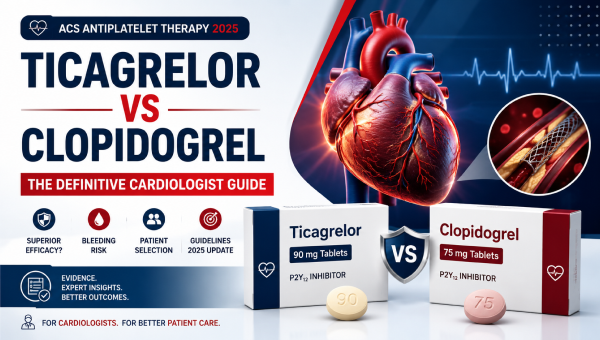




Ticagrelor vs Clopidogrel: Which Antiplatelet Medicine Is Better After Acute Coronary Syndrome (ACS)
Jul 17, 2026
Introduction
Acute Coronary Syndrome (ACS) is one of the leading causes of hospitalization and cardiovascular death worldwide. It includes serious conditions such as unstable angina and heart attacks that occur when blood flow to the heart is suddenly reduced or blocked. Prompt treatment is essential to restore blood flow, reduce heart muscle damage, and prevent future cardiovascular events.
A key component of ACS treatment is antiplatelet therapy, which helps prevent platelets from forming harmful blood clots inside the coronary arteries. Among the most commonly prescribed P2Y12 inhibitors are Ticagrelor and Clopidogrel. Although both medicines are effective, they differ in their mechanism of action, onset, dosing schedule, and clinical considerations.
In this guide, we'll compare Ticagrelor vs Clopidogrel, explain how each medicine works, discuss current guideline recommendations, review clinical evidence, and help you understand how cardiologists choose the most appropriate therapy for individual patients.
What Is Acute Coronary Syndrome (ACS)?
Understanding ACS
Acute Coronary Syndrome (ACS) is a group of medical emergencies caused by a sudden reduction in blood flow to the heart muscle. This usually occurs when a fatty plaque inside a coronary artery ruptures, triggering the formation of a blood clot that partially or completely blocks blood flow.
Without prompt treatment, heart muscle cells begin to die due to a lack of oxygen. Early diagnosis and rapid medical intervention are critical to reduce complications and improve long-term outcomes.
Types of Acute Coronary Syndrome
Unstable Angina
Unstable angina is a warning sign that the heart is not receiving enough blood. Patients may experience chest pain that occurs unexpectedly, lasts longer than usual, or happens even at rest. Although heart muscle damage has not yet occurred, urgent medical evaluation is required because the risk of a heart attack is high.
NSTEMI (Non-ST-Elevation Myocardial Infarction)
NSTEMI is a type of heart attack in which blood flow to the heart is significantly reduced but not completely blocked. Blood tests show evidence of heart muscle injury, even though the ECG may not display the classic ST-segment elevation seen in STEMI.
STEMI (ST-Elevation Myocardial Infarction)
STEMI is the most severe form of heart attack. A coronary artery becomes completely blocked, causing extensive damage to the heart muscle if blood flow is not restored quickly. Immediate reperfusion therapy, such as primary PCI (angioplasty) or thrombolytic therapy when appropriate, is essential.
Quick Comparison
| ACS Type | Severity | Typical Treatment |
| Unstable Angina | Moderate | Medicines ± PCI |
| NSTEMI | High | Medicines + PCI (when indicated) |
| STEMI | Emergency | Immediate Reperfusion + Dual Antiplatelet Therapy |
Why Are Antiplatelet Medicines Used in ACS?
How Blood Clots Form
When a coronary artery plaque ruptures, the body attempts to repair the damage by activating platelets. These platelets stick together and form a clot. While clotting is important for stopping bleeding after an injury, clot formation inside a coronary artery can block blood flow to the heart and cause a heart attack.
Role of Platelets in Heart Attacks
Platelets play a central role in the development of Acute Coronary Syndrome. Once activated, they release chemical signals that attract more platelets, causing the clot to grow rapidly. Antiplatelet medicines interrupt this process, reducing the likelihood of further clot formation.
What Is Dual Antiplatelet Therapy (DAPT)?
Dual Antiplatelet Therapy (DAPT) combines:
- Aspirin, which reduces platelet activation through one pathway.
- A P2Y12 inhibitor such as Ticagrelor or Clopidogrel, which blocks another key pathway involved in platelet aggregation.
Together, these medicines provide stronger protection against recurrent heart attacks and stent thrombosis than aspirin alone.
The duration of DAPT is individualized based on factors such as the type of ACS, whether a coronary stent has been placed, the patient's bleeding risk, and current cardiology guidelines. Your cardiologist will determine the most appropriate treatment duration.
What Is Ticagrelor?
Medicine Overview
Ticagrelor is an oral P2Y12 receptor inhibitor that helps reduce platelet activation and clot formation. It is commonly prescribed as part of Dual Antiplatelet Therapy following Acute Coronary Syndrome and after certain coronary interventions.
Drug Class: P2Y12 Receptor Inhibitor
Dosage Form: Oral Tablet
Prescription Medicine: Yes
How Ticagrelor Works
Ticagrelor directly blocks the P2Y12 receptor found on platelets. This prevents platelets from sticking together and forming harmful clots inside the coronary arteries.
Unlike some other medicines in its class, Ticagrelor does not require activation by the liver before becoming effective, allowing for relatively rapid platelet inhibition.
Approved Uses
Ticagrelor is approved for use in appropriate patients for:
- Acute Coronary Syndrome (ACS)
- Prevention of recurrent cardiovascular events in selected high-risk patients
- Dual Antiplatelet Therapy after Percutaneous Coronary Intervention (PCI), when clinically indicated
What Is Clopidogrel?
Medicine Overview
Clopidogrel is another widely used P2Y12 receptor inhibitor. It has been used for many years to reduce the risk of heart attack, stroke, and other cardiovascular events in patients with atherosclerotic disease.
Drug Class: P2Y12 Receptor Inhibitor
Dosage Form: Oral Tablet
Prescription Medicine: Yes
How Clopidogrel Works
Clopidogrel works by blocking the P2Y12 receptor on platelets, reducing their ability to stick together and form blood clots.
Unlike Ticagrelor, Clopidogrel is a prodrug, meaning it must first be converted into its active form by enzymes in the liver before it becomes effective.
Approved Uses
Clopidogrel may be prescribed for:
- Acute Coronary Syndrome
- Secondary prevention after ischemic stroke in selected patients
- Peripheral Artery Disease (PAD)
- Post-PCI and coronary stent management
- Other approved cardiovascular indications
Ticagrelor vs Clopidogrel – Quick Comparison
| Feature | Ticagrelor | Clopidogrel |
| Drug Class | P2Y12 Receptor Inhibitor | P2Y12 Receptor Inhibitor |
| Activation | Active Drug | Prodrug |
| Onset of Action | Faster | Slower |
| Typical Dosing | Usually Twice Daily | Usually Once Daily |
| Prescription Required | Yes | Yes |
Ticagrelor vs Clopidogrel: Key Differences
Although both medicines belong to the same drug class, there are important differences that influence treatment decisions.
Mechanism of Action
Both medicines block the P2Y12 receptor on platelets, reducing clot formation. However, Ticagrelor acts directly, whereas Clopidogrel requires metabolic activation in the liver before becoming effective.
Speed of Platelet Inhibition
Because Ticagrelor is already active when taken, it generally produces more rapid platelet inhibition. Clopidogrel takes longer to achieve its full effect because it must first be converted into its active metabolite.
Dosing Schedule
Ticagrelor is usually taken twice daily, while Clopidogrel is generally taken once daily. The appropriate dosing schedule depends on the prescribed treatment plan.
Drug Interactions
Both medicines may interact with other medications. Certain drugs can influence how Clopidogrel is activated, while Ticagrelor has its own interaction profile. Always inform your healthcare provider about all prescription medicines, over-the-counter products, and supplements you are taking.
Genetic Factors (CYP2C19)
Clopidogrel relies on the CYP2C19 enzyme for activation. Some individuals have genetic variations that reduce the activity of this enzyme, potentially leading to a reduced response to Clopidogrel. In selected patients, genetic testing may be considered to help guide treatment decisions.
Reversibility of Platelet Inhibition
Ticagrelor binds reversibly to the P2Y12 receptor, whereas Clopidogrel binds irreversibly for the lifespan of the platelet. This difference may influence treatment planning in patients who require surgery or invasive procedures.
Clinical Evidence Comparing Ticagrelor and Clopidogrel
Several large clinical trials have compared Ticagrelor and Clopidogrel in patients with Acute Coronary Syndrome. These studies have helped shape current international cardiology guidelines.
Landmark Clinical Trials
PLATO Trial
The PLATO trial was a landmark international study evaluating Ticagrelor and Clopidogrel in patients with Acute Coronary Syndrome. The study demonstrated that Ticagrelor reduced the risk of certain major cardiovascular events in selected ACS patients compared with Clopidogrel, although it was also associated with a higher risk of some types of bleeding. These findings contributed to its inclusion in many guideline recommendations for appropriate patients.
CURRENT-OASIS 7 Trial
The CURRENT-OASIS 7 trial explored different Clopidogrel dosing strategies in patients with ACS undergoing PCI. The study provided important insights into optimizing antiplatelet therapy in selected patient populations and continues to inform clinical practice.
Current Guideline Recommendations
Current cardiology guidelines recommend that the choice between Ticagrelor and Clopidogrel should be individualized. Factors such as the type of ACS, bleeding risk, need for PCI, previous medical history, drug tolerability, and patient-specific characteristics all play an important role in selecting the most appropriate antiplatelet therapy.
Evidence Summary
| Clinical Outcome | Ticagrelor | Clopidogrel |
| Platelet Inhibition | More Rapid | Effective |
| Cardiovascular Event Reduction | Supported in selected ACS patients | Well-established |
| Bleeding Considerations | Higher in some patients | Lower in some patients |
When Might Doctors Prescribe Ticagrelor?
The decision to prescribe Ticagrelor is based on current cardiology guidelines, the patient's diagnosis, and an individual assessment of the benefits and potential risks. It is commonly used as part of Dual Antiplatelet Therapy (DAPT) in eligible patients with Acute Coronary Syndrome (ACS).
Acute Coronary Syndrome (ACS)
Ticagrelor is frequently prescribed for patients diagnosed with Unstable Angina, NSTEMI, or STEMI. By providing rapid and effective platelet inhibition, it helps reduce the risk of further clot formation after an acute coronary event.
After Coronary Stent Placement
Patients undergoing Percutaneous Coronary Intervention (PCI) with coronary stent implantation often receive Ticagrelor alongside aspirin as part of guideline-directed Dual Antiplatelet Therapy. This combination helps reduce the risk of stent thrombosis, a serious complication in which a blood clot forms inside the newly placed stent.
Patients at Higher Ischemic Risk
Some patients have a greater likelihood of experiencing recurrent cardiovascular events due to factors such as extensive coronary artery disease, diabetes, multiple blocked arteries, or a previous heart attack. In selected patients, Ticagrelor may be preferred because of its rapid and consistent platelet inhibition.
Guideline-Recommended DAPT
International cardiology guidelines recommend Ticagrelor as one of the preferred P2Y12 inhibitors for many patients with Acute Coronary Syndrome who do not have contraindications and who are considered suitable after evaluation of their bleeding risk.
When Might Doctors Prescribe Clopidogrel?
Although Ticagrelor is recommended in many ACS situations, Clopidogrel continues to play an important role in cardiovascular care. It remains an effective and well-established treatment option for many patients.
Patients Unable to Take Ticagrelor
Some patients may not tolerate Ticagrelor because of side effects, contraindications, or drug interactions. In these situations, Clopidogrel may be an appropriate alternative based on the treating cardiologist's assessment.
Higher Bleeding Risk (When Appropriate)
For patients with an increased risk of bleeding, Clopidogrel may be considered in selected situations where the balance between preventing blood clots and minimizing bleeding favors its use. Treatment decisions are always individualized.
Long-Term Secondary Prevention
Clopidogrel is widely used for long-term prevention of future cardiovascular events in selected patients with previous heart attacks, ischemic stroke, or peripheral artery disease.
Cost and Accessibility Considerations
Clopidogrel is available as a generic medicine in many regions, making it more affordable and accessible for long-term therapy. Cost may be one of several factors considered when choosing an appropriate antiplatelet medicine, but it should never be the only deciding factor.
Safety Comparison: Ticagrelor vs Clopidogrel
Both medicines reduce the ability of platelets to form blood clots, which means bleeding is the most important potential side effect. Before prescribing either medicine, healthcare providers carefully assess each patient's overall risk profile.
Safety Comparison Table
| Safety Consideration | Ticagrelor | Clopidogrel |
| Bleeding Risk | Present | Present |
| Shortness of Breath | More commonly reported | Less common |
| Drug Interactions | Yes | Yes |
| Requires Prescription | Yes | Yes |
Bleeding Warning Signs
Patients taking either medicine should seek medical attention if they experience:
- Unusual bruising
- Bleeding that does not stop
- Blood in the urine
- Black or bloody stools
- Vomiting blood
- Severe nosebleeds
- Persistent gum bleeding
- Severe headache after a fall or injury
Prompt medical evaluation is essential because serious bleeding may require immediate treatment.
Drug Interactions
Ticagrelor and Clopidogrel may interact with several medicines, including:
- Blood thinners (anticoagulants)
- Aspirin (outside prescribed DAPT regimens)
- NSAIDs such as ibuprofen and naproxen
- Certain antifungal medicines
- Some antibiotics
- Medicines that affect liver enzymes
Always tell your healthcare provider about all prescription medicines, over-the-counter products, vitamins, and herbal supplements you are taking.
Importance of Medication Adherence
Stopping antiplatelet therapy without medical advice can significantly increase the risk of heart attack, stroke, or stent thrombosis, particularly during the first months after PCI.
Never stop taking Ticagrelor or Clopidogrel unless your cardiologist specifically instructs you to do so.
How Cardiologists Choose Between Ticagrelor and Clopidogrel
Selecting the most appropriate antiplatelet medicine involves balancing the risk of future cardiovascular events against the risk of bleeding. No single medicine is best for every patient.
Healthcare providers consider several important factors before making a treatment decision.
Type of Acute Coronary Syndrome
Patients with STEMI, NSTEMI, or Unstable Angina may have different treatment strategies depending on the severity of the condition and planned interventions.
PCI or Coronary Stent Placement
Patients receiving coronary stents usually require Dual Antiplatelet Therapy for a specific duration determined by current clinical guidelines and their individual risk profile.
Bleeding Risk
A history of gastrointestinal bleeding, previous hemorrhagic stroke, advanced age, or other bleeding disorders may influence the choice of antiplatelet medicine.
Age
Older adults may have a higher bleeding risk, making careful treatment selection particularly important.
Kidney Disease
Patients with chronic kidney disease require individualized assessment because kidney function can influence overall cardiovascular risk and medication management.
Previous Stroke or TIA
A history of stroke or transient ischemic attack (TIA) may affect which antiplatelet medicine is most appropriate.
Cost and Availability
Affordability, insurance coverage, and medicine availability may also be considered, particularly for long-term therapy.
Current Cardiology Guidelines
Modern treatment decisions are guided by evidence-based recommendations from international cardiology organizations together with each patient's medical history and clinical condition.
Lifestyle Tips After Acute Coronary Syndrome
Medication is only one part of recovery after Acute Coronary Syndrome. Long-term heart health also depends on healthy lifestyle habits.
Take Medicines Exactly as Prescribed
Continue all prescribed medications, including antiplatelet therapy, cholesterol-lowering medicines, blood pressure medicines, and diabetes medications exactly as instructed.
Quit Smoking
Smoking damages blood vessels and greatly increases the risk of another heart attack. Quitting smoking is one of the most effective ways to improve cardiovascular health.
Follow a Heart-Healthy Diet
Choose a diet rich in:
- Fruits and vegetables
- Whole grains
- Lean protein
- Healthy fats
- Low-fat dairy products
Limit salt, processed foods, sugary beverages, and saturated fats.
Cardiac Rehabilitation
Participating in a supervised cardiac rehabilitation program can improve physical fitness, reduce future cardiovascular risk, and enhance quality of life.
Control Diabetes, Blood Pressure, and Cholesterol
Managing these risk factors significantly reduces the likelihood of future heart attacks and strokes.
Regular Follow-up with Your Cardiologist
Attend all scheduled appointments so your healthcare provider can monitor your progress, adjust medications if needed, and address any concerns.
Why Choose Shabbir Medical Hall for Cardiac Medicines?
Trusted Pharmacy Since 1920
For more than a century, Shabbir Medical Hall has been committed to supplying genuine prescription medicines and supporting patients with reliable pharmacy services across India.
Why Patients Trust Us
- Genuine prescription medicines
- Comprehensive range of cardiology and critical care medicines
- Competitive pricing
- Prescription verification
- Secure packaging
- Nationwide delivery
- Expert customer support
Looking for Ticagrelor or Clopidogrel Tablets?
Shabbir Medical Hall offers genuine prescription cardiac medicines with prescription verification, secure packaging, and reliable delivery across India. A valid prescription from a registered healthcare professional is required for purchase.
Conclusion
Dual Antiplatelet Therapy (DAPT) remains a cornerstone of modern Acute Coronary Syndrome (ACS) management. Both Ticagrelor and Clopidogrel are evidence-based treatment options that reduce the risk of recurrent cardiovascular events by preventing harmful platelet aggregation. While they share the same therapeutic goal, they differ in their pharmacological characteristics, onset of action, dosing schedules, and clinical considerations.
The most appropriate medicine depends on guideline recommendations, the patient's individual risk factors, bleeding risk, treatment objectives, and the cardiologist's clinical judgment. Never start, stop, or switch antiplatelet therapy without consulting your healthcare provider. For genuine prescription cardiac medicines and dependable nationwide service, choose a trusted licensed pharmacy such as Shabbir Medical Hall.
Frequently Asked Questions (FAQ)
1. What is the difference between Ticagrelor and Clopidogrel?
Both medicines are P2Y12 antiplatelet agents that help prevent blood clots. Ticagrelor is an active drug with a faster onset of action, while Clopidogrel is a prodrug that requires activation in the liver before becoming effective.
2. Which medicine is preferred after a heart attack?
The choice depends on several factors, including the type of Acute Coronary Syndrome, planned PCI, bleeding risk, coexisting medical conditions, and current cardiology guidelines. Your cardiologist will recommend the most appropriate option for your situation.
3. Can Ticagrelor and Clopidogrel be taken together?
No. They belong to the same class of medicines and are generally not used together. Most patients receive aspirin plus one P2Y12 inhibitor as part of Dual Antiplatelet Therapy, unless otherwise directed by a specialist.
4. What are the common side effects of Ticagrelor and Clopidogrel?
The most important potential side effect of both medicines is bleeding. Ticagrelor may also cause shortness of breath (dyspnea) in some patients. Report any unusual bleeding or breathing difficulties to your healthcare provider promptly.
5. How long should Dual Antiplatelet Therapy continue after ACS?
The duration of Dual Antiplatelet Therapy varies depending on the type of ACS, whether a coronary stent was placed, bleeding risk, and current guideline recommendations. Always follow your cardiologist's advice regarding treatment duration.
6. Where can I buy genuine Ticagrelor tablets in India?
You can purchase genuine prescription Ticagrelor and Clopidogrel tablets from licensed pharmacies such as Shabbir Medical Hall after verification of a valid prescription from a registered healthcare professional.
Recent Post
Taffic 90mg vs Ticagrelor Leeford 90mg: Same Molecule, Different Brands Compared
Rivajon 20mg vs Clexane 40mg: Rivaroxaban vs Enoxaparin for DVT
DVT, Pulmonary Embolism & AFib: A Complete Guide to Rivaroxaban Therapy
Empaworth 25mg vs Farxiga 10mg
Empagliflozin for Heart Failure with Reduced Ejection Fraction (HFrEF)
Empaworth 10mg vs Empaworth 25mg
Type 2 Diabetes Treatment in 2026

Humog 150 HP vs Gonal-F 150 IU

Female Infertility Treatment
Poly B XP 750000 IU vs Colistin Injection