


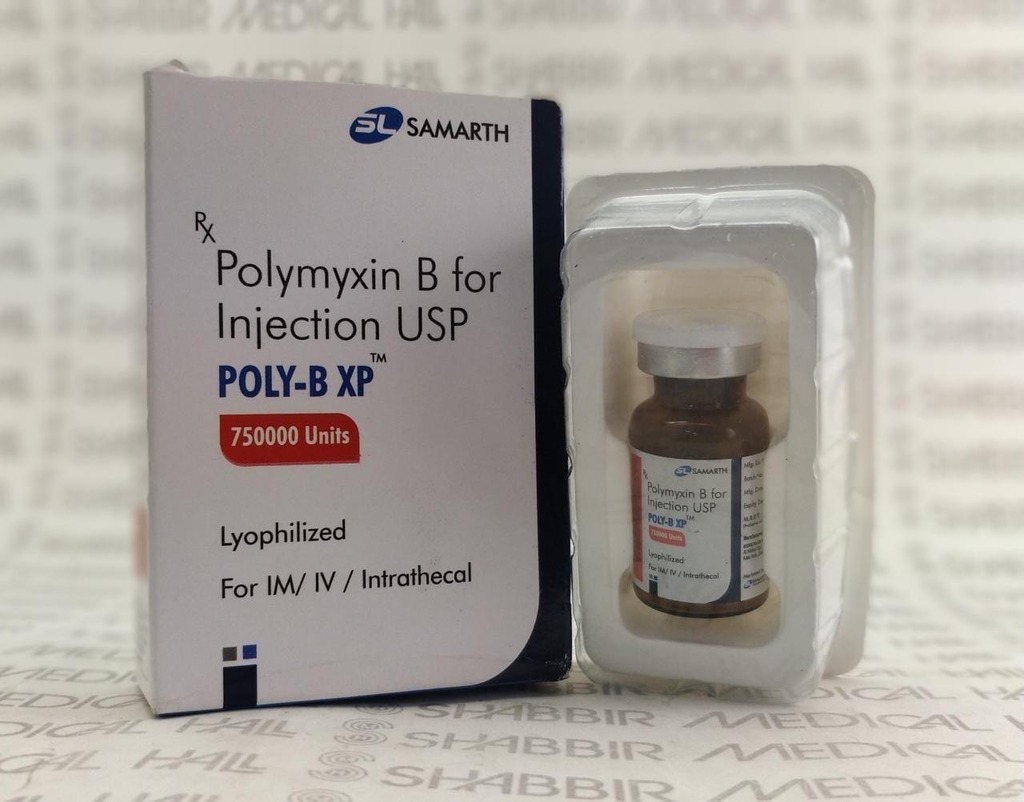
POLY B XP 750000 UNIT INJ
Manufactured By SAMARTH LIFE SCIENCES PVT LTD
Composition POLYMYXIN B 750000IU
RS 3173.92
MRP RS 5289.87
(40% OFF)
Includes all taxes
Package SIZE
( VIAL )

100% Authentic
Products

Free
Shipping*

Products
Return Policy
Description:
Poly B XP 750000 Unit Injection (Polymyxin B Sulphate 750000 IU) is a potent polymyxin-class antibiotic manufactured by Samarth Life Sciences Pvt Ltd, indicated for the treatment of severe and life-threatening bacterial infections caused by multidrug-resistant (MDR) gram-negative organisms. It acts by binding to the lipopolysaccharide (LPS) in the outer membrane of gram-negative bacteria, disrupting membrane permeability, causing leakage of cellular contents, and ultimately leading to bacterial cell death. Available from Shabbir Medical Hall at the best price in India, this genuine prescription injection is available online with fast delivery nationwide.
BENEFITS: Poly B XP 750000 Unit Injection provides a highly targeted bactericidal action against a broad spectrum of gram-negative pathogens, including Pseudomonas aeruginosa, Acinetobacter baumannii, Klebsiella pneumoniae, and Escherichia coli. It is considered a critical last-resort antibiotic for infections caused by organisms resistant to beta-lactams, carbapenems, and other conventional antibiotics. Its additional endotoxin-neutralising activity may reduce septic shock severity in critically ill patients.
USAGE OVERVIEW: Poly B XP 750000 Unit Injection is administered strictly under hospital supervision by trained healthcare professionals via intravenous (IV) infusion or intramuscular (IM) injection. It is reconstituted and diluted before use as per institutional protocols. The dosage is determined by the treating physician based on the patient's renal function, body weight, infection severity, and identified pathogen. Duration of therapy is as prescribed by the intensivist, infectious disease specialist, or microbiologist.
SAFETY OVERVIEW: The most important safety concerns are nephrotoxicity (kidney damage) and neurotoxicity (nerve damage), which are dose-dependent and require close monitoring of renal function, serum drug levels (where available), and neurological status throughout therapy. Concurrent use with other nephrotoxic or neurotoxic agents must be avoided or carefully managed. This medicine is administered only in a clinical setting and is NOT for self-administration.
Uses / Indications:
- Severe Gram-Negative Bacterial Infections: including those caused by Pseudomonas aeruginosa, Acinetobacter baumannii, Klebsiella pneumoniae, and Escherichia coli — particularly multidrug-resistant (MDR) and extensively drug-resistant (XDR) strains
- Septicaemia / Bloodstream Infections: gram-negative bacteraemia in critically ill patients
- Hospital-Acquired / Ventilator-Associated Pneumonia (HAP/VAP): caused by resistant gram-negative organisms
- Urinary Tract Infections (UTI): severe or complicated UTIs due to susceptible gram-negative bacteria
- Meningitis / Intrathecal Use: gram-negative bacterial meningitis when other agents are not suitable
- Ocular / Subconjunctival Infections: severe corneal or eye infections caused by susceptible gram-negative bacteria
ADDITIONAL USES:
- Peritonitis and intra-abdominal infections (as part of combination regimens)
- Decolonisation of MDR gram-negative organisms in high-risk patients (selective decontamination protocols)
- Off-label use in cystic fibrosis patients with Pseudomonas aeruginosa pulmonary infections
Interactions / Warnings:
NEPHROTOXICITY WARNING:
- Renal function (serum creatinine, BUN, urine output) MUST be monitored daily in ICU patients and at minimum every 48 hours in ward patients
- Dose MUST be adjusted immediately if serum creatinine rises or creatinine clearance falls below 30 mL/min
- Discontinue if severe nephrotoxicity occurs and switch to alternative therapy
NEUROTOXICITY / NEUROMUSCULAR BLOCKADE WARNING:
- Avoid rapid IV administration — always infuse over 60–90 minutes; bolus injection risks respiratory arrest
- Monitor for neurological signs: dizziness, ataxia, numbness, muscle weakness, slurred speech
- Respiratory support (mechanical ventilation) should be immediately available during infusion in ICU
RENAL / HEPATIC IMPAIRMENT:
- Renal impairment (CrCl <30 mL/min): dose reduction MANDATORY; dosing interval should be extended
- Severe renal impairment or AKI: specialist guidance required; some institutions hold therapy or use surrogate monitoring
- Hepatic impairment: limited data; use with caution
PAEDIATRIC USE:
- Polymyxin B can be used in infants (including neonates) and children — dosing is weight-based; close monitoring for nephrotoxicity and neurotoxicity is mandatory
ELDERLY USE (>=65 years):
- Age-related decline in renal function increases risk of nephrotoxicity; careful dose adjustment and more frequent renal function monitoring required
CONTRAINDICATIONS:
- Known hypersensitivity to Polymyxin B or other polymyxins
- Use as a routine or prophylactic antibiotic is NOT recommended due to serious toxicity profile
RESISTANCE STEWARDSHIP:
- Polymyxin B is a last-resort antibiotic — use ONLY when sensitivity testing confirms susceptibility and other options are not available or have failed
- Empirical use without microbiological evidence is strongly discouraged
Pregnancy interaction:
-Polymyxin B should be used during pregnancy ONLY if the potential benefit clearly justifies the potential risk to the foetus
-Animal reproduction studies have shown nephrotoxic effects on the developing foetus.There are no adequate well-controlled studies in pregnant women
-Classified as Pregnancy Category C:use with extreme caution and only on specialist advice
BREASTFEEDING:
-It is not known whether Polymyxin B is excreted in human breast milk
-Due to the potential for serious adverse reactions in nursing infants(particularly nephrotoxicity and neurotoxicity),a decision should be made whether to discontinue nursing or to discontinue the drug,taking into account the importance of the therapy to the mother
-Consult the treating physician and neonatologist before use in a breastfeeding mother
CONTRACEPTION WARNING:
-Not specifically applicable;however,male and female patients of childbearing potential should be counselled on the risks during therapy
Expert advice:
- 1. HOSPITAL-ONLY ADMINISTRATION — NO SELF-INJECTION: Poly B XP 750000 Unit Injection MUST be administered only in an ICU, hospital ward, or supervised clinical setting by trained healthcare professionals. This is not a medicine for self-injection or home therapy. The risk of rapid respiratory arrest from neuromuscular blockade means IV bolus injection is strictly prohibited — all doses must be given as a slow IV infusion over at least 60–90 minutes.
- 2. RENAL FUNCTION MONITORING IS NON-NEGOTIABLE: Nephrotoxicity is the primary dose-limiting toxicity of Polymyxin B. Serum creatinine, blood urea nitrogen (BUN), and urine output must be monitored daily in critically ill patients. Any rise in creatinine above 25% of baseline should prompt immediate dose review. Hydration status must be optimised. Avoid concurrent use of other nephrotoxic agents (aminoglycosides, vancomycin, NSAIDs) wherever clinically possible.
- 3. WATCH FOR NEUROLOGICAL SIGNS: Neurotoxicity can manifest as peripheral paraesthesia (tingling/numbness), dizziness, ataxia, blurred vision, slurred speech, or in severe cases, respiratory muscle paralysis. Report any new neurological symptoms to the treating physician immediately. Neurotoxic effects are generally reversible on dose reduction or discontinuation.
- 4. VERIFY SUSCEPTIBILITY BEFORE USE: Polymyxin B is a last-resort antibiotic. It should only be used when microbiological culture and sensitivity testing confirm that the causative organism is susceptible, and when other less toxic alternatives (e.g., carbapenems, beta-lactam/beta-lactamase inhibitors) are not effective or are contraindicated. Avoid empirical use without microbiological justification.
- 5. RECONSTITUTION AND INFUSION ACCURACY: Always verify the reconstitution diluent (Sterile Water for Injection or 0.9% NaCl), volume, and final concentration before preparation. For IV infusion, the calculated dose should be diluted in 300–500 mL of 5% Dextrose. Infusion time must be maintained at 60–90 minutes minimum — do NOT administer as a rapid IV push.
MONITORING ADVICE:
- Serum Creatinine and BUN: Daily in ICU; every 48 hours in ward patients
- Urine Output: Hourly in critically ill patients
- Serum Electrolytes (Sodium, Potassium, Magnesium): Daily
- Neurological Assessment: Daily — document any new paraesthesia, ataxia, or mental status changes
- Complete Blood Count (CBC) and Liver Function Tests (LFTs): Baseline and weekly
- Microbiological Response: Blood cultures, sputum, urine cultures repeated at 48–72 hours to assess treatment response
- Therapeutic Drug Monitoring (TDM): Increasingly used in specialist centres to optimise dosing and minimise toxicity
COMPLIANCE TIPS:
- Ensure the full prescribed course is completed even if clinical improvement is noted — early discontinuation risks relapse and resistance development
- Maintain all laboratory monitoring appointments without delay
- Inform all treating specialists (nephrologist, neurologist, intensivist) that the patient is on Polymyxin B
- Store unopened vials per label instructions; discard unused reconstituted solution as per hospital waste policy
SAFETY TIPS:
- Keep emergency resuscitation equipment (including mechanical ventilation support) available at the bedside during infusion
- This medicine MUST NOT be used without a valid prescription from a registered physician / infectious disease specialist
- Do NOT substitute with other polymyxin products (e.g., colistin/polymyxin E) without physician authorisation — dosing units differ significantly
- Antibiotic stewardship compliance: document indication, dose, and planned duration in the medical record at every prescription
Side Effects:
- Pain, redness, swelling, and irritation at the injection site (IM route particularly)
- Nephrotoxicity (kidney damage): rising serum creatinine, reduced urine output, electrolyte disturbances — most significant dose-limiting toxicity
- Neurotoxicity: dizziness, ataxia (unsteady gait), peripheral paraesthesia (numbness/tingling), confusion, slurred speech
- Fever and drug-induced reactions
- Flushing, nausea, vomiting
- Phlebitis at IV infusion site
SERIOUS SIDE EFFECTS (contact your doctor immediately):
- Nephrotoxicity / Acute Kidney Injury (AKI): oliguria, haematuria, cylindruria, uraemia — MONITOR renal function (serum creatinine, BUN, urine output) daily in ICU patients
- Neuromuscular Blockade: muscle weakness, respiratory muscle paralysis — RISK IS HIGHER if given rapidly IV or combined with neuromuscular blocking agents
- Respiratory Arrest: can occur with rapid IV administration — always infuse slowly over 60–90 minutes
- Anaphylactic / Hypersensitivity Reactions: urticaria, rash, bronchospasm, anaphylactic shock — have emergency resuscitation equipment available
- Superinfection: prolonged use may result in overgrowth of non-susceptible organisms (fungi, gram-positive bacteria)
EMERGENCY SIGNS — SEEK IMMEDIATE MEDICAL HELP:
- Sudden muscle weakness or inability to breathe
- Signs of hypersensitivity (rash, swelling, difficulty breathing)
- Significant reduction in urine output / signs of kidney failure
- Confusion, ataxia, or other neurological deterioration
How to use:
INTRAVENOUS (IV) – Preferred Route:
- Adults: 15,000–25,000 units/kg/day (based on body weight and renal function), divided into 2 doses given every 12 hours
- Maximum daily dose: 25,000 units/kg/day (not to exceed 2,000,000 IU/day in normal renal function)
- Each dose must be diluted in 300–500 mL of 5% Dextrose and infused over 60–90 minutes
INTRAMUSCULAR (IM):
- 25,000–30,000 units/kg/day, divided every 4–6 hours
- IM injections are painful — IV infusion is preferred wherever possible
INTRATHECAL (for meningitis):
- 50,000 units once daily for 3–4 days, then every other day for at least 2 weeks after CSF cultures are sterile
RENAL DOSE ADJUSTMENT:
- Dosage MUST be reduced in patients with renal impairment (creatinine clearance <30 mL/min)
- Haemodialysis patients: specialist dosing guidance required
ROUTE OF ADMINISTRATION:
- Reconstitute: Dissolve vial contents in Sterile Water for Injection or 0.9% Sodium Chloride as per institutional protocol
- Use only freshly reconstituted solution — do NOT store after reconstitution unless under refrigeration for up to 72 hours
- Administer ONLY in a hospital/ICU setting under strict medical supervision
- NOT for self-administration or home use
- Avoid rapid IV bolus — risk of neuromuscular blockade and respiratory arrest
MISSED DOSE:
- All dosing is managed by trained hospital healthcare professionals under clinical protocol
- Missed doses in ICU/hospital settings are managed by the treating healthcare team
- Ensure the full prescribed course is completed as directed — do not stop early even if symptoms improve
STORAGE:
- Store between 10°C–25°C in a cool, dry place away from direct sunlight
- Keep in original vial with seal intact until use
- Keep out of reach of children
- Do not use after the expiry date printed on the vial
How it works:
- Poly B XP 750000 Unit Injection contains Polymyxin B Sulphate, a cyclic polypeptide antibiotic of the polymyxin class
- Gram-negative bacteria are protected by an outer membrane rich in lipopolysaccharide (LPS / endotoxin), which acts as a barrier against many antibiotics
- Binding electrostatically to the lipid A component of LPS in the bacterial outer membrane
- Displacing calcium (Ca²⁺) and magnesium (Mg²⁺) ions that stabilise the membrane
- Disrupting outer membrane integrity and increasing permeability
- Causing leakage of essential intracellular contents
- Ultimately leading to rapid bacterial cell death (bactericidal activity)
ADDITIONAL MECHANISM:
- Polymyxin B also neutralises the toxic effects of endotoxin (LPS), potentially reducing the inflammatory cascade and severity of septic shock in gram-negative bacteraemia
SPECTRUM OF ACTIVITY:
- Active against: Pseudomonas aeruginosa, Acinetobacter baumannii, Klebsiella pneumoniae, Escherichia coli, Enterobacter spp., Citrobacter spp., Haemophilus influenzae
- NOT active against: Gram-positive bacteria, Proteus spp., Providencia spp., Serratia marcescens, Burkholderia cepacia, anaerobes
KEY ADVANTAGES:
- Bactericidal against many MDR and XDR gram-negative organisms
- Remains active against carbapenem-resistant strains
- Effective endotoxin neutralisation adds clinical benefit in sepsis
Faq for medicine:
Poly-B XP 750000 Unit contains a higher-strength Polymyxin B formulation reserved for serious MDR and XDR Gram-negative infections in critically ill patients where standard therapy has failed. Indications include carbapenem-resistant Klebsiella, Pseudomonas, and Acinetobacter infections. Poly-B XP is strictly a last-resort antibiotic requiring specialist oversight in intensive care or infectious disease settings.
2.How does the 750000 unit dose of Poly-B XP differ from the 500000 unit strength?
Poly-B XP 750000 Unit provides a 50% higher Polymyxin B dose per vial compared to the 500000 IU formulation, offering greater dosing flexibility for higher-weight patients or those requiring larger total daily doses. The higher-dose Poly-B XP vial reduces the number of vials needed per dose and may improve preparation efficiency in critical care settings without changing therapeutic targets.
3.What renal monitoring protocol is used for patients receiving Poly-B XP 750000?
Patients on Poly-B XP 750000 require daily serum creatinine and urine output monitoring. Urinalysis for proteinuria and casts should be performed every 48 hours. Any creatinine rise exceeding 1.5× baseline or oliguria should trigger dose reassessment. Nephrotoxicity is the most common and serious treatment-limiting adverse effect of Poly-B XP, requiring proactive renal protection strategies throughout therapy.
4.Is Poly-B XP 750000 Unit safe for intrathecal or intraventricular administration?
Poly-B XP 750000 Unit can be used intrathecally or intraventricularly in MDR Gram-negative meningitis or ventriculitis, where systemic Polymyxin B achieves poor CSF penetration. Intrathecal doses are much lower at approximately 50,000 IU per day. This off-label use requires specialist neurosurgical and infectious disease collaboration, with strict sterility and precise dose calculations to prevent neurotoxic complications.
5.What pathogens is Poly-B XP 750000 Unit specifically active against?
Poly-B XP 750000 Unit is active against MDR Gram-negative rods including carbapenem-resistant Acinetobacter baumannii, Pseudomonas aeruginosa, Klebsiella pneumoniae, and Enterobacter species. It is not active against Gram-positive organisms or organisms with intrinsic polymyxin resistance such as Burkholderia cepacia, Proteus, Serratia, and Morganella. Susceptibility testing should confirm sensitivity before use.
6.What measures reduce nephrotoxicity risk while on Poly-B XP 750000 injections?
To minimize Poly-B XP 750000 nephrotoxicity: avoid concurrent nephrotoxic drugs, ensure adequate IV hydration, use the minimum effective dose for the shortest necessary duration, and monitor daily renal parameters closely. Patients with CKD, advanced age, or sepsis-related organ dysfunction face the highest risk. Regular multidisciplinary reviews involving nephrology, ICU, and infectious disease teams are essential throughout treatment.
Medicine interaction:
- Aminoglycosides (gentamicin, amikacin, tobramycin): additive nephrotoxicity and neurotoxicity — AVOID concurrent use or monitor very closely
- Other nephrotoxic drugs (vancomycin, amphotericin B, NSAIDs, contrast agents): significantly increased risk of acute kidney injury — AVOID or use with extreme caution and intensive renal monitoring
- Neuromuscular blocking agents (vecuronium, pancuronium, atracurium): Polymyxin B may potentiate neuromuscular blockade, leading to prolonged muscle weakness and respiratory paralysis — use with extreme caution
- Loop diuretics (furosemide, ethacrynic acid): additive nephrotoxicity; may increase risk of renal failure
- Colistin (Polymyxin E): both agents have the same class of toxicity — concurrent use is NOT recommended
- Skeletal muscle relaxants: enhanced neuromuscular blockade possible
VACCINE INTERACTIONS:
- Consult physician before any vaccinations during treatment (live vaccines are generally contraindicated in critically ill patients)
SUPPLEMENT INTERACTIONS:
- Herbal preparations with nephrotoxic potential (e.g., Aristolochic acid-containing herbs): AVOID
- Always inform your doctor of all vitamins, herbal products, and supplements