


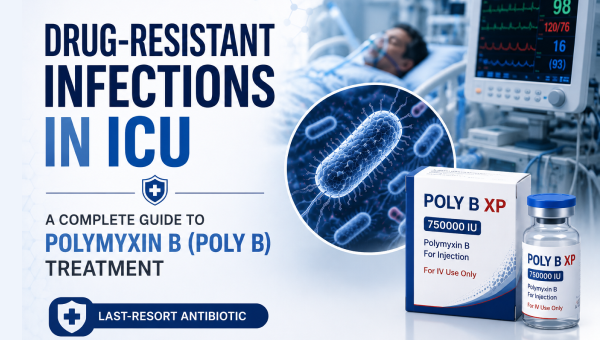




Drug-Resistant Infections in ICU
Jun 26, 2026
Introduction
Drug-Resistant Infections in ICU settings have become one of the most serious challenges in modern healthcare. According to global public health organizations, antimicrobial resistance (AMR) is increasing worldwide, making many bacterial infections more difficult to treat. Intensive Care Unit (ICU) patients are particularly vulnerable because they often have weakened immune systems, require invasive medical devices, and receive multiple courses of antibiotics during hospitalization.
Early diagnosis and timely antibiotic treatment play a critical role in improving patient outcomes. Identifying the bacteria responsible for an infection through laboratory testing allows healthcare professionals to choose the most appropriate treatment while reducing unnecessary antibiotic use.
When infections are caused by multidrug-resistant (MDR) Gram-negative bacteria, treatment options become limited. In such situations, Polymyxin B Treatment may be considered as a last-resort antibiotic under specialist supervision. Poly B Injection is widely used in hospitals to treat severe infections when other antibiotics are no longer effective.
This guide explains what drug-resistant infections are, why ICU patients are at higher risk, how ICU Infection Treatment is managed, and the role of Polymyxin B in treating life-threatening bacterial infections.
What Are Drug-Resistant Infections?
Definition of Drug Resistance
Drug-resistant infections occur when bacteria develop the ability to survive antibiotics that previously killed them. This phenomenon is known as antimicrobial resistance (AMR).
In simple terms, bacteria change over time and become less sensitive to medicines designed to eliminate them. As resistance increases, infections become harder to treat, hospital stays become longer, and the risk of complications also rises.
How Antibiotic Resistance Develops
Several factors contribute to antimicrobial resistance.
Overuse of Antibiotics
Using antibiotics when they are not needed encourages bacteria to adapt and develop resistance.
Incorrect Antibiotic Use
Skipping doses, stopping treatment early, or using incorrect antibiotics allows surviving bacteria to become stronger.
Hospital-Acquired Infections
Hospitals, especially ICUs, expose patients to bacteria that may already be resistant to multiple antibiotics.
Resistant Bacterial Mutations
Natural genetic mutations help some bacteria survive antibiotic treatment and pass resistance to future generations.
Why ICU Patients Are at High Risk of Drug-Resistant Infections
Critically ill patients face several factors that increase infection risk.
Weakened Immune System
Serious illnesses reduce the body's natural ability to fight bacterial infections.
Mechanical Ventilation
Patients requiring ventilators have an increased risk of developing ventilator-associated pneumonia caused by resistant organisms.
Catheters and Invasive Medical Devices
Urinary catheters, central venous lines, and other invasive devices provide potential entry points for bacteria.
Long Hospital Stays
The longer a patient remains hospitalized, the greater the exposure to multidrug-resistant bacteria.
Previous Antibiotic Exposure
Repeated or prolonged antibiotic treatment may eliminate susceptible bacteria while allowing resistant strains to survive.
Common Drug-Resistant Bacteria Found in ICUs
Several Gram-negative bacteria commonly cause severe hospital-acquired infections.
Carbapenem-Resistant Acinetobacter baumannii (CRAB)
Often associated with ventilator-associated pneumonia and bloodstream infections.
Carbapenem-Resistant Pseudomonas aeruginosa (CRPA)
Can infect the lungs, bloodstream, urinary tract, and surgical wounds.
Carbapenem-Resistant Enterobacterales (CRE)
One of the most difficult resistant organisms to treat due to extensive antibiotic resistance.
Multidrug-Resistant Klebsiella pneumoniae
Frequently responsible for pneumonia, bloodstream infections, and urinary tract infections.
Quick Comparison Table
| Bacteria | Common Infection | Drug Resistance |
| Acinetobacter baumannii | Pneumonia | High |
| Pseudomonas aeruginosa | Bloodstream, Lung | High |
| Klebsiella pneumoniae | UTI, Bloodstream | High |
| CRE | Multiple Sites | Very High |
Common ICU Infections That May Require Polymyxin B
Depending on culture results and susceptibility testing, doctors may consider Polymyxin B Treatment for severe infections.
Ventilator-Associated Pneumonia (VAP)
A serious lung infection developing after prolonged mechanical ventilation.
Hospital-Acquired Pneumonia (HAP)
Pneumonia occurring during hospitalization, often caused by resistant bacteria.
Bloodstream Infections (Sepsis)
Untreated bloodstream infections can rapidly become life-threatening.
Complicated Urinary Tract Infections
Resistant urinary infections may require hospital-based intravenous antibiotics.
Intra-Abdominal Infections
Complicated abdominal infections caused by MDR Gram-negative organisms sometimes require Polymyxin B therapy.
What Is Polymyxin B (Poly B)?
Overview of Polymyxin B
Poly B Injection contains Polymyxin B, an antibiotic reserved for treating severe multidrug-resistant Gram-negative bacterial infections when other treatment options are ineffective.
Because of its potential side effects, it is generally used in hospitals under specialist supervision.
How Polymyxin B Works
Polymyxin B works by damaging the protective outer membrane of susceptible Gram-negative bacteria.
Its mechanism includes:
- Damaging the bacterial cell membrane
- Causing leakage of essential cellular contents
- Killing resistant Gram-negative bacteria
- Providing an option when standard antibiotics fail
When Do Doctors Prescribe Polymyxin B?
Doctors usually prescribe Polymyxin B Treatment after careful clinical evaluation.
Severe Multidrug-Resistant Infections
Used when infections fail to respond to conventional antibiotics.
ICU Patients with Confirmed Resistant Organisms
Recommended when laboratory testing identifies susceptible MDR Gram-negative bacteria.
Culture and Sensitivity Test Results
Treatment decisions are ideally guided by microbiology culture and antibiotic susceptibility reports.
Combination Antibiotic Therapy
In some cases, Polymyxin B may be combined with other antibiotics to improve treatment effectiveness and reduce the risk of resistance.
Types and Strengths of Poly B Injections
Poly B XP 750000 IU
Often selected according to patient-specific dosing requirements and hospital protocols.
Poly B 500000 IU
Another commonly available strength used for individualized treatment plans.
Comparison Table
| Feature | Poly B XP 750000 IU | Poly B 500000 IU |
| Active Ingredient | Polymyxin B | Polymyxin B |
| Strength | 750000 IU | 500000 IU |
| Dosage Form | Injection | Injection |
| Hospital Use | Yes | Yes |
Benefits of Polymyxin B in ICU Treatment
Effective Against MDR Gram-Negative Bacteria
Provides activity against bacteria resistant to many commonly used antibiotics.
Supports Critical Care Management
Offers an important treatment option for critically ill ICU patients.
Proven Clinical Use in Severe Infections
Polymyxin B has an established role in managing selected multidrug-resistant bacterial infections.
Important Option When Other Antibiotics Fail
It remains one of the few available therapies for certain life-threatening resistant infections.
How Is Polymyxin B Administered?
Intravenous (IV) Administration
Polymyxin B is administered through intravenous infusion in hospital settings.
Dosage Based on Patient Factors
Treatment decisions depend on:
- Body weight
- Infection severity
- Kidney function
- Clinical response
- Laboratory findings
Side Effects and Safety Considerations
Like many potent antibiotics, Polymyxin B may cause adverse effects.
Common Side Effects
| Common Side Effects |
| Kidney toxicity |
| Numbness or tingling |
| Muscle weakness |
| Dizziness |
| Injection-site reactions |
Monitoring During Treatment
Healthcare teams closely monitor patients throughout therapy.
Kidney Function Tests
Regular blood tests help detect early signs of kidney injury.
Neurological Monitoring
Patients are monitored for numbness, weakness, or other nerve-related symptoms during treatment.
Preventing Drug-Resistant Infections in the ICU
Preventing resistant infections requires coordinated hospital practices.
Antibiotic Stewardship
Use antibiotics only when medically necessary and according to evidence-based guidelines.
Strict Hand Hygiene
Proper hand hygiene remains one of the most effective infection-prevention measures.
Infection Control Measures
Routine cleaning, sterilization, and equipment disinfection reduce bacterial transmission.
Appropriate Isolation Practices
Patients carrying resistant organisms may require isolation precautions to prevent spread.
Regular Surveillance and Monitoring
Continuous monitoring of infection trends helps hospitals identify outbreaks early.
Why Choose Shabbir Medical Hall for Critical Care Medicines?
For hospitals and healthcare professionals seeking reliable access to critical-care medicines, Shabbir Medical Hall offers:
- Trusted Pharmacy Since 1920
- Genuine Prescription Medicines
- Critical Care and Hospital Products
- Competitive Pricing
- Prescription Verification
- Nationwide Delivery
- Dedicated Customer Support
- Reliable Supply for Hospitals and Healthcare Professionals
Need Genuine Polymyxin B Injections?
Shabbir Medical Hall supplies authentic Poly B Injection and other critical-care medicines with prescription verification, dependable service, and nationwide delivery across India.
Frequently Asked Questions
1. What are drug-resistant infections?
Drug-resistant infections are caused by bacteria that no longer respond to antibiotics that previously treated them effectively. This resistance develops over time through genetic changes and inappropriate antibiotic use. As a result, infections become more difficult to treat, may require stronger medications, longer hospital stays, and closer medical monitoring, particularly in critically ill patients admitted to intensive care units.
2. Why are ICU patients more likely to develop drug-resistant infections?
ICU patients often have weakened immune systems, require ventilators, urinary catheters, central lines, or other invasive devices, and may receive multiple courses of antibiotics. These factors increase exposure to multidrug-resistant bacteria commonly found in hospitals, making severe infections more likely and often requiring specialized ICU infection treatment under close medical supervision.
3. What is Polymyxin B used for?
Polymyxin B Treatment is primarily used to treat severe infections caused by multidrug-resistant Gram-negative bacteria when standard antibiotics are no longer effective. It is commonly prescribed for conditions such as ventilator-associated pneumonia, bloodstream infections, complicated urinary tract infections, and hospital-acquired pneumonia after culture and sensitivity testing confirms susceptibility.
4. Is Polymyxin B considered a last-resort antibiotic?
Yes. Polymyxin B is widely regarded as a last-resort antibiotic because it is reserved for serious multidrug-resistant bacterial infections with limited treatment options. Due to its potential side effects, including kidney and nerve toxicity, it should only be administered under specialist supervision with regular laboratory monitoring throughout treatment.
5. Can Polymyxin B cause side effects?
Yes. Like many powerful antibiotics, Poly B Injection may cause side effects such as kidney toxicity, numbness or tingling, muscle weakness, dizziness, and injection-site reactions. Healthcare providers closely monitor kidney function and neurological status throughout treatment to detect complications early and adjust therapy if necessary.
6. Can I buy Polymyxin B injections online in India?
Yes. Licensed pharmacies such as Shabbir Medical Hall can provide genuine Poly B Injection after verifying a valid prescription from a qualified healthcare professional. Since Polymyxin B is a hospital-use prescription medicine, it should only be purchased through authorized sources and administered under appropriate medical supervision.
Conclusion
Drug-Resistant Infections in ICU settings continue to pose a significant challenge for healthcare professionals worldwide. Early diagnosis, laboratory-guided antibiotic selection, strict infection-control practices, and responsible antibiotic stewardship remain essential for improving patient outcomes and limiting the spread of antimicrobial resistance.
For patients with severe multidrug-resistant Gram-negative infections, Polymyxin B Treatment provides an important therapeutic option when conventional antibiotics are ineffective. However, Poly B Injection should always be prescribed based on culture results, individualized patient assessment, and careful clinical monitoring. Working closely with experienced healthcare professionals ensures safer and more effective ICU Infection Treatment, helping optimize recovery while minimizing potential treatment-related complications.
Recent Post

Taffic 90mg vs Ticagrelor Leeford 90mg: Same Molecule, Different Brands Compared

Ticagrelor vs Clopidogrel: Which Antiplatelet Medicine Is Better After Acute Coronary Syndrome (ACS)

Rivajon 20mg vs Clexane 40mg: Rivaroxaban vs Enoxaparin for DVT
DVT, Pulmonary Embolism & AFib: A Complete Guide to Rivaroxaban Therapy
Empaworth 25mg vs Farxiga 10mg
Empagliflozin for Heart Failure with Reduced Ejection Fraction (HFrEF)
Empaworth 10mg vs Empaworth 25mg
Type 2 Diabetes Treatment in 2026

Humog 150 HP vs Gonal-F 150 IU

Female Infertility Treatment