


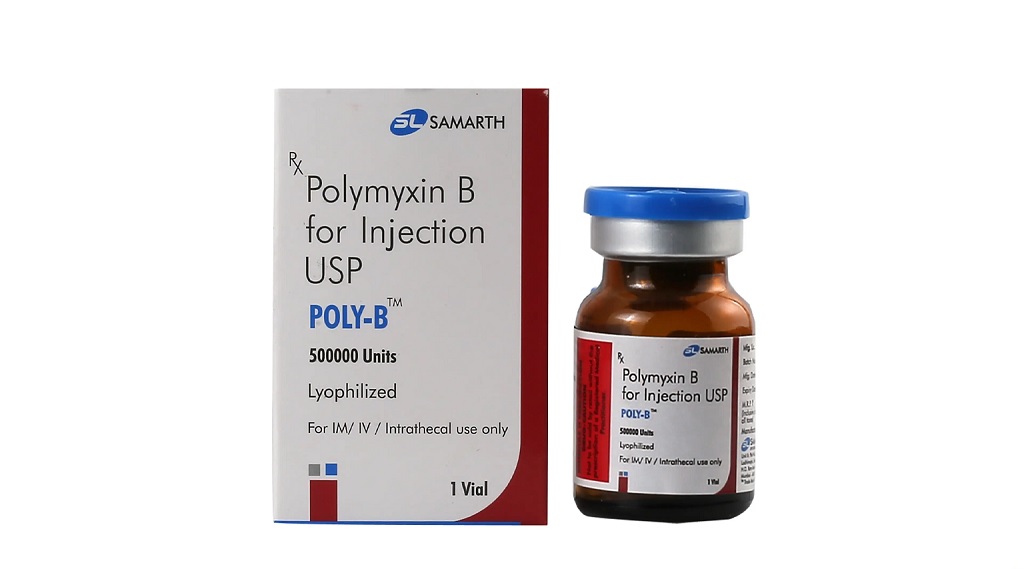
Poly B 500000IU Injection
 Item requires a valid prescription
Manufactured By Samarth Life Sciences Pvt Ltd
Composition Polymyxin B 500000IU
RS 1529.34
MRP RS 2548.90
(40% OFF)
Includes all taxes
Package SIZE
( 1 Injection in 1 vial )

100% Authentic
Products

Free
Shipping*

Products
Return Policy
Description:
Poly B 500000IU Injection (Polymyxin B 500000 IU) is a potent last-resort polymyxin antibiotic manufactured by Samarth Life Sciences Pvt Ltd, indicated for the treatment of serious, life-threatening infections caused by multidrug-resistant (MDR) gram-negative bacteria, including Pseudomonas aeruginosa, Klebsiella pneumoniae, Acinetobacter baumannii, and Enterobacter species. It is administered exclusively in a hospital/ICU setting under close clinical supervision by IV infusion, intrathecal injection, or intramuscular injection, as prescribed by an infectious disease specialist or intensivist. Available from Shabbir Medical Hall at the best price in India, this genuine prescription injection is available online with fast delivery for institutional procurement nationwide.
BENEFITS: Poly B 500000IU Injection provides bactericidal activity against otherwise untreatable MDR gram-negative pathogens that have failed carbapenem, beta-lactam, aminoglycoside, and fluoroquinolone therapies. Polymyxin B disrupts bacterial outer membrane integrity by displacing calcium and magnesium from membrane phospholipids, causing leakage of intracellular contents and rapid cell death. It is effective against septicaemia, hospital-acquired pneumonia (HAP), ventilator-associated pneumonia (VAP), bacterial meningitis (intrathecal route), complicated urinary tract infections (UTIs), and pulmonary infections caused by MDR gram-negative organisms.
USAGE OVERVIEW: Poly B 500000IU Injection is prepared and administered only by trained healthcare professionals. The lyophilised powder is reconstituted with the appropriate diluent and delivered via IV infusion, intrathecal injection, or IM injection as per the clinical protocol and infectious disease specialist's guidance. Dosage is calculated in IU/kg body weight and adjusted for renal function, infection severity, and patient response. Self-administration is strictly not permitted.
SAFETY OVERVIEW: The most significant adverse effects are nephrotoxicity (kidney damage) and neurotoxicity (including neuromuscular blockade and apnoea). Renal function, urine output, and serum drug levels must be monitored throughout therapy. This medicine is strictly for inpatient hospital use and requires a valid prescription from a registered medical practitioner.
Uses / Indications:
- Septicaemia (Bloodstream Infections): caused by susceptible MDR gram-negative bacteria (Pseudomonas aeruginosa, Klebsiella pneumoniae, Acinetobacter baumannii) resistant to all other antibiotics
- Hospital-Acquired Pneumonia (HAP) / Ventilator-Associated Pneumonia (VAP): caused by MDR gram-negative pathogens, including carbapenem-resistant Enterobacterales (CRE)
- Bacterial Meningitis (Intrathecal / Intraventricular Route): especially Pseudomonas aeruginosa and Haemophilus influenzae meningitis when systemic antibiotics are inadequate
- Complicated Urinary Tract Infections (UTIs): hospital-acquired or catheter-associated UTIs caused by MDR gram-negative organisms
- Pulmonary Infections: pneumonia and pulmonary consolidation caused by multidrug-resistant gram-negative bacteria
ADDITIONAL USES:
- Empiric last-resort therapy in ICU patients with culture-pending severe sepsis due to suspected MDR gram-negative organisms
- Combination therapy with rifampicin, meropenem, or fosfomycin in synergistic MDR protocols (as directed by infectious disease specialist)
Interactions / Warnings:
NEPHROTOXICITY WARNING (MOST CRITICAL):
- Renal function (serum creatinine, BUN, eGFR, urine output) MUST be assessed at baseline and DAILY during Polymyxin B therapy
- Dose must be adjusted or therapy discontinued if serum creatinine rises >50% above baseline or AKI occurs
- Concurrent use of other nephrotoxic drugs dramatically increases this risk — review all concurrent medications
- Maintain adequate hydration throughout therapy to protect renal function
NEUROMUSCULAR BLOCKADE WARNING:
- Polymyxin B can cause potentially fatal respiratory muscle paralysis, especially when combined with neuromuscular blocking agents, anaesthetics, or aminoglycosides
- Ensure mechanical ventilation support is immediately available in ICU settings during infusion
- Patients with pre-existing neuromuscular disease (myasthenia gravis) are at substantially higher risk — avoid if possible
HOSPITAL / ICU USE ONLY:
- Poly B 500000IU Injection is a last-resort antibiotic reserved for serious MDR infections — it must NEVER be used for mild or moderate infections or in outpatient settings
- Overuse or misuse contributes to further development of polymyxin-resistant gram-negative superbugs
- Use should be guided by microbiological culture and sensitivity results (MIC testing)
RENAL IMPAIRMENT:
- Significant dose reduction required in all degrees of renal impairment; use with extreme caution in ESRD
- Polymyxin B is NOT significantly cleared by haemodialysis — specialist dosing guidance is essential
HEPATIC IMPAIRMENT:
- No specific dose adjustment for hepatic impairment, but monitor closely
ELDERLY USE (>=65 years):
- Elderly patients are at higher risk of nephrotoxicity due to reduced baseline renal reserve — more frequent monitoring required; dose adjustment based on eGFR
Pregnancy interaction:
- Polymyxin B is classified as Pregnancy Category C — animal studies have shown adverse foetal effects; adequate human data are lacking
- Use only if the potential benefit to the mother outweighs the potential risk to the foetus — strictly under specialist guidance
- Polymyxin B crosses the placenta; foetal nephrotoxicity is a theoretical concern
- This medication is reserved for life-threatening infections where no safer alternative is available
BREASTFEEDING:
- It is not known whether Polymyxin B is excreted in human breast milk
- Given the potential for serious adverse reactions in nursing infants (particularly nephrotoxicity), breastfeeding should be discontinued during therapy or the drug should not be used — discuss with treating specialist
PAEDIATRIC USE:
- Poly B injection may be used in paediatric patients (including neonates) under strict specialist supervision with weight-based dosing
- Intrathecal use in children under 2 years: 20,000 IU once daily; children >2 years: 25,000–50,000 IU once daily per specialist protocol
- Continuous renal function monitoring is mandatory in all paediatric patients
CONTRACEPTION WARNING:
- No specific contraception warning documented for Polymyxin B — this is a hospital-only injectable antibiotic used for short-course, life-threatening infection management
- Consult treating specialist for any reproductive health considerations during therapy
Expert advice:
1. THIS IS A LAST-RESORT ANTIBIOTIC — STRICT INDICATION REQUIRED: Poly B 500000IU Injection (Polymyxin B) is reserved exclusively for life-threatening infections caused by multidrug-resistant gram-negative bacteria that have failed all other antibiotic options (carbapenems, beta-lactams, aminoglycosides, fluoroquinolones). It must only be prescribed by an infectious disease specialist or intensivist after culture-confirmed MDR sensitivity. Misuse accelerates the emergence of polymyxin-resistant superbugs — a critical global health threat.
2. MONITOR RENAL FUNCTION DAILY WITHOUT EXCEPTION: Nephrotoxicity is the most common, dose-limiting, and potentially irreversible adverse effect of Polymyxin B. Serum creatinine, BUN, urine output, and electrolytes MUST be checked every day during therapy. Ensure the patient is adequately hydrated. If creatinine rises >50% above baseline, contact the prescribing physician immediately for dose adjustment or discontinuation.
3. ALWAYS VERIFY CONCURRENT MEDICATIONS FOR NEPHROTOXICITY RISK: Never administer Polymyxin B concurrently with aminoglycosides (gentamicin, amikacin, tobramycin), vancomycin, amphotericin B, loop diuretics, or IV contrast agents without explicit specialist justification. The combined nephrotoxic burden in ICU patients is frequently underestimated — perform a full medication reconciliation before each new drug is added.
4. HAVE RESPIRATORY SUPPORT IMMEDIATELY AVAILABLE DURING INFUSION: Polymyxin B can cause acute neuromuscular blockade and respiratory paralysis — a rare but rapidly fatal complication. This risk is highest when Polymyxin B is combined with neuromuscular blocking agents (rocuronium, vecuronium) or anaesthetics. Infusions should only be administered in a fully equipped ICU or high-dependency unit with ventilatory support immediately available.
5. COMPLETE THE FULL PRESCRIBED COURSE: Even if the patient's clinical condition improves rapidly, the full course of Polymyxin B must be completed as directed by the infectious disease specialist. Premature discontinuation risks inadequate bacterial eradication, relapse, and the emergence of even more resistant organisms.
MONITORING ADVICE:
- Serum creatinine and BUN: DAILY throughout therapy
- Urine output: Continuous monitoring (hourly in ICU patients) — target >0.5 mL/kg/hour
- Serum electrolytes (sodium, potassium, magnesium): Daily — correct deficiencies promptly
- Neurological assessment: Daily — check for new paraesthesia, dizziness, facial flushing, muscle weakness
- Microbiology cultures (blood, sputum, urine): Repeat at 48–72 hours of therapy to assess response
- Polymyxin B serum drug monitoring (TDM): Available at specialist centres — target AUC/MIC ratio guides optimal dosing
- Hepatic function: Baseline and as clinically indicated
- Signs of superinfection: Monitor for new fever, diarrhoea (C. difficile), or oral/vaginal candidiasis during and after therapy
SAFETY TIPS:
- Always reconstitute the vial using the correct diluent (5% Dextrose or 0.9% NaCl for IV; sterile saline for intrathecal) — never use bacteriostatic water containing preservatives for intrathecal use
- Infuse IV dose slowly over 60–90 minutes to reduce infusion-related reactions
- Do NOT mix Polymyxin B in the same IV line or bag as other antibiotics — potential physical incompatibility
- Store reconstituted solution at 2–8°C; discard any unused portion after 72 hours
- Document all doses, infusion times, and observed side effects in the patient's medication administration record (MAR)
- Isolate MDR patients (contact precautions) to prevent horizontal transmission within the clinical environment
Side Effects:
- Nephrotoxicity (Kidney Damage): rising serum creatinine, reduced urine output, electrolyte imbalances (hyponatraemia, hypokalaemia) — the most common and dose-limiting adverse effect
- Neurotoxicity: dizziness, peripheral paraesthesia (tingling/numbness), ataxia, facial flushing, perioral numbness
- Injection site reactions: pain, phlebitis at IV infusion site
- Fever, chills, urticaria (hypersensitivity-type reactions)
- Nausea, vomiting
SERIOUS SIDE EFFECTS (contact your treating doctor immediately):
- Severe Nephrotoxicity / Acute Kidney Injury (AKI): marked rise in serum creatinine, oliguria, anuria — may require dialysis; monitor daily during therapy
- Neuromuscular Blockade / Respiratory Paralysis (Apnoea): rare but potentially fatal — risk increased by concurrent use of neuromuscular blocking agents, anaesthetics, aminoglycosides, or in patients with myasthenia gravis
- Severe Hypersensitivity / Anaphylaxis: bronchospasm, facial oedema, circulatory collapse — treat immediately with adrenaline and supportive care
- Drug Fever: high-grade fever with rigors occurring hours after infusion
- Superinfection: prolonged use may allow overgrowth of non-susceptible organisms (Candida, Clostridium difficile)
EMERGENCY SIGNS — SEEK IMMEDIATE MEDICAL HELP:
- Sudden difficulty breathing, respiratory distress, or muscle weakness after infusion (neuromuscular blockade)
- Significant drop in urine output or anuria (AKI)
- Severe allergic reaction: throat swelling, collapse, hives
How to use:
- CRITICAL: Poly B 500000IU Injection is ONLY prepared and administered by trained hospital healthcare professionals. NEVER self-administer.
IV INFUSION (Systemic Infections — Septicaemia, HAP/VAP, UTI):
- Adults with normal renal function: 15,000–25,000 IU/kg/day IV, divided into 2 doses every 12 hours
- Maximum: 25,000 IU/kg/day (do not exceed)
- Infusion duration: each dose infused over 60–90 minutes
- Reconstitute vial with 5% Dextrose or 0.9% Sodium Chloride for injection
INTRATHECAL (Bacterial Meningitis — Intrathecal / Intraventricular Route):
- Adults: 50,000 IU intrathecally once daily for 3–4 days, then every other day for 2 weeks
- Children >2 years: 25,000–50,000 IU intrathecally once daily (per specialist protocol)
RENAL DOSE ADJUSTMENT (MANDATORY):
- Polymyxin B is primarily renally eliminated; dose MUST be reduced in patients with renal impairment (eGFR <50 mL/min)
- Consult infectious disease specialist and pharmacist for weight-based, renally-adjusted dosing
ROUTE OF ADMINISTRATION:
- IV infusion, intrathecal injection, or IM injection — as per clinical protocol
- Administered exclusively by trained healthcare professionals in hospital/ICU setting
MISSED DOSE:
- Administered by hospital staff under clinical protocol — missed doses are managed by the treating healthcare team
- Duration: Typically 7–14 days for systemic infections, guided by clinical response and culture sensitivity
- Course should be completed as directed — do not stop early even if symptoms improve
STORAGE (Vial, Pre-Reconstitution):
- Store below 25°C in a dry place, protected from light
- Keep in original sealed vial packaging
- After reconstitution: use immediately or store at 2–8°C for up to 72 hours
- Keep out of reach of children
- Do not use after expiry date printed on label
How it works:
- Polymyxin B carries a strong positive charge (cationic) that attracts it to the negatively charged lipopolysaccharide (LPS) layer on the outer membrane of gram-negative bacteria
- It competitively displaces calcium (Ca²⁺) and magnesium (Mg²⁺) ions from the phosphate groups of membrane phospholipids and LPS
- This displacement destabilises the outer membrane, creating gaps and increasing permeability
- The inner (cytoplasmic) membrane is subsequently disrupted, causing uncontrolled leakage of intracellular contents (ions, proteins, nucleic acids)
- The result is rapid, irreversible bactericidal cell death — not just growth inhibition
SPECTRUM OF ACTIVITY:
- ACTIVE AGAINST: Pseudomonas aeruginosa, Klebsiella pneumoniae (including KPC-producing strains), Acinetobacter baumannii, Enterobacter species, E. coli, Haemophilus influenzae, Salmonella, Shigella
- NOT ACTIVE AGAINST: Gram-positive bacteria (Staphylococcus, Streptococcus), anaerobes, Proteus mirabilis, Providencia, Serratia, Burkholderia cepacia (intrinsic resistance)
KEY PHARMACOLOGICAL PROPERTIES:
- Concentration-dependent bactericidal killing (higher peak concentrations = better kill)
- Minimal post-antibiotic effect — plasma levels must be maintained
- Does not penetrate the blood-brain barrier well — intrathecal/intraventricular route required for CNS infections
- Predominantly renally eliminated — dose adjustment mandatory in renal impairment
Faq for medicine:
Poly-B 500000 IU contains Polymyxin B, a last-resort antibiotic for serious infections caused by multidrug-resistant Gram-negative bacteria including carbapenem-resistant Klebsiella pneumoniae, Pseudomonas aeruginosa, and Acinetobacter baumannii. Poly-B is used when all other antibiotic options have been exhausted, particularly in ICU settings with XDR or PDR organism infections.
2.What serious side effects does Poly-B 500000 IU Polymyxin B cause?
The major adverse effects of Poly-B 500000 IU include nephrotoxicity (acute kidney injury in 20–50% of patients) and neurotoxicity including paresthesias, dizziness, peripheral neuropathy, and rarely neuromuscular blockade. Nephrotoxicity is dose-dependent and reversible upon drug discontinuation. Patients receiving Poly-B require daily renal function monitoring and avoidance of concurrent nephrotoxic agents.
3.How is Poly-B 500000 IU dosed and administered in clinical settings?
Poly-B 500000 IU is dosed at 15,000–25,000 units/kg/day divided every 12 hours by intravenous infusion over 60 minutes. Loading doses are not routinely used. In renal impairment, dose adjustment is complex and must be overseen by an infectious disease specialist or critical care physician. All Poly-B dosing decisions require specialist involvement given the drug's narrow therapeutic window.
4.Is Poly-B 500000 IU Polymyxin B effective against MRSA infections?
Poly-B 500000 IU is not effective against MRSA or other Gram-positive bacteria. Polymyxins act on the lipopolysaccharide of Gram-negative outer cell membranes, which are absent in Gram-positive organisms like Staphylococcus aureus. Poly-B is exclusively for MDR Gram-negative infections. For MRSA, agents such as Vancomycin, Linezolid, Daptomycin, or Teicoplanin are the appropriate choices.
5.Can Poly-B 500000 IU be used safely in patients with pre-existing renal impairment?
Using Poly-B 500000 IU in patients with existing renal impairment is high risk due to cumulative nephrotoxicity. If no alternatives exist, Poly-B may be used with significantly reduced doses, extended intervals, and close renal monitoring. Concurrent nephrotoxins including aminoglycosides and amphotericin B must be avoided. The risk-benefit decision should formally involve nephrology and infectious disease specialists.
6.What is the role of combination therapy with Poly-B 500000 IU for XDR bacteria?
Poly-B 500000 IU is often combined with Rifampicin, Fosfomycin, Tigecycline, or Meropenem to improve outcomes against XDR and PDR Gram-negative organisms. Combination therapy may prevent resistance emergence, enable lower Poly-B doses to reduce toxicity, and provide synergistic bactericidal effects. Susceptibility testing is essential to guide the optimal combination regimen selection for each patient.
Medicine interaction:
- Nephrotoxic drugs (aminoglycosides — gentamicin, amikacin; vancomycin; amphotericin B; NSAIDs; IV contrast agents; loop diuretics): additive nephrotoxicity risk — AVOID concurrent use unless no alternative; monitor renal function intensively
- Neuromuscular blocking agents (vecuronium, atracurium, suxamethonium) and anaesthetics: Polymyxin B potentiates neuromuscular blockade — risk of respiratory paralysis and apnoea — use with EXTREME CAUTION; ensure respiratory support is immediately available
- Aminoglycosides (gentamicin, tobramycin, amikacin): combined nephrotoxicity and neurotoxicity — AVOID concurrent systemic use unless combination is clinically essential under specialist guidance
- Colistin (Polymyxin E): do NOT use concomitantly — overlapping toxicity profiles with no additive benefit
- Muscle relaxants (non-depolarising): enhanced neuromuscular blockade — monitor respiratory function closely
- Sodium cephalothin (cefalotin): increased nephrotoxicity reported — AVOID
VACCINE INTERACTIONS:
- No specific vaccine interactions documented — consult treating infectious disease specialist before any vaccinations during Polymyxin B therapy
SUPPLEMENT INTERACTIONS:
- Not applicable for general supplementation — this is an ICU-only injectable antibiotic
- Always inform all treating physicians of all medicines being administered concurrently