


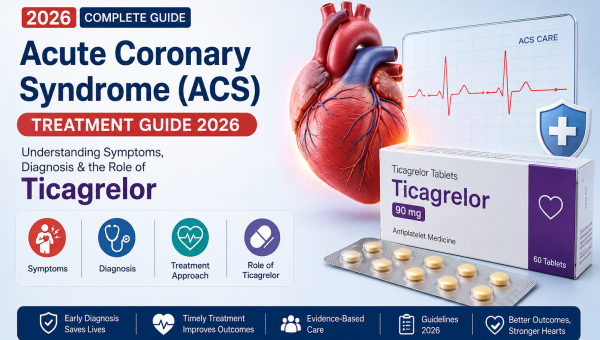




Acute Coronary Syndrome (ACS) Treatment Guide 2026
Jun 25, 2026
Introduction
Acute Coronary Syndrome (ACS) is a serious cardiovascular emergency that occurs when blood flow to the heart muscle is suddenly reduced or blocked. The condition includes unstable angina and different types of heart attacks, which can quickly become life-threatening if not treated promptly. As cardiovascular disease continues to be one of the leading causes of death in India, awareness of ACS symptoms and treatment options has become increasingly important.
Early diagnosis and immediate medical intervention can significantly improve survival rates and reduce long-term heart damage. Modern advances in Acute Coronary Syndrome Treatment now include emergency procedures, lifestyle interventions, and evidence-based medications that help restore blood flow and prevent future cardiovascular events.
Among these therapies, Ticagrelor has emerged as an important antiplatelet medicine used to reduce blood clot formation and lower the risk of recurrent heart attacks and strokes. This Acute Coronary Syndrome Treatment Guide explains ACS symptoms, diagnosis, treatment options, and the growing role of Ticagrelor for ACS management in 2026.
What is Acute Coronary Syndrome (ACS)?
Definition of ACS
Acute Coronary Syndrome (ACS) is a group of conditions caused by a sudden decrease in blood flow to the heart muscle. This reduced blood supply usually occurs when a coronary artery becomes partially or completely blocked by a blood clot.
ACS includes:
-Unstable Angina
-NSTEMI (Non-ST Elevation Myocardial Infarction)
-STEMI (ST-Elevation Myocardial Infarction)
Without immediate treatment, the heart muscle may not receive enough oxygen, leading to permanent damage.
Why ACS is Considered a Medical Emergency
ACS requires urgent medical attention because:
-Blood flow to the heart is reduced.
-Heart muscle cells can begin to die within minutes.
-Permanent heart damage may occur.
-Risk of sudden cardiac death increases significantly.
-Delayed treatment can worsen long-term outcomes.
Types of Acute Coronary Syndrome
Unstable Angina
Unstable angina occurs when blood flow to the heart is reduced but does not cause permanent heart muscle damage. Symptoms may occur unexpectedly and often signal an increased risk of heart attack.
NSTEMI (Non-ST Elevation Myocardial Infarction)
NSTEMI is a heart attack that causes partial damage to the heart muscle due to reduced blood flow.
STEMI (ST-Elevation Myocardial Infarction)
STEMI is the most severe form of heart attack and occurs when a coronary artery becomes completely blocked, resulting in extensive heart muscle damage.
Comparison Table
| Type | Severity | Heart Damage |
| Unstable Angina | Moderate | No Permanent Damage |
| NSTEMI | High | Partial Damage |
| STEMI | Very High | Extensive Damage |
Causes and Risk Factors of Acute Coronary Syndrome
Common Causes
The primary causes of ACS include:
-Coronary artery blockage
-Rupture of cholesterol plaque
-Blood clot formation inside coronary arteries
-Progressive narrowing of blood vessels
Major Risk Factors
Several factors increase the likelihood of developing ACS:
-High blood pressure
-Diabetes
-Smoking
-Obesity
-High cholesterol
-Family history of heart disease
-Sedentary lifestyle
-Chronic stress
-Increasing age
Managing these risk factors can significantly reduce cardiovascular risk.
Symptoms of Acute Coronary Syndrome
Common Warning Signs
Symptoms may appear suddenly and should never be ignored.
Common symptoms include:
-Chest pain or pressure
-Shortness of breath
-Pain in the jaw, neck, shoulder, or arm
-Excessive sweating
-Dizziness
-Nausea
-Unexplained fatigue
Symptoms in Women
Women may experience symptoms that differ from classic chest pain, including:
-Extreme fatigue
-Nausea
-Back pain
-Shortness of breath
-Indigestion-like discomfort
Symptoms in Older Adults
Older adults may experience:
-Confusion
-Weakness
-Breathlessness
-Dizziness
-Reduced exercise tolerance
How is Acute Coronary Syndrome Diagnosed?
Medical History and Physical Examination
Doctors evaluate symptoms, risk factors, and medical history to determine the likelihood of ACS.
ECG (Electrocardiogram)
An ECG measures the heart's electrical activity and helps identify heart attacks quickly.
Blood Tests
Cardiac biomarkers such as troponin help detect heart muscle injury.
Coronary Angiography
Angiography allows doctors to visualize blocked coronary arteries and determine treatment options.
Echocardiogram
This imaging test evaluates heart structure and pumping function.
Acute Coronary Syndrome Treatment Options in 2026
Emergency Medical Care
Immediate treatment focuses on restoring blood flow and preventing further heart damage.
Lifestyle Changes
Long-term recovery often includes:
-Heart-healthy diet
-Regular physical activity
-Smoking cessation
-Weight management
-Stress reduction
Surgical Procedures
Angioplasty
A catheter-based procedure used to open blocked arteries.
Stent Placement
A small mesh tube is inserted to keep arteries open after angioplasty.
Coronary Artery Bypass Surgery (CABG)
CABG creates alternate pathways for blood flow around blocked arteries.
Medicines Used in ACS Treatment
Several medicines play a crucial role in Heart Attack Treatment and long-term prevention.
-Aspirin
-Ticagrelor
-Clopidogrel
-Statins
-Beta-blockers
-ACE inhibitors
These medications help reduce clot formation, lower cholesterol, control blood pressure, and improve survival outcomes.
What is Ticagrelor and Why is it Important in ACS Treatment?
Understanding Ticagrelor
Ticagrelor is an antiplatelet medication widely used in modern ACS Treatment. It helps prevent blood platelets from sticking together and forming harmful clots.
Its primary goals include:
-Preventing blood clot formation
-Improving blood flow
-Reducing future cardiovascular events
How Ticagrelor Works
When blood vessels are damaged, platelets become activated and clump together to form clots.
Ticagrelor blocks specific platelet receptors, reducing platelet activation and lowering the risk of clot formation inside coronary arteries.
This mechanism helps protect patients from additional heart attacks and strokes.
Benefits of Ticagrelor in ACS Patients
Key benefits include:
Reduces risk of recurrent heart attack
-Helps prevent stroke
-Improves cardiovascular outcomes
-Supports long-term secondary prevention
-Provides strong platelet inhibition
Ticagrelor vs Clopidogrel: Which is Better for ACS?
| Feature | Ticagrelor | Clopidogrel |
| Onset of Action | Faster | Slower |
| Platelet Inhibition | Stronger | Moderate |
| Clinical Outcomes | Improved | Standard |
| Prescription Use | Common in ACS | Common Alternative |
| Feature | Ticagrelor | Clopidogrel |
|---|---|---|
| Onset of Action | Faster | Slower |
| Platelet Inhibition | Stronger | Moderate |
| Clinical Outcomes | Improved | Standard |
| Prescription Use | Common in ACS | Common Alternative |
While both medicines are effective, cardiologists often prefer Ticagrelor in many ACS patients because of its faster onset and stronger platelet inhibition.
Role of Dual Antiplatelet Therapy (DAPT) After a Heart Attack
What is DAPT?
Dual Antiplatelet Therapy (DAPT) involves using two antiplatelet medicines together to reduce clot formation.
Why Doctors Prescribe Aspirin + Ticagrelor
The combination helps:
-Reduce recurrent heart attacks
-Prevent stent thrombosis
-Lower stroke risk
-Improve cardiovascular protection
Recommended Treatment Duration
Many patients continue DAPT for approximately 12 months after a heart attack, although duration varies depending on individual risk factors and cardiologist recommendations.
Precautions While Taking Ticagrelor
Common Side Effects
Some patients may experience:
-Bleeding
-Shortness of breath
-Easy bruising
Important Safety Tips
-Take medicine exactly as prescribed.
-Inform doctors before surgery.
-Avoid stopping treatment without medical advice.
-Report unusual bleeding immediately.
When to Contact Your Doctor
Seek medical attention if you experience:
-Severe bleeding
-Black stools
-Difficulty breathing
-Allergic reactions
-Chest pain recurrence
Can Acute Coronary Syndrome Be Prevented?
Heart-Healthy Lifestyle Changes
Many cardiovascular events can be prevented through healthy habits.
-Exercise regularly
-Quit smoking
-Maintain healthy weight
-Control blood pressure
-Manage diabetes
-Reduce cholesterol levels
-Follow a heart-healthy diet
Importance of Regular Heart Checkups
Routine medical evaluations help identify cardiovascular risk factors early and improve prevention strategies.
Why Choose Shabbir Medical Hall for Cardiac Medicines?
Patients trust Shabbir Medical Hall for cardiovascular medicines because of:
-Trusted Pharmacy Since 1920
-Genuine Prescription Medicines
-Cardiac Medication Availability
-Competitive Pricing
-Prescription Verification
-Nationwide Delivery
-Customer Support Assistance
Need Ticagrelor or Other Cardiac Medicines?
Upload your prescription and connect with Shabbir Medical Hall for genuine cardiovascular medicines and professional support.
Frequently Asked Questions
1. What is Acute Coronary Syndrome (ACS)?
Acute Coronary Syndrome (ACS) is a group of serious heart conditions caused by reduced blood flow to the heart muscle. It includes unstable angina, NSTEMI, and STEMI heart attacks. ACS is considered a medical emergency because delayed treatment can result in permanent heart damage, serious complications, or death. Immediate medical evaluation is essential whenever symptoms suggest a possible heart attack.
2. What are the first symptoms of ACS?
The earliest symptoms often include chest pain, pressure, tightness, or discomfort that may spread to the arm, shoulder, neck, jaw, or back. Patients may also experience shortness of breath, sweating, nausea, dizziness, or unusual fatigue. Symptoms can vary between individuals, particularly in women and older adults, making prompt medical assessment important.
3. What is Ticagrelor used for in ACS treatment?
Ticagrelor is an antiplatelet medicine used to reduce the risk of blood clot formation in patients with Acute Coronary Syndrome. It helps prevent recurrent heart attacks, strokes, and cardiovascular complications by reducing platelet activity. Doctors commonly prescribe it alongside aspirin as part of dual antiplatelet therapy following a heart attack or coronary intervention procedure.
4. Is Ticagrelor better than Clopidogrel?
Ticagrelor generally provides faster and stronger platelet inhibition compared with Clopidogrel, which may improve cardiovascular outcomes in many ACS patients. However, the most appropriate medication depends on factors such as bleeding risk, medical history, drug interactions, and physician recommendations. A cardiologist will determine the best treatment approach for each individual patient.
5. How long should a patient take Ticagrelor after a heart attack?
The duration of Ticagrelor therapy varies based on the patient's condition, treatment history, and risk factors. Many patients take Ticagrelor with aspirin for approximately 12 months after a heart attack as part of dual antiplatelet therapy. However, some individuals may require shorter or longer treatment durations based on their cardiologist's evaluation and clinical response.
6. Can Acute Coronary Syndrome be prevented?
While not every case can be prevented, many ACS events are linked to modifiable risk factors. Maintaining a healthy weight, controlling blood pressure and cholesterol, managing diabetes, avoiding smoking, exercising regularly, and attending routine health checkups can significantly reduce cardiovascular risk. Early identification and management of heart disease risk factors remain essential for prevention.
Conclusion
Acute Coronary Syndrome is a life-threatening cardiovascular emergency that requires immediate diagnosis and treatment. Early recognition of symptoms and rapid medical intervention can significantly improve survival rates while reducing permanent heart damage. Modern Acute Coronary Syndrome Treatment strategies include emergency procedures, lifestyle modifications, and evidence-based medications such as Ticagrelor for ACS, which helps reduce recurrent cardiovascular events. Long-term success depends on medication adherence, risk factor control, regular follow-up care, and maintaining heart-healthy habits. Patients who work closely with their healthcare providers can improve outcomes and reduce the risk of future heart attacks and complications.
Recent Post
Taffic 90mg vs Ticagrelor Leeford 90mg: Same Molecule, Different Brands Compared
Ticagrelor vs Clopidogrel: Which Antiplatelet Medicine Is Better After Acute Coronary Syndrome (ACS)
Rivajon 20mg vs Clexane 40mg: Rivaroxaban vs Enoxaparin for DVT
DVT, Pulmonary Embolism & AFib: A Complete Guide to Rivaroxaban Therapy
Empaworth 25mg vs Farxiga 10mg
Empagliflozin for Heart Failure with Reduced Ejection Fraction (HFrEF)
Empaworth 10mg vs Empaworth 25mg
Type 2 Diabetes Treatment in 2026

Humog 150 HP vs Gonal-F 150 IU

Female Infertility Treatment