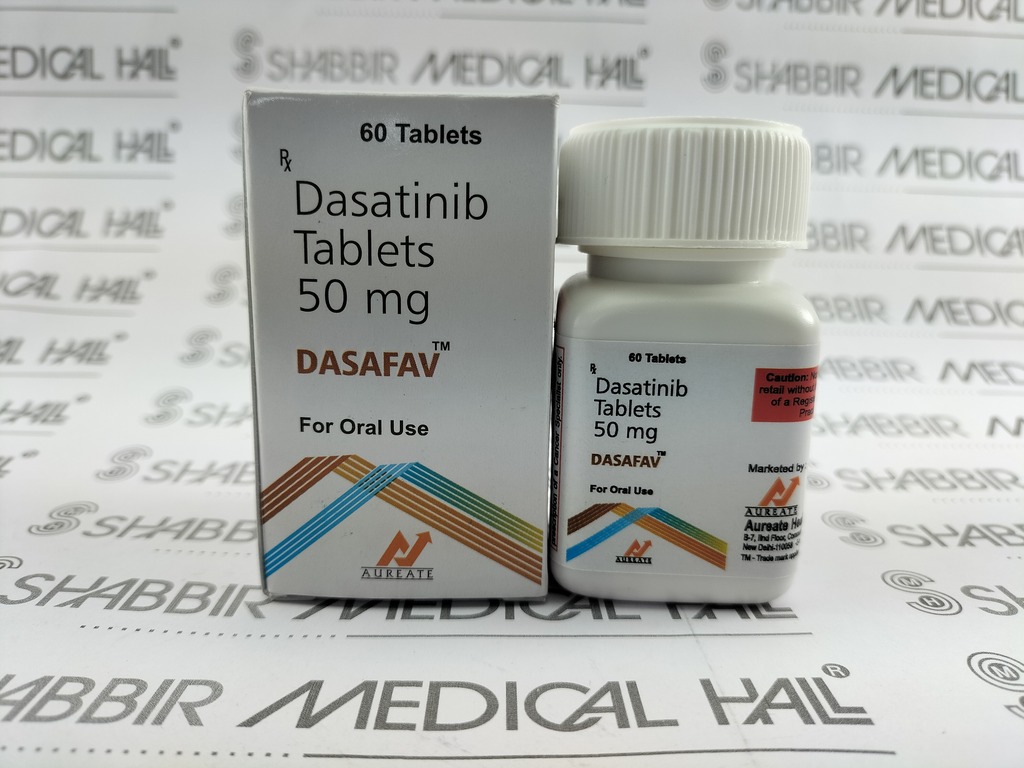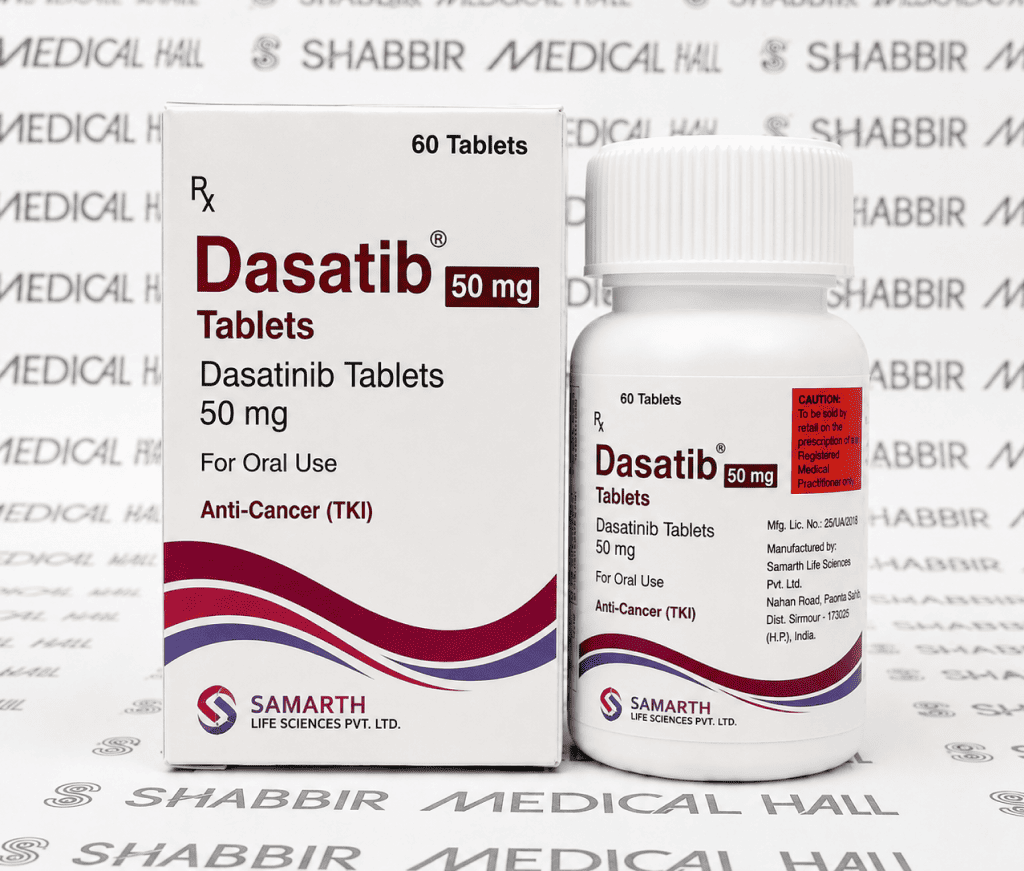


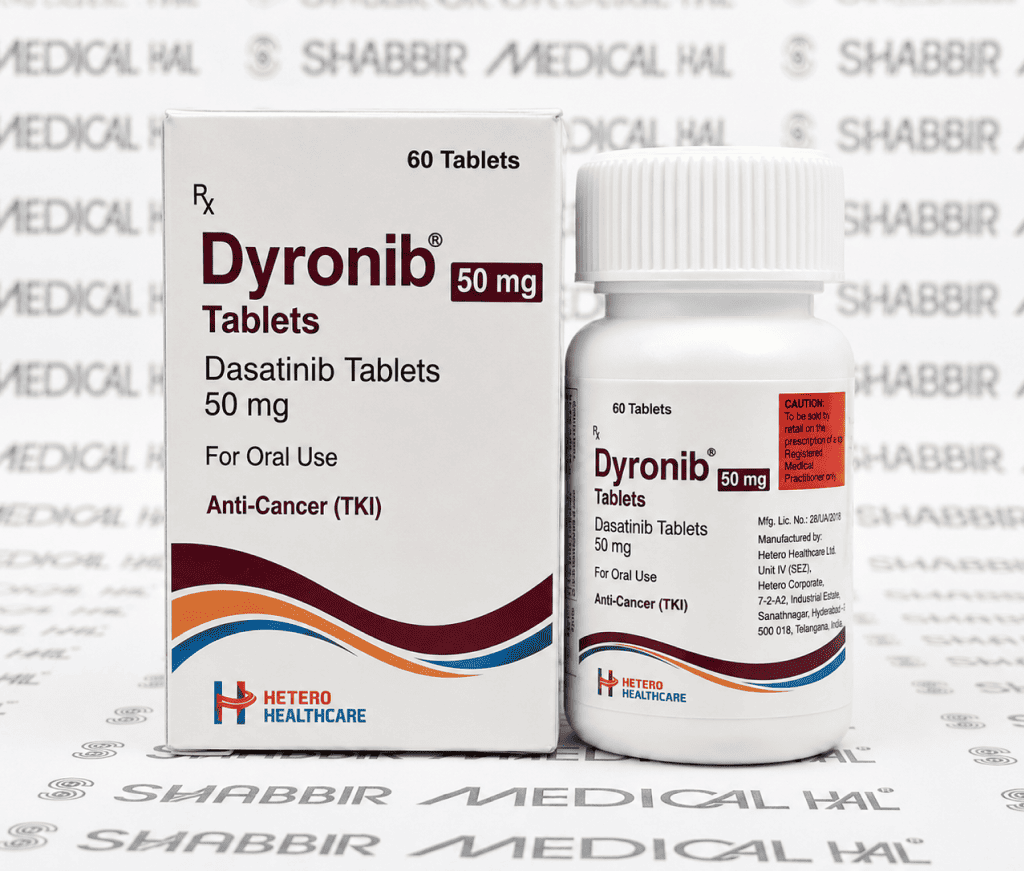
Dyronib 50mg
 Item requires a valid prescription
Manufactured By Hetero Healthcare Limited
Composition Dasatinib 50mg
RS 8530.90
MRP RS 12187.00
(30% OFF)
Includes all taxes
Package SIZE
( Bottle of 60 Tabs )

100% Authentic
Products

Free
Shipping*

Products
Return Policy
Description:
Dyronib 50mg Tablet (Dasatinib 50mg) is a targeted anti-cancer medicine belonging to the class of tyrosine kinase inhibitors (TKIs), manufactured by Hetero Healthcare Limited and used in the treatment of Philadelphia chromosome-positive (Ph+) Chronic Myeloid Leukaemia (CML) and Acute Lymphoblastic Leukaemia (ALL) in adults and paediatric patients aged one year and above. Available from Shabbir Medical Hall at the best price in India, this genuine prescription medicine is now easy to buy online with fast home delivery.
BENEFITS: Dyronib 50mg works at the molecular level by blocking the BCR-ABL protein — a faulty enzyme that drives uncontrolled blood cancer cell growth. By precisely inhibiting this abnormal signal, Dyronib helps reduce cancer cell proliferation, supports the recovery of healthy blood cell counts, and may lead to long-term haematological and cytogenetic remission. Its high potency and convenient once-daily oral tablet form make it one of the most trusted second-generation TKIs in oncology today.
USAGE OVERVIEW: Take Dyronib 50mg exactly as prescribed by your oncologist. The standard adult dose for chronic-phase CML is typically 100mg once daily (two tablets of 50mg), while the accelerated or blast-phase dosing may differ. Tablets should be swallowed whole with water and can be taken with or without food. Regular blood count monitoring and follow-up with your haematologist are essential throughout treatment.
SAFETY OVERVIEW: Like all chemotherapy agents, Dyronib 50mg may cause side effects including nausea, fatigue, fluid retention, or low blood counts. Serious effects such as pleural effusion (fluid around the lungs) or unusual bleeding require immediate medical attention. Inform your doctor about all current medications, liver or kidney conditions, and whether you are pregnant or breastfeeding before starting therapy.
Uses / Indications:
• Philadelphia chromosome-positive (Ph+) Chronic Myeloid Leukaemia (CML) — chronic phase
• Ph+ CML — accelerated phase or myeloid/lymphoid blast phase
• Philadelphia chromosome-positive Acute Lymphoblastic Leukaemia (Ph+ ALL) with resistance or intolerance to prior therapy
• First-line treatment of newly diagnosed Ph+ CML in chronic phase (adults)
• Paediatric Ph+ CML (chronic phase) and Ph+ ALL (age ≥1 year)
COMMON / OFF-LABEL USES:
• Second-line therapy after Imatinib (Gleevec) resistance or intolerance
• Management of CML with BCR-ABL mutations in combination protocols
• Supportive treatment in clinical trial settings for other BCR-ABL driven malignancies
Interactions / Warnings:
LIVER DISEASE:
• Dasatinib is primarily metabolised by the liver (CYP3A4). Patients with moderate to severe hepatic impairment may require dose adjustment.
• Regular liver function tests (LFTs) are recommended throughout treatment.
KIDNEY DISEASE:
• Renal excretion is minimal (<4%). No dose adjustment is generally required for renal impairment, but monitor closely.
HEART CONDITIONS:
• Dyronib can cause QT prolongation and fluid accumulation (pleural/pericardial effusion). Use with caution in patients with a history of cardiac disease.
• Baseline ECG recommended before starting therapy.
ALLERGY WARNING:
• Do not use Dyronib 50mg if you are allergic to Dasatinib or any excipients in the formulation.
ELDERLY USE (≥65 years):
• Elderly patients may be more sensitive to side effects, particularly fluid retention and myelosuppression. Closer monitoring advised.
DRIVING & MACHINERY:
• Dasatinib may cause dizziness, fatigue, or visual disturbances. Patients should assess their individual response before driving.
Pregnancy interaction:
• Dasatinib is classified as Pregnancy Category D — there is evidence of fetal risk.
• It can cause fetal harm when administered to a pregnant woman (teratogenic and embryotoxic in animal studies).
• Women of childbearing potential must use effective contraception during treatment and for at least 30 days after the final dose.
• Inform your doctor immediately if pregnancy is suspected or confirmed during treatment.
BREASTFEEDING:
• Dasatinib and its active metabolite are excreted in human breast milk.
• Breastfeeding is NOT recommended during treatment and for at least 2 weeks after the last dose.
• Discuss alternative feeding options with your doctor.
DOCTOR CONSULTATION WARNING:
• Never start, stop, or change Dyronib dosing without consulting your oncologist. This is a potent anti-cancer agent requiring medical supervision.
Expert advice:
1. ADHERENCE IS CRITICAL – Skipping doses or stopping Dyronib without medical guidance can lead to disease relapse or drug resistance. Set daily reminders and keep a medication diary.
2. CONSISTENT TIMING – Take your tablet at the same time every day to maintain stable plasma drug levels for optimal therapeutic effect.
3. AVOID GRAPEFRUIT – Grapefruit and related citrus fruits inhibit the CYP3A4 enzyme responsible for metabolising Dasatinib, potentially causing dangerously elevated drug levels.
4. ANTACID TIMING – If you require antacids for stomach discomfort, take them at least 2 hours before or 2 hours after Dyronib. Avoid PPIs and H2 blockers if possible — discuss alternatives with your doctor.
5. REPORT ALL MEDICINES – Always inform your oncologist and pharmacist about every medicine, supplement, or herbal product you are taking before starting Dyronib.
Monitoring Advice • Blood counts (CBC with differential): Recommended at baseline, then weekly for the first 2 months, and monthly thereafter.
• Liver function tests (LFTs): Periodic monitoring, especially in the first 6 months.
• ECG monitoring: Before initiation and periodically during treatment for QT interval assessment.
• Fluid monitoring: Report any new breathlessness, cough, leg swelling, or rapid weight gain immediately — these may indicate pleural or pericardial effusion.
Compliance Tips • Store all tablets in the original child-proof bottle in a cool, dry place.
• Never share your prescription medicine with others.
• If you feel well and your blood counts normalise, do not discontinue treatment without oncologist approval — remission requires continued therapy.
• Keep all scheduled follow-up appointments. Regular molecular response testing (BCR-ABL PCR) is key to assessing treatment success.
Safety Tips • Wash hands after handling tablets (cytotoxic precautions where applicable).
• Dispose of unused tablets through a pharmacy take-back programme — never flush or bin them.
• If a caregiver is administering the medicine, they should avoid direct contact with broken tablets.
Side Effects:
• Nausea, vomiting, diarrhoea, or abdominal pain
• Headache and fatigue/weakness
• Skin rash or itching
• Musculoskeletal pain (bone, joint, or muscle aches)
• Peripheral oedema (swelling of hands, feet, ankles)
• Haematological effects: anaemia, thrombocytopenia (low platelets), neutropenia (low white cells)
• Fever, infections
SERIOUS SIDE EFFECTS (contact your doctor immediately):
• Pleural effusion – fluid build-up around the lungs (shortness of breath, cough, chest tightness)
• Pericardial effusion – fluid around the heart
• Pulmonary arterial hypertension (PAH) — rare but serious, especially with long-term use
• Severe bleeding episodes (unusual bruising, blood in urine or stools)
• Severe infection signs (high fever, chills, rigors)
• QT prolongation (heart rhythm changes) — detected on ECG
EMERGENCY WARNING SIGNS — SEEK IMMEDIATE MEDICAL HELP:
• Sudden difficulty breathing or chest pain
• Confusion or extreme fatigue
• Swelling of the face, lips, or tongue (possible allergic reaction)
• Signs of liver damage: yellowing of skin/eyes (jaundice), dark urine, persistent nausea
How to use:
• Ph+ CML (Chronic Phase, Adults): 100mg once daily (two 50mg tablets)
• Ph+ CML (Accelerated / Blast Phase, Adults): 140mg once daily
• Ph+ ALL (Adults): 140mg once daily
• Paediatric CML/ALL: Dose calculated by body weight (mg/m²) — follow oncologist instructions
TIMING:
• Take at the same time each day for consistent blood levels.
• Swallow tablets whole — do not crush, chew, split, or break them.
FOOD INTERACTIONS:
• Can be taken with or without food.
• Avoid grapefruit, grapefruit juice, and Seville oranges — they inhibit CYP3A4 and may raise Dasatinib blood levels dangerously.
MISSED DOSE:
• If you miss a dose, skip it and take your next dose at the usual time. Never double up.
STORAGE:
• Store at room temperature (15°C–30°C / 59°F–86°F).
• Keep in the original bottle, tightly closed, away from moisture and sunlight.
• Keep out of reach of children.
How it works:
In Philadelphia chromosome-positive leukaemia, a genetic translocation between chromosomes 9 and 22 creates the BCR-ABL fusion gene. This gene encodes an abnormal, constantly active tyrosine kinase enzyme that continuously signals cancer cells to divide and survive — even in the absence of normal growth signals.
Dasatinib works by binding to and blocking the ATP-binding site of the BCR-ABL kinase, preventing it from activating downstream signalling pathways (such as RAS/MAPK and PI3K/Akt) that promote cancer cell proliferation and survival. Unlike first-generation TKIs, Dasatinib binds both the active and inactive conformations of BCR-ABL, giving it a broader inhibitory profile.
Additionally, Dasatinib inhibits the SRC family kinases, c-KIT, PDGFR-β, and ephrin receptor kinases — further suppressing cancer cell growth signals.
The result: cancer cell division slows significantly, leukaemia cell counts decline, and the body's ability to produce healthy blood cells is gradually restored.
Faq for medicine:
Dyronib 50mg (Dasatinib 50mg), manufactured by Hetero Healthcare Limited, is used to treat Philadelphia chromosome-positive Chronic Myeloid Leukaemia (CML) and Acute Lymphoblastic Leukaemia (ALL). It targets the BCR-ABL protein in leukemia cells, making it effective in both adult and pediatric patients aged one year and above.
2.Is Dyronib 50mg effective for resistant CML cases?
Dyronib 50mg is effective in CML cases resistant to first-generation TKIs like imatinib. As a second-generation tyrosine kinase inhibitor, Dyronib targets multiple BCR-ABL mutations that render older drugs ineffective, providing an important treatment option for patients who have failed or are intolerant to prior therapy.
3.What is the standard dose of Dyronib 50mg for chronic-phase CML?
The standard adult dose of Dyronib 50mg for chronic-phase CML is typically 100mg once daily (two tablets of 50mg). For accelerated or blast-phase CML, the oncologist may prescribe 140mg daily. Dosing in pediatric patients is weight-based and must be determined by a specialist physician.
4.What precautions should patients take while using Dyronib 50mg?
Patients taking Dyronib 50mg should undergo regular blood count monitoring, liver function tests, and cardiac evaluations. Antacids and proton pump inhibitors may reduce Dyronib absorption. Avoid grapefruit juice. Report signs of bleeding, breathlessness, or severe fatigue to the treating oncologist immediately.
5.Can Dyronib 50mg be used in pediatric leukemia patients?
Dyronib 50mg can be used in pediatric patients aged one year and above with Ph+ CML or Ph+ ALL. The dose is weight-based and prescribed by a pediatric oncologist. Regular monitoring of blood counts, growth parameters, and organ function is essential during treatment in children.
6.How should Dyronib 50mg tablets be stored safely?
Dyronib 50mg should be stored at room temperature below 30°C, away from direct sunlight and moisture. Keep the tablets in their original packaging and out of reach of children. Do not use Dyronib beyond the expiry date printed on the pack. Consult a pharmacist if storage conditions are uncertain.
Medicine interaction:
• CYP3A4 Inhibitors (increase Dasatinib levels — AVOID or use with caution): Ketoconazole, itraconazole, clarithromycin, atazanavir, ritonavir, grapefruit juice
• CYP3A4 Inducers (decrease Dasatinib levels — AVOID): Rifampicin, dexamethasone, phenytoin, carbamazepine, phenobarbital, St. John's Wort
• CYP3A4 Substrates (Dasatinib may increase levels of): Simvastatin, alfentanil, cyclosporin, ergot alkaloids
• Antacids / H2 Blockers / PPIs: Antacids reduce Dasatinib absorption — take at least 2 hours before or after; H2-antagonists and PPIs significantly reduce bioavailability — avoid if possible
• QT-prolonging Drugs: Concurrent use increases risk of life-threatening arrhythmia — use with extreme caution
• Anticoagulants: Dyronib may increase bleeding risk when combined with warfarin, heparin, or antiplatelet agents
ALCOHOL INTERACTION:
• No direct pharmacokinetic interaction known, but alcohol can worsen nausea, fatigue, and liver stress — avoid or minimise.
SUPPLEMENT INTERACTIONS:
• St. John's Wort: Significantly reduces Dasatinib plasma levels — strictly avoid.
• Herbal supplements with anti-platelet effects (ginkgo, garlic, ginger): May increase bleeding risk.
Available Substitutes