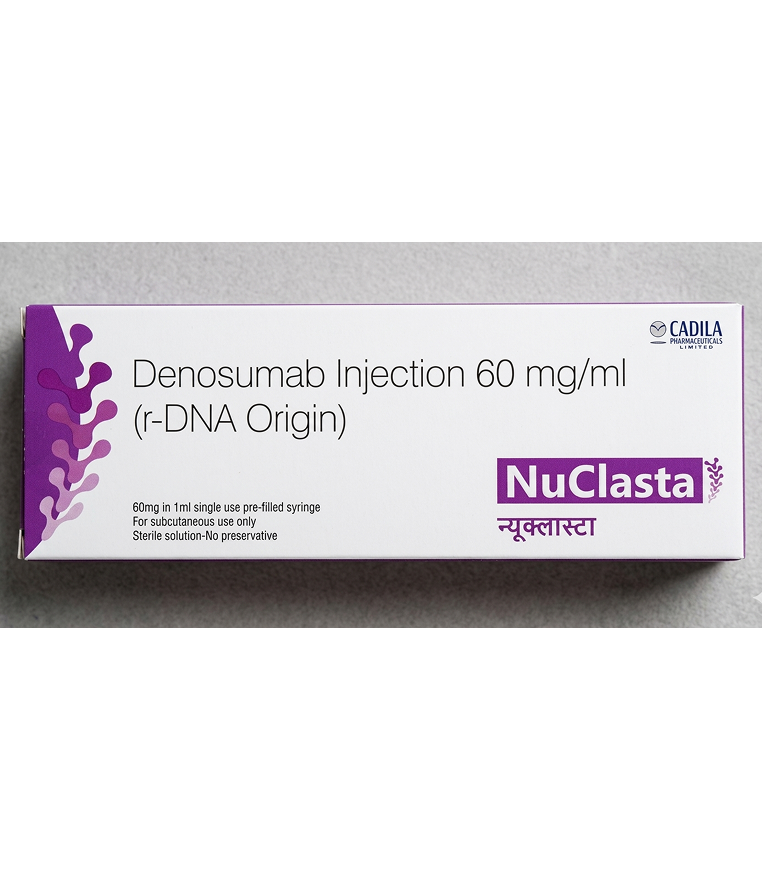


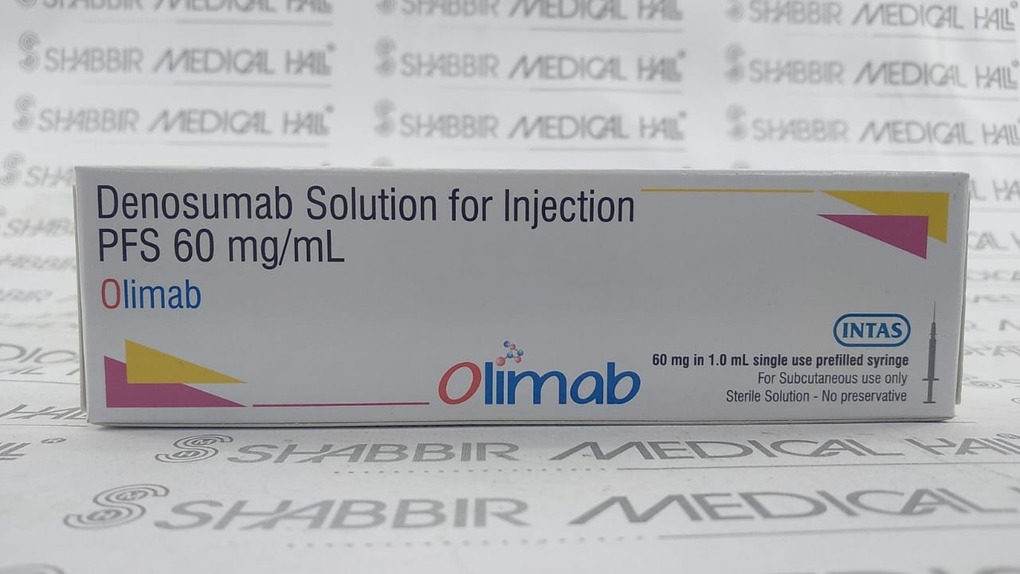
Olimab 60mg Injection
 Item requires a valid prescription
Manufactured By Intas Pharmaceuticals Ltd
Composition Denosumab 60mg/ml
RS 13912.60
MRP RS 15458.40
(10% OFF)
Includes all taxes
Package SIZE
( PreFilled Syringe )

100% Authentic
Products

Free
Shipping*

Products
Return Policy
Description:
Olimab 60mg Injection(Denosumab 60mg/ml) is a fully human monoclonal antibody (IgG2) and RANK Ligand (RANKL) inhibitor manufactured by Intas Pharmaceuticals Ltd, indicated for the treatment of osteoporosis in postmenopausal women and in men at increased risk of fracture, as well as for bone loss associated with androgen deprivation therapy (ADT) in prostate cancer patients and aromatase inhibitor (AI) therapy in breast cancer patients. It works by binding with high affinity and specificity to RANKL, preventing it from activating its receptor RANK on osteoclast precursors and mature osteoclasts, thereby inhibiting osteoclast-mediated bone resorption and increasing bone mineral density (BMD). Available from Shabbir Medical Hall at the best price in India, this genuine prescription injection is available online with fast delivery nationwide.
BENEFITS: Olimab 60mg (Denosumab) provides powerful and reversible suppression of bone resorption with a highly targeted mechanism. Unlike bisphosphonates, Denosumab is not incorporated into bone matrix; its effects are fully reversible upon discontinuation and it does not require renal dose adjustment. The FREEDOM trial demonstrated a significant reduction in vertebral, non-vertebral, and hip fractures in postmenopausal women. It is also clinically proven to increase BMD and reduce fracture risk in men on ADT and women on AI therapy. Once every 6 months subcutaneous dosing makes it highly convenient for long-term therapy.
USAGE OVERVIEW: Olimab 60mg Injection is administered as a subcutaneous (SC) injection once every 6 months (every 26 weeks) by a healthcare professional or trained caregiver. The injection is given into the upper arm, upper thigh, or abdomen. Adequate calcium (at least 1,000 mg/day) and vitamin D (at least 400 IU/day) supplementation is mandatory throughout treatment to prevent hypocalcaemia. The first injection should be given after checking baseline serum calcium levels. Dosage and treatment duration are determined by the treating rheumatologist, orthopaedician, or endocrinologist.
SAFETY OVERVIEW: The most common side effects include hypocalcaemia (especially in renal impairment), back pain, musculoskeletal pain, and injection-site reactions. Osteonecrosis of the jaw (ONJ) and atypical femoral fractures have been reported with prolonged use. Serious infections (including skin infections/cellulitis) and hypersensitivity reactions have occurred. Dental examination is recommended before starting therapy. Serum calcium must be monitored before each injection. This medicine requires a valid prescription.
Uses / Indications:
• Postmenopausal Osteoporosis: treatment of women at high risk of fractures (vertebral, non-vertebral, and hip fractures), including patients intolerant of or inadequately responding to bisphosphonates
• Male Osteoporosis: treatment of osteoporosis in men at increased risk of fractures
• Bone Loss in Prostate Cancer (ADT-induced): prevention of bone loss and fractures in men receiving androgen deprivation therapy (ADT) for non-metastatic prostate cancer
• Bone Loss in Breast Cancer (AI-induced): treatment of bone loss in women receiving aromatase inhibitor therapy for breast cancer
ADDITIONAL USES (per specialist protocol):
• Glucocorticoid-induced osteoporosis in patients receiving long-term corticosteroid therapy
• Prevention of skeletal-related events (SREs) in patients with bone metastases from solid tumours (higher-dose Denosumab formulations used in oncology settings)
Interactions / Warnings:
HEPATOTOXICITY WARNING:
- Liver function tests (ALT, AST, bilirubin) MUST be monitored every 2 weeks for the first 3 months, then monthly thereafter
- Olimab should be withheld or permanently discontinued if severe hepatotoxicity occurs
ADRENOCORTICAL INSUFFICIENCY:
- Risk increases if steroid (prednisone) is interrupted, reduced, or stopped — NEVER self-adjust steroid dose
- Supplemental corticosteroids may be required in periods of stress (surgery, infection)
CARDIOVASCULAR RISK:
- Use with caution in patients with cardiovascular disease, heart failure, or history of arrhythmia
- Monitor blood pressure, serum potassium, and fluid retention monthly
RENAL / HEPATIC IMPAIRMENT:
- Mild-moderate hepatic impairment: use with caution; no dose adjustment for mild impairment
- Severe hepatic impairment (Child-Pugh C): CONTRAINDICATED
- Renal impairment: use with caution; no specific dose adjustment required but limited data available
FOOD INTERACTION:
- Must be taken on an EMPTY STOMACH — food dramatically increases absorption and toxicity risk
DRIVING & MACHINERY:
- May cause fatigue and dizziness; assess personal response before driving
ELDERLY USE (>=65 years):
- Commonly used in elderly patients (prostate cancer typically affects older men); monitor cardiovascular and hepatic parameters closely
Pregnancy interaction:
• Denosumab (Olimab 60mg) is NOT recommended during pregnancy. Animal studies have shown increased fetal loss, stillbirths, and postnatal developmental abnormalities.
• Women of childbearing potential must use effective contraception during treatment and for at least 5 months after the last dose.
• If pregnancy occurs during treatment, the prescriber should be informed immediately.
BREASTFEEDING:
• It is not known whether Denosumab is excreted in human breast milk.
• A risk to the breastfed infant cannot be excluded; breastfeeding is NOT recommended during treatment and for at least 5 months after the last dose.
CONTRACEPTION WARNING:
• Women of reproductive age must use a highly effective method of contraception during and for at least 5 months after stopping Olimab 60mg therapy.
Expert advice:
1. CALCIUM AND VITAMIN D ARE MANDATORY:
• Olimab 60mg suppresses bone resorption but does NOT supply calcium.
• Hypocalcaemia is the most common serious adverse effect.
• Ensure the patient receives at least 1,000 mg elemental calcium and 400–800 IU vitamin D daily throughout treatment.
• In patients with renal impairment, monitor serum calcium, phosphorus, and magnesium closely before each injection and within 2 weeks of starting.
2. DENTAL REVIEW BEFORE STARTING TREATMENT:
• Osteonecrosis of the jaw (ONJ) is a rare but serious complication.
• Complete all major dental work before the first injection whenever possible.
• Maintain excellent oral hygiene throughout therapy.
• Avoid elective invasive dental procedures during treatment whenever feasible.
3. NEVER STOP WITHOUT TRANSITIONING TO A BISPHOSPHONATE:
• Abrupt discontinuation may cause rapid rebound bone loss and multiple vertebral fractures.
• Always plan transition therapy (e.g. zoledronic acid or alendronate) under specialist supervision before stopping Denosumab.
• Patients should NEVER stop treatment without medical advice.
4. CORRECT INJECTION TECHNIQUE AND COLD CHAIN:
• Allow the pre-filled syringe to reach room temperature for 15–30 minutes before injection.
• Do NOT warm using microwave, hot water, or direct heat.
• Inject subcutaneously into abdomen, upper thigh, or outer upper arm.
• Rotate injection sites regularly.
• Maintain uninterrupted refrigeration at 2°C–8°C and never freeze the syringe.
5. MONITOR FOR ATYPICAL FEMORAL FRACTURE:
• Advise patients to report new thigh, hip, or groin pain immediately.
• Periodic DEXA scans should be performed to monitor bone mineral density as advised by the specialist.
MONITORING ADVICE:
• Serum calcium, phosphorus, magnesium: Before each injection and more frequently in renal impairment or symptomatic patients
• Renal function (eGFR / serum creatinine): Baseline and periodically
• DEXA bone mineral density scan: Baseline and every 1–2 years
• Dental review: Before initiation and periodically during long-term therapy
• Serum vitamin D (25-OH vitamin D): Baseline and during supplementation
• Fracture risk assessment (FRAX score): Baseline and periodically
COMPLIANCE TIPS:
• Set a reminder for the 6-monthly injection appointment
• Maintain a medication diary recording injection dates and calcium/vitamin D intake
• Calcium and vitamin D supplements must be taken DAILY
• Educate patients about symptoms of hypocalcaemia: muscle cramps, tingling, palpitations
• Do NOT use a frozen syringe even if thawed later
• Women of childbearing age must use effective contraception during therapy and for 5 months after the last dose
SAFETY TIPS:
• Do NOT administer to patients with untreated hypocalcaemia
• Inform all doctors, dentists, and surgeons about Denosumab treatment
• Before dental procedures or surgery, disclose the date of the last injection
• Do NOT switch brands/biosimilars without specialist approval
• During prolonged illness or immobility, monitor calcium levels more closely
Side Effects:
* Musculoskeletal pain: back pain, joint pain (arthralgia), limb pain, muscle pain
* Hypocalcaemia (low calcium levels): tingling, muscle cramps, numbness — monitor calcium regularly
* Injection site reactions: redness, swelling, pain, itching
* Hypercholesterolaemia (elevated cholesterol levels)
* Urinary tract infections and upper respiratory tract infections
* Constipation and abdominal discomfort
SERIOUS SIDE EFFECTS (contact your doctor immediately):
* Severe hypocalcaemia: muscle spasms, seizures, cardiac arrhythmias, confusion
* Osteonecrosis of the jaw (ONJ): jaw pain, swelling, exposed bone, delayed dental healing
* Atypical femoral fractures: persistent thigh, hip, or groin pain
* Severe skin infections (cellulitis): redness, swelling, fever, warmth over skin
* Serious allergic reactions / anaphylaxis: facial swelling, difficulty breathing, severe rash
EMERGENCY SIGNS — SEEK IMMEDIATE MEDICAL HELP:
* Severe muscle cramps, twitching, or seizures (possible severe hypocalcaemia)
* Swelling of face, lips, tongue, or throat; difficulty breathing
* Severe jaw pain, loose teeth, or exposed jaw bone
* Sudden severe thigh or groin pain suggesting possible fracture
* High fever with painful red swollen skin (possible cellulitis)
How to use:
OSTEOPOROSIS / BONE LOSS TREATMENT:
• 60 mg subcutaneous (SC) injection ONCE EVERY 6 MONTHS
• Administered by a healthcare professional into the upper arm, upper thigh, or abdomen
CALCIUM & VITAMIN D SUPPLEMENTATION:
• Calcium: At least 1,000 mg elemental calcium daily
• Vitamin D: 400–800 IU daily (or as directed by physician)
• Supplementation is mandatory throughout treatment to reduce hypocalcaemia risk
RENAL IMPAIRMENT:
• No dose adjustment required
• Severe renal impairment (eGFR <30 mL/min) or dialysis patients have increased hypocalcaemia risk — close calcium monitoring required
ROUTE OF ADMINISTRATION:
• Subcutaneous (SC) injection ONLY
• Inject into abdomen, upper thigh, or outer upper arm
• Rotate injection sites with each dose
INJECTION HANDLING:
• Store refrigerated at 2°C–8°C until use
• Remove syringe from refrigerator 15–30 minutes before injection to reach room temperature naturally
• Do NOT shake, freeze, microwave, or expose to direct heat/light
• Do NOT use if solution is cloudy, discoloured, or contains particles
MISSED DOSE:
• Administer as soon as possible if missed
• Schedule future injections every 6 months from the date of the last injection
• Do NOT discontinue treatment without specialist guidance due to rebound fracture risk
STORAGE:
• Store refrigerated at 2°C–8°C
• Protect from direct light
• Do NOT freeze
• If necessary, may be kept at room temperature (up to 25°C) for a maximum of 30 days
• Keep out of reach of children
How it works:
Olimab 60mg contains Denosumab, a fully human monoclonal IgG2 antibody targeting RANKL (Receptor Activator of Nuclear Factor Kappa-B Ligand).
Bone remodelling depends on the balance between osteoblasts (bone-forming cells) and osteoclasts (bone-resorbing cells). In osteoporosis and treatment-induced bone loss:
• RANKL is overexpressed by osteoblasts/stromal cells
• RANKL binds RANK on osteoclast precursors → activating osteoclast formation, function, and survival
• Result: excessive bone resorption → reduced bone mineral density → fracture risk
DENOSUMAB MECHANISM:
• Binds RANKL with very high affinity and specificity (Kd ~3×10⁻¹² M)
• Prevents RANKL from binding RANK → blocks osteoclast differentiation, activation, and survival
• Rapid, potent, and reversible suppression of bone resorption markers (CTX, NTX) within days
KEY ADVANTAGES:
• Powerful BMD gains at spine, hip, and femoral neck — superior to many bisphosphonates in head-to-head trials
• No renal dose adjustment required (unlike bisphosphonates)
• Once-every-6-month SC injection — high compliance
• Fully reversible on discontinuation (important consideration: requires transition to bisphosphonate to prevent rebound)
• Proven fracture reduction across vertebral, non-vertebral, and hip sites (FREEDOM trial)
Faq for medicine:
1.What condition is Olimab 60mg injection primarily used to treat?
Olimab 60mg Injection (Denosumab 60mg) is primarily used to treat osteoporosis in postmenopausal women and men at high risk of fractures. It is also prescribed for bone loss associated with hormone deprivation therapy in prostate and breast cancer patients, and for certain bone metastasis conditions in oncology care.
2.How does Olimab 60mg strengthen bones and reduce fracture risk?
Olimab 60mg works by inhibiting RANKL (receptor activator of nuclear factor kappa-B ligand), a protein that promotes osteoclast activity. By blocking RANKL, Denosumab reduces bone resorption, increases bone mineral density, and significantly lowers fracture risk in the spine, hip, and other skeletal sites.
3.How often is Olimab 60mg injection administered?
Olimab 60mg is administered as a subcutaneous injection once every six months by a trained healthcare professional. The injection is given in the upper arm, thigh, or abdomen. Consistent dosing every six months is important for maintaining bone density benefits and reducing the risk of vertebral and non-vertebral fractures.
4.What are the side effects patients may experience with Olimab 60mg?
Common side effects of Olimab 60mg include back pain, musculoskeletal pain, and hypocalcemia (low blood calcium). Rare but serious risks include osteonecrosis of the jaw and atypical femoral fractures. Patients should ensure adequate calcium and vitamin D intake and inform the doctor of any dental procedures before starting treatment.
5.Is Olimab 60mg suitable for men with osteoporosis?
Olimab 60mg is indicated for osteoporosis in men at high fracture risk, particularly those receiving androgen deprivation therapy for prostate cancer. Denosumab has been shown to increase bone mineral density and reduce vertebral fracture risk in men, making Olimab a clinically validated option for male osteoporosis management.
6.Can Olimab 60mg be used in patients with chronic kidney disease?
Olimab 60mg can be used in patients with chronic kidney disease, including those on dialysis, as Denosumab is not renally cleared. However, hypocalcemia risk is significantly elevated in renal impairment. Calcium and vitamin D supplementation must be optimized, and serum calcium should be closely monitored before and during therapy.
Medicine interaction:
OSTEOPOROSIS / BONE LOSS TREATMENT:
• 60 mg subcutaneous (SC) injection ONCE EVERY 6 MONTHS
• Administered by a healthcare professional into the upper arm, upper thigh, or abdomen
CALCIUM & VITAMIN D SUPPLEMENTATION:
• Calcium: At least 1,000 mg elemental calcium daily
• Vitamin D: 400–800 IU daily (or as directed by physician)
• Supplementation is mandatory throughout treatment to reduce hypocalcaemia risk
RENAL IMPAIRMENT:
• No dose adjustment required
• Severe renal impairment (eGFR <30 mL/min) or dialysis patients have increased hypocalcaemia risk — close calcium monitoring required
ROUTE OF ADMINISTRATION:
• Subcutaneous (SC) injection ONLY
• Inject into abdomen, upper thigh, or outer upper arm
• Rotate injection sites with each dose
INJECTION HANDLING:
• Store refrigerated at 2°C–8°C until use
• Remove syringe from refrigerator 15–30 minutes before injection to reach room temperature naturally
• Do NOT shake, freeze, microwave, or expose to direct heat/light
• Do NOT use if solution is cloudy, discoloured, or contains particles
MISSED DOSE:
• Administer as soon as possible if missed
• Schedule future injections every 6 months from the date of the last injection
• Do NOT discontinue treatment without specialist guidance due to rebound fracture risk
STORAGE:
• Store refrigerated at 2°C–8°C
• Protect from direct light
• Do NOT freeze
• If necessary, may be kept at room temperature (up to 25°C) for a maximum of 30 days
• Keep out of reach of children
Available Substitutes