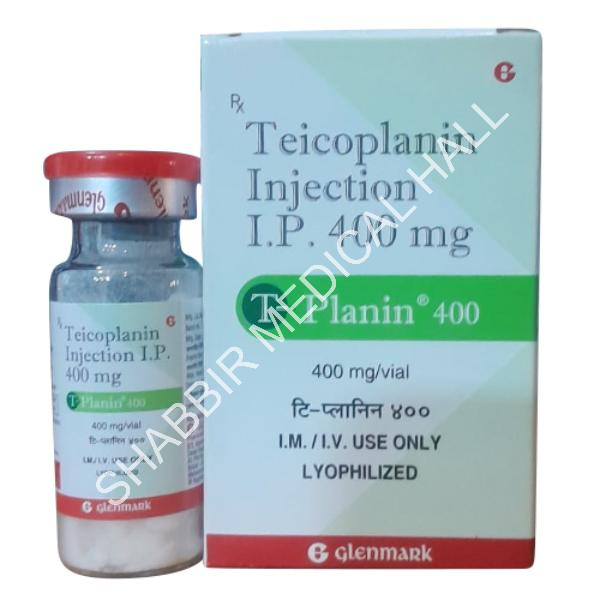


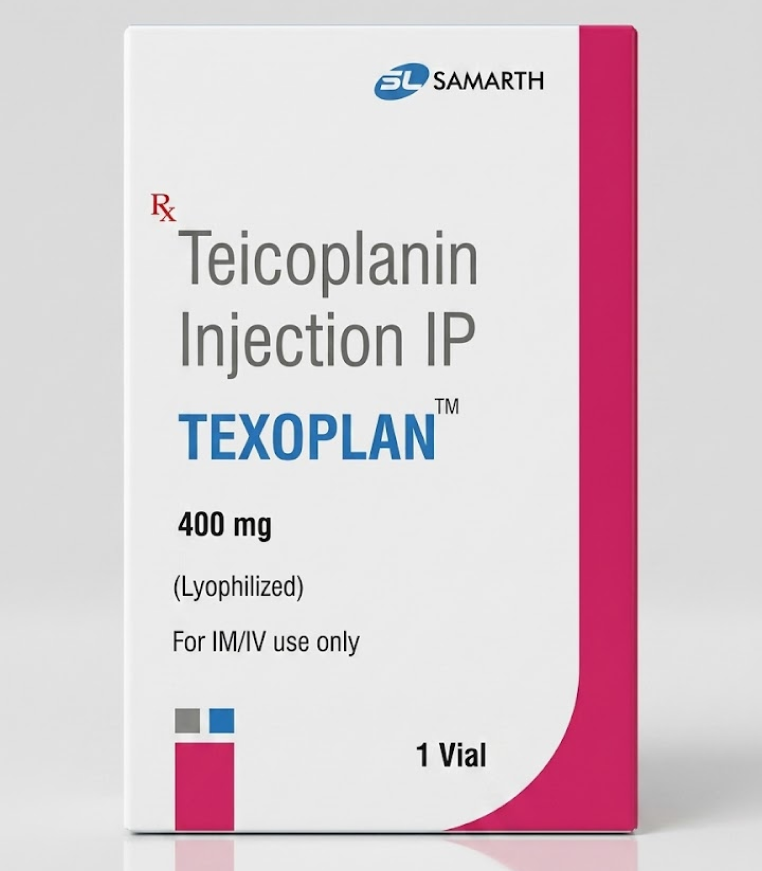
Texoplan 400mg
 Item requires a valid prescription
Manufactured By SAMARTH LIFE SCIENCES PVT.LTD
Composition Teicoplanin 400mg
RS 1558.20
MRP RS 2226.00
(30% OFF)
Includes all taxes
Package SIZE
( Injection )

100% Authentic
Products

Free
Shipping*

Products
Return Policy
Description:
Texoplan 400mg Injection(Teicoplanin 400mg) is a glycopeptide antibiotic manufactured by Samarth Life Sciences Pvt. Ltd., indicated for the treatment of serious gram-positive bacterial infections, particularly those caused by methicillin-resistant Staphylococcus aureus (MRSA), Staphylococcus epidermidis, Enterococcus faecalis, and other susceptible gram-positive organisms. Teicoplanin works by inhibiting bacterial cell-wall synthesis through a unique binding mechanism, making it a critical alternative to vancomycin in hospital and clinical settings. Available from Shabbir Medical Hall at the best price in India, this genuine prescription injection is available online with fast delivery nationwide.
BENEFITS: Texoplan 400mg (Teicoplanin) offers several clinical advantages over vancomycin — including once-daily dosing (after loading), no requirement for continuous infusion rate monitoring, and a lower incidence of infusion-related reactions such as Red Man Syndrome. Its long half-life (up to 70–100 hours) allows convenient once-daily or alternate-day maintenance dosing, improving patient compliance and enabling outpatient parenteral antibiotic therapy (OPAT). It is active against MRSA, coagulase-negative staphylococci, enterococci, and Clostridium spp.
USAGE OVERVIEW: Texoplan 400mg Injection is administered intravenously (IV) or intramuscularly (IM) by a trained healthcare professional. A loading dose regimen is mandatory to rapidly achieve therapeutic plasma concentrations — typically 400mg (6 mg/kg) every 12 hours for 3 doses (Day 1), followed by a maintenance dose of 400mg (6 mg/kg) once daily. Dosage is adjusted for renal impairment and determined by the treating infectious disease specialist or physician.
SAFETY OVERVIEW: Common side effects include injection-site reactions, fever, rash, elevated liver enzymes, and mild renal changes. Serious but rare adverse events include hypersensitivity reactions, nephrotoxicity, ototoxicity (hearing impairment), and thrombocytopenia. Therapeutic drug monitoring (TDM) is recommended for serious infections and prolonged treatment courses to optimise dosing and prevent toxicity. This medicine requires a valid prescription and must be used under specialist supervision.
Uses / Indications:
- Skin and Soft Tissue Infections (SSTI): including cellulitis, wound infections, and abscesses caused by MRSA and other gram-positive organisms
- Bone and Joint Infections (Osteomyelitis / Septic Arthritis): caused by Staphylococcus aureus (MRSA and MSSA)
- Endocarditis: infective endocarditis caused by susceptible gram-positive organisms including MRSA and Enterococcus spp.
- Hospital-Acquired Pneumonia (HAP): caused by MRSA in ICU or ward settings
- Bacteraemia / Septicaemia: gram-positive bloodstream infections requiring parenteral glycopeptide therapy
- Peritonitis: associated with continuous ambulatory peritoneal dialysis (CAPD) caused by gram-positive organisms
ADDITIONAL USES:
- Febrile neutropenia: empirical cover for gram-positive organisms in immunocompromised patients
- Surgical prophylaxis: in patients with penicillin allergy undergoing orthopaedic or cardiac surgery
- Clostridium difficile colitis (oral route, off-label): specialist use in recurrent/severe cases
Interactions / Warnings:
NEPHROTOXICITY WARNING: Renal function (serum creatinine, eGFR) MUST be monitored at baseline and throughout therapy. Risk is significantly increased when co-administered with aminoglycosides or other nephrotoxic drugs. Adjust dose frequency from Day 4 onwards based on CrCl (see dosage section).
OTOTOXICITY WARNING: Teicoplanin can cause cochlear damage (hearing loss) and vestibular toxicity, particularly at supratherapeutic trough levels or with prolonged therapy. Baseline audiometric assessment recommended for patients receiving prolonged courses. Report any hearing changes, tinnitus, or balance disturbance immediately.
THERAPEUTIC DRUG MONITORING (TDM): TDM is strongly recommended for serious infections (endocarditis, osteomyelitis, MRSA bacteraemia). Target trough (Cmin): ≥10 mg/L for routine infections; ≥15–20 mg/L for endocarditis or difficult-to-treat MRSA. Inadequate trough levels lead to treatment failure; excessive levels increase toxicity risk. TDM samples taken immediately before the 4th or 5th dose (at steady state).
HYPERSENSITIVITY / CROSS-REACTIVITY: Contraindicated in patients with known hypersensitivity to Teicoplanin. Cross-reactivity with vancomycin is possible but rare; use with caution in patients with documented vancomycin allergy.
HAEMATOLOGICAL MONITORING: Monitor full blood count (FBC/CBC) weekly during prolonged therapy — thrombocytopenia and neutropenia have been reported.
HEPATIC MONITORING: Liver function tests (LFTs) should be checked at baseline and periodically during extended therapy.
DRIVING & MACHINERY: Dizziness and vestibular disturbances have been reported; patients should exercise caution while driving or operating machinery.
Pregnancy interaction:
- Teicoplanin should be used during pregnancy ONLY when clearly indicated and the benefit outweighs the potential risk to the foetus.
- Animal studies have shown foetotoxicity at high doses; adequate human data are limited.
- Decision to use during pregnancy must be made exclusively by the treating specialist, weighing the severity of the infection against potential foetal risk.
- Teicoplanin has been used in clinical practice for serious MRSA infections in pregnant women under close specialist supervision.
BREASTFEEDING:
- It is not known whether Teicoplanin is excreted in human breast milk.
- Due to potential serious adverse effects on the nursing infant, the treating physician should advise whether to continue or discontinue breastfeeding during therapy.
CONTRACEPTION WARNING:
- No specific contraceptive requirements; standard clinical management guidelines apply.
Expert advice:
1. ALWAYS GIVE THE LOADING DOSE — NEVER SKIP IT:
Teicoplanin has a very long half-life (70–100 hours) but also requires time to reach therapeutic plasma concentrations. The loading dose regimen (400mg every 12 hours × 3 doses on Day 1) is clinically mandatory to rapidly achieve bactericidal trough levels. Omitting the loading dose results in sub-therapeutic levels for the first 2–3 days, risking early treatment failure, particularly in serious infections like MRSA endocarditis or osteomyelitis. Confirm the loading dose schedule is clearly stated on every prescription.
2. TARGET TROUGH LEVELS — TDM IS ESSENTIAL FOR SERIOUS INFECTIONS:
Unlike many antibiotics, Teicoplanin's clinical outcome is directly linked to achieving adequate trough (Cmin) concentrations. For routine infections, target Cmin ≥ 10 mg/L; for endocarditis, osteomyelitis, or deep-seated MRSA infections, Cmin should be ≥ 15–20 mg/L. Always advise the prescribing team to draw TDM samples immediately before the 4th or 5th dose (not earlier) for accurate steady-state measurement. Inadequate troughs lead to treatment failure and emergence of glycopeptide-intermediate Staphylococcus aureus (GISA).
3. DO NOT SHAKE THE VIAL DURING RECONSTITUTION:
Teicoplanin is a protein-based molecule that foams excessively when shaken. Instruct nursing staff to roll the vial gently after adding solvent and allow the foam to settle completely before withdrawing the solution. Drawing up foam instead of solution results in underdosing. This is a very common reconstitution error with serious consequences for treatment efficacy.
4. MONITOR RENAL FUNCTION AND ADJUST DOSE FROM DAY 4:
No dose adjustment is needed for the first 4 days of therapy (loading phase). From Day 4 onwards, dose frequency must be reduced based on creatinine clearance — CrCl 40–60 mL/min: every 48 hours; CrCl < 40 mL/min: every 72 hours. Failure to adjust results in drug accumulation, increased ototoxicity and nephrotoxicity risk. Always check latest renal function at Day 4 and reassess regularly.
5. ADVANTAGE OVER VANCOMYCIN — COMMUNICATE TO PRESCRIBERS:
Teicoplanin can be given both IV and IM — a key advantage enabling outpatient parenteral antibiotic therapy (OPAT) for conditions like osteomyelitis or endocarditis where patients complete 4–6 weeks of therapy at home. Once daily IM injection is far more practical than continuous IV infusion. Alert prescribing teams to this option when appropriate, particularly when patients are clinically stable and can be discharged early.
MONITORING ADVICE:
- Renal function (serum creatinine, urea, eGFR): Baseline + every 48–72 hours during active therapy; adjust dose frequency from Day 4
- Teicoplanin trough (TDM): Before 4th or 5th dose; repeat weekly for prolonged courses
- Full blood count (FBC/CBC): Baseline + weekly — monitor for thrombocytopenia and neutropenia
- Liver function tests (ALT, AST, ALP): Baseline + weekly for prolonged therapy
- Audiometry: Baseline for patients receiving > 2-week courses or those at risk (pre-existing hearing impairment, concurrent ototoxic drugs)
- Clinical response assessment: Temperature, CRP, WBC, blood cultures — at 48–72 hours
COMPLIANCE / HANDLING TIPS:
- Administered by trained healthcare professionals in hospital/clinic/OPAT settings
- Reconstituted solution stable for 24 hours at 2–8°C; use immediately if not refrigerated
- Do NOT mix Teicoplanin with aminoglycosides in the same IV line or syringe — precipitate formation and mutual inactivation
- Store unreconstituted vials below 25°C, protected from light
- Do not freeze reconstituted solution
SAFETY TIPS:
- Never stop therapy early without specialist advice — premature discontinuation in MRSA endocarditis or osteomyelitis leads to relapse and potential emergence of glycopeptide resistance
- Report any hearing changes, tinnitus, or reduced urine output to the prescribing team immediately
- Maintain all TDM and monitoring appointments for the duration of therapy
Side Effects:
- Injection-site reactions: pain, erythema, phlebitis at IV site; local pain at IM site
- Fever, chills (pyrexia) — particularly during loading dose phase
- Skin rash, urticaria, pruritus (itching)
- Elevated liver enzymes (ALT, AST, alkaline phosphatase) — usually mild and transient
- Nausea, vomiting, diarrhoea
- Headache, dizziness
- Mild increases in serum creatinine
SERIOUS SIDE EFFECTS (contact your doctor immediately):
- Nephrotoxicity: significant rise in serum creatinine, decreased urine output — especially with concurrent aminoglycosides or other nephrotoxic agents
- Ototoxicity: hearing loss, tinnitus, vestibular dysfunction — particularly with prolonged therapy or high trough levels
- Anaphylaxis / Severe Hypersensitivity: urticaria, angioedema, bronchospasm, hypotension — discontinue immediately; emergency treatment required
- Thrombocytopenia: abnormal bruising, bleeding, or petechiae — CBC monitoring required
- Leucopenia, neutropenia: increased infection susceptibility with prolonged use
- Stevens-Johnson Syndrome / Toxic Epidermal Necrolysis (rare): severe blistering skin rash — seek immediate medical attention
EMERGENCY SIGNS — SEEK IMMEDIATE MEDICAL HELP:
- Sudden rash with blistering or skin peeling
- Hearing loss or ringing in the ears (tinnitus)
- Reduced urine output or swelling (renal impairment)
- Signs of anaphylaxis: throat tightening, difficulty breathing, collapse
How to use:
LOADING DOSE (Day 1 — mandatory to achieve rapid therapeutic levels):
- Serious infections (SSTI, UTI, pneumonia): 400mg (6 mg/kg) IV/IM every 12 hours × 3 doses
- Life-threatening infections (endocarditis, osteomyelitis, bacteraemia): 400mg (6 mg/kg) IV every 12 hours × 3–5 doses
MAINTENANCE DOSE (from Day 2 onwards):
- Moderate infections: 200mg once daily IV/IM
- Serious infections (MRSA, endocarditis, osteomyelitis): 400mg (6 mg/kg) once daily IV/IM
- Severe/life-threatening: up to 12 mg/kg once daily — per specialist guidance and TDM
RENAL IMPAIRMENT:
- Days 1–4: No dose adjustment required
- From Day 4 onwards: CrCl 40–60 mL/min → dose every 48 hours; CrCl < 40 mL/min → dose every 72 hours; Haemodialysis → dose after each session (Teicoplanin is NOT significantly removed by dialysis)
ROUTE OF ADMINISTRATION:
- Intravenous (IV): Reconstitute with provided solvent; administer as slow IV injection (over 3–5 min) or short infusion (30 min) — NOT 2-hour extended infusion needed
- Intramuscular (IM): Reconstituted solution can be given IM — unique advantage over vancomycin
- Administer by trained nurse or healthcare professional
RECONSTITUTION:
- Reconstitute vial with the provided Water for Injection; roll gently — do NOT shake (foaming)
- Allow reconstituted solution to stand briefly to allow foam to settle before withdrawing
STORAGE:
- Unreconstituted vial: Store below 25°C, protect from light
- Reconstituted solution: Use within 24 hours if stored at 2–8°C (refrigerated)
- Do not freeze
- Keep out of reach of children
- Do not use after expiry date
How it works:
MECHANISM OF ACTION:
- Teicoplanin binds with high affinity to the D-Ala-D-Ala terminus of peptidoglycan precursor lipid II on the bacterial cell membrane
- This binding physically blocks the transglycosylation and transpeptidation steps of bacterial cell-wall synthesis
- Unlike beta-lactams, Teicoplanin does not compete at penicillin-binding proteins (PBPs) — making it fully active against MRSA
- Results in disruption of cell-wall integrity, osmotic instability, and bacterial cell death (bactericidal)
- Active specifically against gram-positive organisms; has no activity against gram-negative bacteria (due to inability to penetrate the outer membrane)
SPECTRUM OF ACTIVITY:
- Staphylococcus aureus (including MRSA)
- Staphylococcus epidermidis (including methicillin-resistant strains)
- Enterococcus faecalis and faecium (vancomycin-susceptible strains)
- Streptococcus spp. (including Streptococcus pneumoniae)
- Clostridium spp. (including C. difficile)
- Corynebacterium spp., Listeria monocytogenes
KEY ADVANTAGES OVER VANCOMYCIN:
- Longer half-life (70–100 hrs) → once-daily dosing after loading
- Can be given IM as well as IV — useful in outpatient settings
- Lower incidence of Red Man Syndrome (infusion-related flushing)
- No continuous rate-controlled infusion required
- Supports OPAT (Outpatient Parenteral Antibiotic Therapy) programmes
Faq for medicine:
Texoplan 400mg contains Teicoplanin, a glycopeptide antibiotic used for serious Gram-positive infections including MRSA bacteremia, endocarditis, skin and soft tissue infections, osteomyelitis, and peritonitis in CAPD patients. Texoplan is reserved for infections where standard antibiotics have failed or in patients with contraindications to beta-lactams, primarily in hospital and ICU settings.
2.How is Texoplan 400mg Teicoplanin administered in clinical practice?
Texoplan 400mg can be given intravenously by slow infusion over 30 minutes or by intramuscular injection. The loading regimen involves three 400mg doses given 12 hours apart, followed by once-daily maintenance dosing. IM administration allows outpatient continuation of Texoplan therapy. Reconstitution must avoid foaming to ensure accurate dosing. Texoplan must not be mixed with aminoglycosides in the same syringe.
3.What are the adverse effects of Texoplan 400mg Teicoplanin?
Adverse effects of Texoplan 400mg include hypersensitivity reactions, thrombocytopenia, elevated liver enzymes, injection site pain, fever, and rarely nephrotoxicity. Teicoplanin has significantly lower Red Man Syndrome rates compared to vancomycin. Texoplan-related ototoxicity is rare but possible with prolonged high-dose therapy or concurrent aminoglycoside use, requiring auditory monitoring in susceptible patients.
4.What serum level targets should be maintained with Texoplan 400mg?
For serious infections, Texoplan 400mg requires minimum trough Teicoplanin levels of ≥10mg/L for general infections, ≥15mg/L for endocarditis, and ≥20–30mg/L for osteomyelitis or febrile neutropenia. Inadequate loading can lead to Texoplan treatment failure. Therapeutic drug monitoring helps optimize Teicoplanin exposure and reduces the risk of clinical failure in deep-seated infections.
5.Can Texoplan 400mg be used for MRSA-infected diabetic foot wounds?
Texoplan 400mg is an effective option for MRSA-complicated diabetic foot infections requiring parenteral Gram-positive coverage. Teicoplanin penetrates well into soft tissue and bone, supporting Texoplan's use in infected diabetic ulcers with osteomyelitis. IM administration can facilitate outpatient parenteral therapy programs, improving treatment compliance and reducing prolonged hospitalization in diabetic foot infection management.
6.How does Texoplan 400mg perform against glycopeptide-intermediate Staphylococcus strains?
Texoplan 400mg may have reduced efficacy against glycopeptide-intermediate S. aureus strains with elevated MICs. In such cases, alternative agents including daptomycin, linezolid, or ceftaroline may be more appropriate. Culture and sensitivity testing with MIC determination is essential before relying on Texoplan in serious MRSA infections, especially in patients with prior glycopeptide therapy exposure.
Medicine interaction:
- Aminoglycosides (gentamicin, amikacin, tobramycin): significantly increased risk of nephrotoxicity and ototoxicity — monitor renal function and audiometry closely; do not mix in same IV line
- Other nephrotoxic agents (amphotericin B, ciclosporin, NSAIDs, contrast media): additive nephrotoxic risk — monitor closely
- Loop diuretics (furosemide): enhanced ototoxic and nephrotoxic risk in combination with Teicoplanin — monitor audiological function
- Anticoagulants (warfarin, heparin): Teicoplanin may potentiate anticoagulant effects — monitor INR and coagulation parameters
- Neuromuscular blocking agents: may be potentiated — exercise caution in anaesthesia settings
- Vancomycin: concurrent use not recommended — additive toxicity without proven additional benefit; use one or the other
VACCINE INTERACTIONS:
- Avoid live bacterial vaccines during active antibiotic therapy
SUPPLEMENT INTERACTIONS:
- No significant herbal supplement interactions established; always disclose all medications and supplements to the treating physician