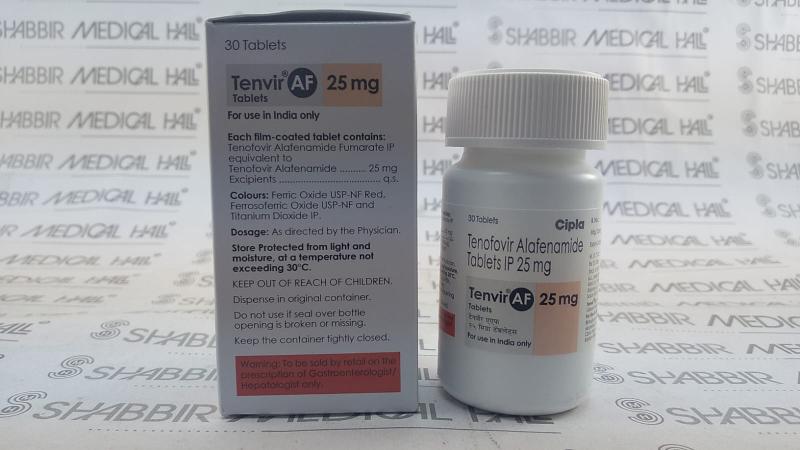


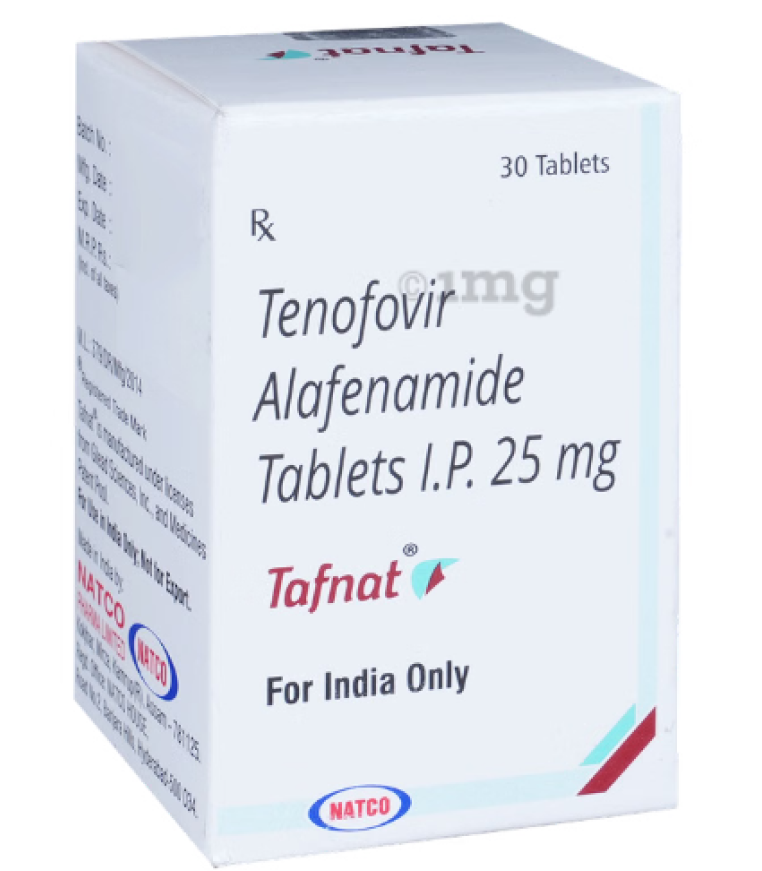
Tafnat 25mg Tablet
 Item requires a valid prescription
Manufactured By Natco Pharma Limited
Composition Tenofovir Alafenamide 25mg
RS 960.09
MRP RS 1371.56
(30% OFF)
Includes all taxes
Package SIZE
( 30 tablets in 1 bottle )

100% Authentic
Products

Free
Shipping*

Products
Return Policy
Description:
Tafnat 25mg Tablet(Tenofovir Alafenamide 25mg) is a next-generation nucleotide reverse transcriptase inhibitor (NtRTI) manufactured by Natco Pharma Limited, indicated for the treatment of chronic Hepatitis B virus (HBV) infection in adults and adolescents (≥12 years, ≥35 kg), and as part of combination antiretroviral therapy (cART) for HIV-1 infection. Tenofovir Alafenamide (TAF) is a prodrug of tenofovir engineered for superior intracellular drug delivery, achieving high TFV-DP concentrations inside hepatocytes and lymphocytes at a substantially lower plasma dose compared to Tenofovir Disoproxil Fumarate (TDF) — resulting in significantly improved renal and bone safety. Available from Shabbir Medical Hall at 30% OFF MRP, this genuine Natco Pharma prescription tablet is available online with fast delivery nationwide.
BENEFITS: Tafnat 25mg delivers highly targeted intracellular antiviral activity. TAF is efficiently converted to tenofovir diphosphate (TFV-DP) inside hepatocytes and lymphocytes, competitively inhibiting HBV DNA polymerase and HIV-1 reverse transcriptase and causing viral DNA chain termination. Compared to TDF, Tafnat (TAF) demonstrates equivalent antiviral efficacy with significantly less impact on renal tubular function and bone mineral density — making it the preferred agent for long-term antiviral therapy, particularly in patients with renal compromise or low bone density.
USAGE OVERVIEW: Tafnat 25mg is taken orally ONCE DAILY WITH FOOD (food significantly increases TAF bioavailability). For chronic HBV: 25 mg once daily. For HIV-1: used in combination regimens as directed by an infectious disease specialist. Duration is determined by the treating physician — do NOT discontinue without medical guidance.
SAFETY OVERVIEW: Generally well tolerated. Most common side effects include nausea, fatigue, and headache. Serious but rare risks include lactic acidosis/severe hepatomegaly with steatosis and severe acute HBV exacerbation upon discontinuation. Regular renal function and bone density monitoring recommended. Prescription required.
Uses / Indications:
• Chronic Hepatitis B Virus (HBV) Infection: adults and adolescents (≥12 years, ≥35 kg) with compensated and decompensated liver disease
• HIV-1 Infection (as part of combination antiretroviral therapy): treatment-naive and treatment-experienced adults
ADDITIONAL USES:
• HIV/HBV co-infection management (single agent covers both)
• Patients transitioning from TDF (Tenofovir Disoproxil Fumarate) due to renal or bone concerns
• Pre-exposure prophylaxis (PrEP) for HIV — as part of approved combination regimens
Interactions / Warnings:
SEVERE ACUTE HBV EXACERBATION WARNING: Do NOT discontinue Tafnat (TAF) without physician guidance. Abrupt cessation in HBV patients can cause severe, sometimes fatal hepatic flares. Monitor liver function (ALT, AST, bilirubin) for at least 6 months after stopping therapy.
LACTIC ACIDOSIS / HEPATOMEGALY: All nucleoside/nucleotide analogues carry risk — monitor for symptoms; suspend if lactic acidosis suspected.
RENAL / HEPATIC IMPAIRMENT: Mild-Moderate Renal Impairment (eGFR ≥15 mL/min): no dose adjustment required — TAF preferred over TDF. eGFR <15 mL/min (not on dialysis): NOT recommended. Haemodialysis: administer after dialysis session. Hepatic impairment: No dose adjustment for mild-moderate; not studied in severe hepatic impairment (Child-Pugh C) — use with caution.
FOOD INTERACTION: Must be taken WITH FOOD — food significantly increases TAF bioavailability.
DRIVING & MACHINERY: May cause dizziness; assess personal response before driving.
ELDERLY USE (≥65 years): Limited data; use with regular monitoring of renal function and bone density.
Pregnancy interaction:
• Tafnat 25mg (TAF) may be used in pregnancy when clearly indicated and on physician advice
• TAF is included in WHO and national HIV treatment guidelines for pregnant women with HIV in specific combination regimens
• Animal studies show no evidence of teratogenicity; limited human data available; risk/benefit must be assessed by treating physician
• Tenofovir Alafenamide has lower transplacental transfer compared to TDF
BREASTFEEDING:
• TAF is excreted in breast milk in small amounts
• HIV-positive mothers should NOT breastfeed (to prevent HIV transmission to infant) — follow national HIV guidelines
• HBV-positive mothers: consult physician; breastfeeding may be possible with infant immunoprophylaxis
CONTRACEPTION WARNING:
• No specific contraceptive requirement; consult physician for reproductive planning during antiviral therapy
Expert advice:
1. ALWAYS TAKE WITH FOOD:
• Tafnat 25mg MUST be taken with food. Food significantly increases Tenofovir Alafenamide (TAF) bioavailability — skipping a meal before your dose means the medicine is not properly absorbed. A light meal or snack is sufficient.
2. NEVER STOP WITHOUT YOUR DOCTOR'S APPROVAL:
• Discontinuing Tafnat abruptly in Hepatitis B patients can trigger severe, potentially life-threatening HBV flares (sudden sharp rise in liver enzymes and viral load). Your physician will plan a supervised withdrawal with close liver monitoring for at least 6 months if treatment needs to stop.
3. MONITOR FOR LACTIC ACIDOSIS SYMPTOMS:
• Though rare, lactic acidosis is a serious risk with all nucleotide analogues. Watch for persistent deep/rapid breathing, unexplained muscle pain, extreme fatigue, cold extremities, nausea, or vomiting. If these occur, stop the medication and seek emergency care immediately.
4. KIDNEY-FRIENDLY BUT NOT KIDNEY-PROOF:
• Tafnat (TAF) causes far less kidney damage than older TDF-based tablets — but long-term use still warrants regular monitoring. Avoid NSAIDs (ibuprofen, diclofenac) and other nephrotoxic agents without physician approval. Report swelling, reduced urination, or persistent fatigue promptly.
5. INFORM ALL DOCTORS ABOUT DRUG INTERACTIONS:
• Several common medications (rifampicin, anti-epileptic drugs, St John's Wort) dramatically reduce TAF blood levels and may lead to treatment failure. Always inform ALL treating doctors, dentists, and pharmacists that you are on Tenofovir Alafenamide (Tafnat).
MONITORING ADVICE:
• Liver Function Tests (ALT, AST, bilirubin): At baseline, then every 3 months for HBV; monthly for first 3 months in HIV patients on new cART
• HBV DNA (viral load): Every 3–6 months to confirm viral suppression
• HBsAg / HBeAg / Anti-HBe: Annually to assess seroconversion
• Serum Creatinine / eGFR: Every 6 months (annually if stable and no risk factors)
• Serum Phosphate: Annually — low phosphate may indicate Fanconi syndrome
• Bone Mineral Density (DXA scan): At baseline if risk factors; consider every 2–3 years on long-term therapy
• HIV viral load / CD4 count: Every 3–6 months (HIV patients)
COMPLIANCE TIPS:
• Set a daily phone alarm at a consistent mealtime — link your dose to a regular meal
• Keep a medication diary noting dose time and any side effects
• Do NOT crush, split, or chew tablets — swallow whole with water during a meal
• Store bottle in original packaging away from heat and moisture
• Carry your prescription and inform any treating doctor you are on antiviral therapy
SAFETY TIPS:
• Do NOT share Tafnat with others — even if they have HBV or HIV
• Maintain all scheduled blood tests and physician appointments
• Inform surgeon/anaesthetist of antiviral therapy before any procedure
• HIV patients on cART: maintain adherence above 95% to prevent resistance
• HBV patients: regular liver ultrasound every 6 months for hepatocellular carcinoma surveillance if cirrhosis is present
Side Effects:
• Nausea, abdominal discomfort
• Fatigue, headache
• Dizziness
• Diarrhoea
• Elevated creatine kinase (muscle enzyme)
• Mild decrease in bone mineral density (less than TDF)
• Mild renal changes (less frequent and severe than TDF)
SERIOUS SIDE EFFECTS (contact your doctor immediately):
• Lactic Acidosis: rare but potentially life-threatening — symptoms: deep rapid breathing, nausea, vomiting, cold/blue extremities, muscle pain, severe fatigue — DISCONTINUE and seek emergency care
• Severe Hepatomegaly with Steatosis: enlarged liver with fat accumulation — abdominal pain, jaundice, dark urine
• Severe Acute HBV Exacerbation on Discontinuation: sudden liver function deterioration if treatment stopped abruptly — clinical worsening, jaundice, elevated ALT
• Immune Reconstitution Inflammatory Syndrome (IRIS) in HIV patients: inflammatory response to latent infections upon starting cART
EMERGENCY SIGNS — SEEK IMMEDIATE MEDICAL HELP:
• Rapid/laboured breathing, extreme fatigue, cold/numb extremities (lactic acidosis)
• Jaundice, severe upper abdominal pain, dark urine
• Sudden severe deterioration after stopping Tafnat
How to use:
• Chronic HBV (Adults ≥18 years): 25 mg orally ONCE DAILY WITH FOOD
• HIV-1 Infection (as part of cART combination): 25 mg orally ONCE DAILY WITH FOOD
• Adolescents (≥12 years, ≥35 kg): 25 mg once daily WITH FOOD (HBV indication)
ROUTE OF ADMINISTRATION:
• Oral (tablet) — swallow whole with water
• Must be taken WITH FOOD — food significantly doubles TAF bioavailability
• Do NOT take on an empty stomach
TIMING:
• Take at the same time each day for consistency
• Do NOT skip doses — missed doses can trigger viral rebound or resistance development
MISSED DOSE:
• If remembered within the same day, take as soon as possible with food
• If almost time for the next dose, skip the missed dose
• Do NOT double up
DURATION:
• Chronic HBV: Long-term therapy; do NOT discontinue without physician guidance — severe HBV flare may occur on abrupt cessation
• HIV-1: Lifelong as part of suppressive cART
STORAGE:
• Store below 30°C in a dry place, away from moisture and direct sunlight
• Keep in original bottle with lid tightly closed
• Keep out of reach of children
• Do not use after the expiry date printed on the label
How it works:
HBV and HIV replicate by using reverse transcriptase to copy their genome into DNA inside human cells.
Tenofovir Alafenamide works by:
• Penetrating hepatocytes and lymphocytes efficiently via plasma stability
• Converting intracellularly to tenofovir diphosphate (TFV-DP), the active metabolite
• TFV-DP competes with natural deoxyadenosine-5'-triphosphate (dATP) for incorporation into viral DNA
• Once incorporated, TFV-DP terminates the viral DNA chain — blocking further replication
This results in:
• Suppression of HBV DNA to undetectable levels (viral suppression)
• Reduction in HBV surface antigen (HBsAg) and e-antigen (HBeAg) levels
• Decreased risk of hepatic flares, cirrhosis progression, and hepatocellular carcinoma
• Effective HIV-1 RNA suppression when used in cART combinations
KEY ADVANTAGES:
• ~90% lower plasma tenofovir exposure vs TDF — protecting kidneys and bones
• Higher intracellular TFV-DP levels in target cells — equivalent or superior efficacy
• Once-daily oral dosing — supports high treatment adherence
• Effective in both HBV-mono-infected and HIV/HBV co-infected patients
Faq for medicine:
Tafnat 25mg contains Tenofovir Alafenamide (TAF), a next-generation nucleotide reverse transcriptase inhibitor used in combination antiretroviral therapy for HIV-1. Tafnat delivers Tenofovir more efficiently to HIV-infected cells with lower systemic exposure, making it a preferred antiretroviral backbone for adults and adolescents needing a safer alternative to older Tenofovir formulations.
2.How does Tafnat 25mg improve the side effect profile of HIV treatment?
Tafnat 25mg reduces systemic Tenofovir exposure by approximately 90% compared to TDF, resulting in significantly lower nephrotoxicity rates and reduced bone mineral density loss. Patients previously experiencing renal or bone-related adverse effects on TDF can safely switch to Tafnat 25mg with measurable improvements in bone and renal parameters, as confirmed by multiple clinical studies.
3.Is Tafnat 25mg effective against hepatitis B in HIV co-infected patients?
Yes, Tafnat 25mg has potent activity against Hepatitis B Virus in addition to HIV. It is used in HIV/HBV co-infected patients to suppress both infections simultaneously. TAF 25mg is also approved for chronic HBV as a standalone agent. Discontinuing Tafnat without an alternative HBV agent in co-infected patients may cause severe hepatitis flares and must be avoided.
4.What is the recommended dose of Tafnat 25mg in HIV treatment regimens?
Tafnat 25mg is prescribed as one tablet once daily with or without food, typically within single-tablet HIV regimens containing emtricitabine, elvitegravir, and cobicistat. The 25mg dose is used within boosted combinations; 10mg TAF is used in other combinations. Consistent daily adherence is critical for maintaining viral suppression and preventing drug resistance mutations.
5.Can patients switch from TDF to Tafnat 25mg safely midway through HIV treatment?
Switching from TDF to Tafnat 25mg is supported by robust clinical evidence showing maintained viral suppression and significant improvements in renal biomarkers and bone density. Studies including the GS-US-380 trials demonstrated the safety and efficacy of this transition. Patients with controlled viral load meeting clinical criteria are excellent candidates for switching to Tafnat 25mg.
6.What are the hepatitis flare risks when stopping Tafnat 25mg in co-infected patients?
Abrupt discontinuation of Tafnat 25mg in HIV/HBV co-infected patients can trigger severe acute HBV hepatitis flares and sometimes acute liver failure. Before stopping Tafnat, an alternative effective HBV therapy must be established. Liver function tests must be monitored closely for several months after discontinuation. Clinicians must never stop Tafnat 25mg in co-infected patients without a hepatology-guided transition plan.
Medicine interaction:
• Rifampicin / Rifabutin (P-gp inducers): significantly reduce TAF plasma levels — AVOID; may require alternative agent
• Anticonvulsants (carbamazepine, phenobarbital, phenytoin): P-gp inducers — reduce TAF exposure — AVOID
• Atazanavir / Cobicistat / Ritonavir (HIV protease inhibitor boosters): increase TAF exposure — use lower TAF dose (10 mg) in boosted combination products; Tafnat 25mg is for unboosted regimens
• Antacids (calcium carbonate, magnesium hydroxide): minimal interaction — no significant adjustment required
• Nephrotoxic agents (NSAIDs, aminoglycosides, contrast dyes): additive renal risk — monitor renal function
• Other antivirals (entecavir, lamivudine): combination for HBV possible under physician supervision
VACCINE INTERACTIONS:
• Hepatitis B vaccine not needed in HBV-infected patients already on antiviral therapy
• Annual influenza vaccination recommended for immunocompromised HIV patients
SUPPLEMENT INTERACTIONS:
• St John's Wort: P-gp inducer — reduces TAF levels — contraindicated
• Always inform your doctor of all vitamins, herbal products, and supplements
Available Substitutes