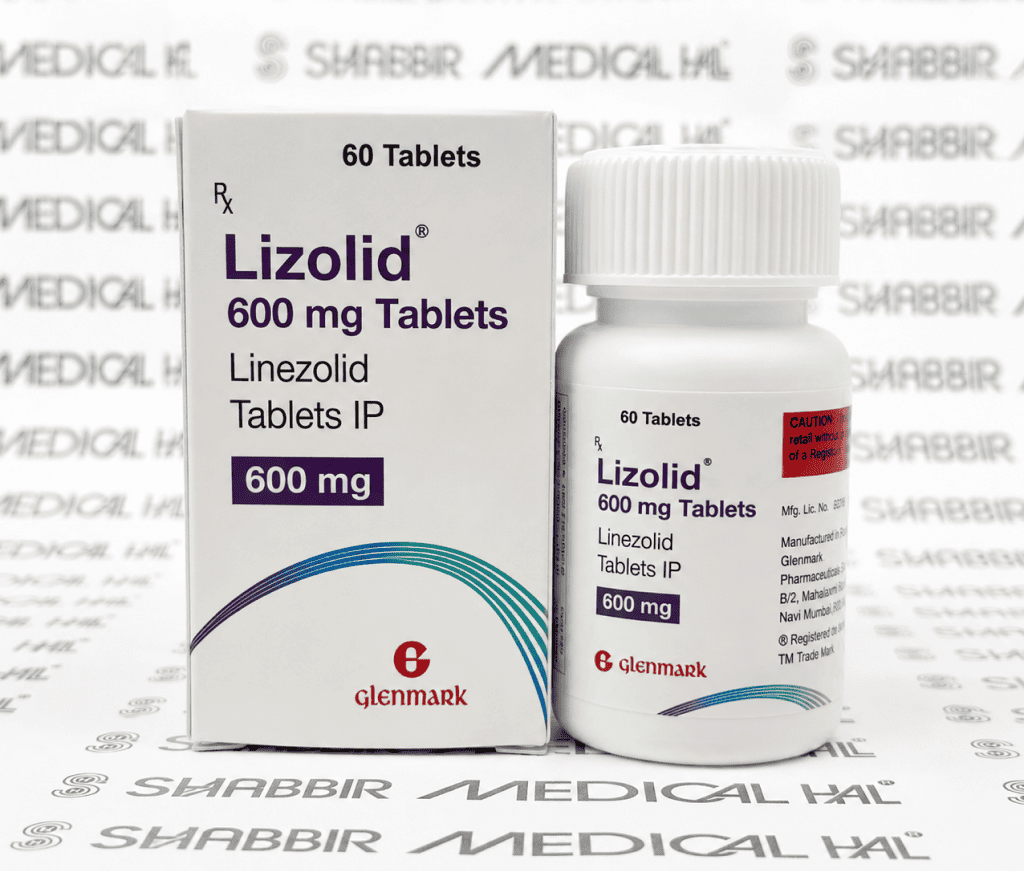


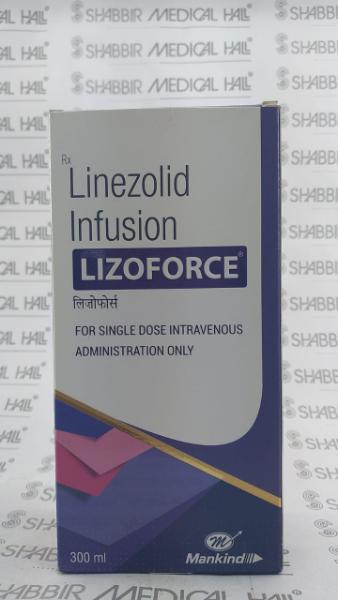
LIZOFORCE 600MG IV
 Item requires a valid prescription
Manufactured By Mankind Pharma Ltd
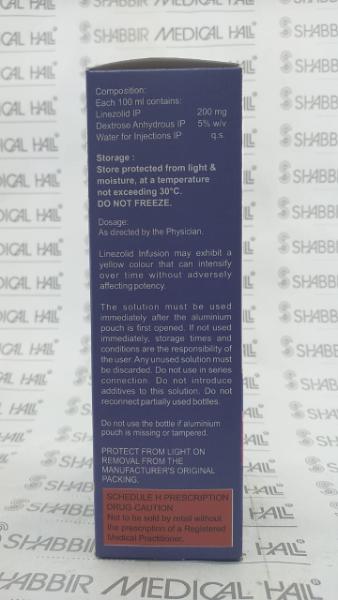
Composition Linezolid 600mg
RS 522.67
MRP RS 580.74
(10% OFF)
Includes all taxes
Package SIZE
( Bottle of 300ml )

100% Authentic
Products

Free
Shipping*

Products
Return Policy
Description:
Lizoforce 600mg IV Injection (Linezolid 600mg) is an intravenous oxazolidinone antibiotic manufactured by Mankind Pharama Ltd, used in hospitals to treat serious and life-threatening Gram-positive bacterial infections that are resistant to conventional antibiotics. It is prescribed for hospital-acquired pneumonia (HAP), community-acquired pneumonia (CAP), complicated skin and soft tissue infections (cSSTI), bacteraemia, and infections caused by methicillin-resistant Staphylococcus aureus (MRSA) and vancomycin-resistant Enterococci (VRE). Available from shabbir Medical hall at the best price in India, this genuine prescription IV injection is available online with fast and reliable delivery.
Benefits:
Lizoforce 600mg IV works by inhibiting bacterial protein synthesis through a unique mechanism — binding to the 23S ribosomal RNA of the 50S subunit, preventing formation of the 70S initiation complex essential for bacterial translation. Unlike many older antibiotics, Linezolid is effective against multidrug-resistant (MDR) Gram-positive organisms, including MRSA and VRE, making it a critical last-line antibiotic in intensive care and hospital settings. Its IV formulation ensures rapid systemic drug levels, critical for severe infections where oral administration is not feasible.
Usage overview:
Lizoforce 600mg IV is administered as a slow intravenous infusion over 30 to 120 minutes, strictly in a hospital or supervised clinical setting. The standard adult dose is 600mg every 12 hours. Duration of treatment depends on the type and severity of infection and is determined by the treating physician or infectious disease specialist. Never self-administer IV antibiotics outside of a clinical environment.
Safety overview:
The most common side effects include nausea, diarrhoea, headache, and anaemia. Serious but rare effects include myelosuppression (low blood counts), serotonin syndrome (when combined with serotonergic drugs), and optic or peripheral neuropathy with prolonged use. Inform your doctor of all current medications and medical conditions before starting therapy.
Uses / Indications:
• Hospital-Acquired Pneumonia (HAP): including MRSA-caused pneumonia in ICU and ward settings
• Community-Acquired Pneumonia (CAP): caused by susceptible Gram-positive organisms
• Complicated Skin & Soft Tissue Infections (cSSTI): diabetic foot infections, wound infections, necrotising fasciitis caused by MRSA or Streptococcus
• Vancomycin-Resistant Enterococcal (VRE) Infections: faecalis and faecium strains
• MRSA Bacteraemia: bloodstream infections with confirmed methicillin-resistant Staphylococcus aureus
ADDITIONAL USES:
• Nosocomial infections in immunocompromised patients (off-label in select protocols)
• Bone and joint infections caused by MRSA (off-label)
• Central nervous system infections (limited data; specialist use only)
• Linezolid is a second-line agent for drug-resistant tuberculosis (MDR-TB / XDR-TB) in combination regimens — specialist/national TB programme guidance required
Interactions / Warnings:
MYELOSUPPRESSION WARNING:
- Weekly full blood counts (CBC) are mandatory for all patients receiving Lizoforce IV, especially if treatment exceeds 10–14 days. Linezolid can cause potentially serious anaemia, thrombocytopenia, and leucopenia.
SEROTONIN SYNDROME:
- Linezolid is a reversible, non-selective MAO inhibitor. Concurrent use with serotonergic medicines carries a significant risk of life-threatening serotonin syndrome. Screen all medications before initiating therapy.
RENAL DISEASE:
- No dose adjustment required for renal impairment. However, two primary metabolites accumulate in severe renal impairment — clinical significance is uncertain; use with specialist monitoring.
HEPATIC DISEASE:
- No dose adjustment required for mild-moderate hepatic impairment. Severe hepatic impairment — limited data; use under specialist supervision with LFT monitoring.
PROLONGED USE (>28 DAYS):
- Risk of peripheral neuropathy and optic neuropathy increases significantly with prolonged courses. Regular ophthalmological and neurological assessment recommended.
ANTIBIOTIC RESISTANCE:
- Reserve Linezolid for proven or strongly suspected Gram-positive infections. Overuse promotes Linezolid-resistant Staphylococcus aureus (LRSA) and VRE.
DRIVING & MACHINERY:
- Lizoforce IV may cause dizziness, headache, or neurological effects. Assess individual response before driving or operating heavy machinery.
ELDERLY USE (>=65 years):
- No age-specific dose adjustment, but elderly patients are at increased risk for myelosuppression and peripheral neuropathy; monitor closely.
Pregnancy interaction:
Animal studies have shown reproductive and developmental toxicity at high doses.
Lizoforce 600mg IV should NOT be used during pregnancy unless clearly necessary and the benefit outweighs the potential risk to the foetus.
Women of childbearing potential should use effective contraception during treatment.
Inform your physician immediately if pregnancy is suspected or confirmed during treatment.
BREASTFEEDING:
Linezolid is excreted in human breast milk.
Breastfeeding is NOT recommended during treatment with Lizoforce 600mg IV.
Discuss temporary cessation of breastfeeding and safe feeding alternatives with your doctor.
DOCTOR CONSULTATION WARNING:
Never stop Lizoforce IV without consulting your physician. Incomplete antibiotic courses promote drug resistance and treatment failure.
Expert advice:
1. IV ADMINISTRATION BY QUALIFIED PERSONNEL ONLY:
Lizoforce 600mg IV must be administered by or under the direct supervision of a qualified healthcare professional in a clinical setting. It is not intended for home self-administration.
2. SCREEN FOR SEROTONERGIC MEDICATIONS BEFORE INITIATING:
Always conduct a thorough medication reconciliation for SSRIs, SNRIs, MAOIs, tramadol, or triptans before prescribing Linezolid. Serotonin syndrome is a potentially fatal, preventable drug interaction.
3. MANDATORY WEEKLY BLOOD COUNT MONITORING:
Arrange for CBC (full blood count) before starting therapy and then weekly throughout the course. Do not extend treatment beyond 28 days without compelling clinical justification and close haematological monitoring.
4. TYRAMINE DIETARY RESTRICTION:
Advise patients to strictly avoid high-tyramine foods (aged cheeses, fermented meats, soy sauce, red wine, tap beer) during Linezolid therapy to prevent hypertensive episodes.
5. COMPLETE THE FULL COURSE:
Stopping Linezolid prematurely promotes antibiotic resistance and infection relapse. Complete the full prescribed course even if symptoms improve.
MONITORING ADVICE:
* Full Blood Count (CBC) with differential: Weekly — essential to detect myelosuppression early
* Liver Function Tests (LFTs): Baseline and periodically; especially with prolonged use
* Renal Function (serum creatinine / eGFR): Baseline; metabolite accumulation in severe impairment
* Visual acuity and colour vision: If treatment exceeds 28 days or patient reports vision changes
* Neurological assessment: Report tingling, numbness, or weakness in hands/feet
* Blood pressure: Monitor when co-administered with adrenergic agents
* Blood cultures: Confirm pathogen susceptibility — Linezolid MIC testing for MRSA/VRE
COMPLIANCE TIPS:
* Keep a written log of infusion dates, times, and any adverse effects to share with your doctor
* Carry your physician's prescription and a medication information card listing all current drugs
* Inform every healthcare provider (dentist, surgeon, GP) that you are receiving Linezolid
* Do not take any new OTC medications, supplements, or herbal products without pharmacist approval
* Attend all scheduled blood test appointments — never skip monitoring during treatment
SAFETY TIPS:
* Report any new neurological symptoms (tingling, numbness, visual changes) to your doctor immediately
* Seek urgent medical attention for sudden fever, agitation, or rapid heartbeat (serotonin syndrome)
* Avoid alcohol during Linezolid therapy — risk of additive side effects
* Dispose of unused IV solution per hospital / pharmacy take-back protocols
* If you develop severe or persistent diarrhoea, report to your doctor — C. difficile colitis requires specific treatment and immediate management
Side Effects:
* Nausea, vomiting, and diarrhoea
* Headache and dizziness
* Anaemia (low haemoglobin — fatigue, pallor, breathlessness)
* Thrombocytopenia (low platelet count — easy bruising, prolonged bleeding)
* Insomnia and skin rash
* Elevated liver enzymes (ALT, AST) — usually transient
SERIOUS SIDE EFFECTS (contact your doctor immediately):
* Myelosuppression: severe anaemia, thrombocytopenia, leucopenia — especially with treatment >2 weeks
* Serotonin Syndrome: agitation, confusion, rapid heart rate, high fever, muscle twitching — particularly when combined with SSRIs, SNRIs, MAOIs, or tramadol
* Peripheral Neuropathy: tingling, numbness, burning sensation in hands/feet — with prolonged use
* Optic Neuropathy / Vision Changes: blurred vision, colour blindness — report immediately
* Lactic Acidosis: nausea, vomiting, abdominal pain, rapid breathing, weakness — medical emergency
* Clostridium difficile-Associated Diarrhoea (CDAD): severe watery or bloody diarrhoea, abdominal cramps
EMERGENCY SIGNS — SEEK IMMEDIATE MEDICAL HELP:
* Sudden confusion, agitation, rapid heart rate, high fever (possible serotonin syndrome)
* Unexplained bleeding or bruising (possible thrombocytopenia)
* Vision changes or loss
* Severe abdominal pain with watery/bloody diarrhoea (possible CDAD)
* Difficulty breathing, extreme fatigue (possible lactic acidosis)
How to use:
• Hospital-Acquired / Community-Acquired Pneumonia: 600mg IV every 12 hours; duration typically 10–14 days
• Complicated Skin & Soft Tissue Infections: 600mg IV every 12 hours; duration 10–14 days
• VRE Infections (E. faecium): 600mg IV every 12 hours; duration 14–28 days depending on site
• MRSA Bacteraemia: 600mg IV every 12 hours; duration guided by clinical response (typically ≥14 days)
ROUTE OF ADMINISTRATION:
• IV Infusion ONLY: Administer over 30 to 120 minutes via peripheral or central IV line
• Do NOT administer as an IV bolus injection
• Compatible with: 0.9% Sodium Chloride, 5% Dextrose, Lactated Ringer's solution
• Hospital / clinical setting only — not for home self-administration
TIMING:
• Administer every 12 hours (approximately 8 AM and 8 PM) for consistent plasma antibiotic levels
• Do not skip doses — incomplete antibiotic courses promote resistance
MISSED DOSE:
• Contact your treating physician / nursing team immediately. Do not double the next dose.
STORAGE:
• Store at room temperature (15–30°C / 59–86°F). Do NOT refrigerate or freeze the infusion solution.
• Protect from light; store in original carton until use.
• Single use only — discard unused portion after infusion. Keep out of reach of children.
• Do not use if solution is discoloured, cloudy, or contains visible particles.
How it works:
Lizoforce 600mg IV contains Linezolid, a synthetic oxazolidinone antibiotic with a unique and novel mechanism of action.
Unlike beta-lactams, glycopeptides, or aminoglycosides, Linezolid targets bacterial protein synthesis at the earliest translation step:
* Linezolid binds selectively to the 23S ribosomal RNA of the 50S ribosomal subunit
* This binding prevents the formation of the functional 70S initiation complex
* Without this complex, bacterial ribosomes cannot begin protein synthesis
* The result is a bacteriostatic effect (inhibits bacterial growth/replication) against most Gram-positive pathogens, and bactericidal against some (e.g., Streptococcus pneumoniae)
Key Clinical Advantages:
* Active against MRSA, VRSA, VRE, and penicillin-resistant Streptococcus pneumoniae
* No cross-resistance with other major antibiotic classes (beta-lactams, glycopeptides, macrolides)
* Excellent tissue penetration including lung, skin, and bone
* 100% bioavailability: IV to oral switch possible (same dose 600mg), enabling step-down therapy
* Clinically proven in randomised controlled trials for MRSA pneumonia and complicated skin and soft tissue infections (cSSTI)
Faq for medicine:
Lizoforce 600mg IV (Linezolid 600mg) treats serious gram-positive bacterial infections including hospital-acquired pneumonia, community-acquired pneumonia, skin and soft tissue infections, and bacteremia. It is particularly effective against methicillin-resistant Staphylococcus aureus (MRSA) and vancomycin-resistant Enterococcus (VRE) infections.
2.How does Lizoforce 600mg IV kill bacteria in the body?
Lizoforce 600mg IV works by inhibiting bacterial protein synthesis through binding to the 23S ribosomal RNA of the 50S subunit, blocking the formation of the 70S ribosomal initiation complex. This action prevents the bacteria from producing essential proteins, effectively stopping growth and aiding clearance of the infection.
3.When is Lizoforce 600mg IV preferred over oral antibiotics?
Lizoforce 600mg IV is preferred when a patient is critically ill, unable to take oral medications, has severe hospital-acquired infections, or when rapid achievement of therapeutic drug levels is needed. IV administration of Linezolid ensures complete bioavailability, making it suitable for intensive care settings and serious systemic infections.
4.How long is a typical course of Lizoforce 600mg IV treatment?
A typical treatment course of Lizoforce 600mg IV lasts 10 to 28 days, depending on the infection type and severity. Pneumonia and uncomplicated skin infections typically require 10–14 days, while complicated infections like bacteremia or VRE may require longer treatment courses under the direction of an infectious disease specialist.
5.What are the side effects associated with Lizoforce 600mg IV use?
Common side effects of Lizoforce 600mg IV include nausea, diarrhea, headache, and thrombocytopenia (low platelet count). With prolonged use beyond two weeks, peripheral neuropathy and optic neuropathy may occur. Complete blood counts should be monitored weekly. Serotonin syndrome risk increases when used with serotonergic drugs.
6.Can Lizoforce 600mg IV be used for MRSA infections in ICU patients?
Lizoforce 600mg IV is a first-line agent for MRSA pneumonia and is widely used in ICU patients. Clinical guidelines support its use for nosocomial pneumonia and complicated skin infections caused by MRSA. It achieves adequate lung penetration, making it especially effective against MRSA in pulmonary infection settings.
Medicine interaction:
SEROTONERGIC DRUGS (HIGH RISK — AVOID concurrent use):
* SSRIs: fluoxetine, sertraline, paroxetine, citalopram, escitalopram
* SNRIs: venlafaxine, duloxetine
* MAOIs: phenelzine, tranylcypromine — CONTRAINDICATED; do not use within 2 weeks of MAOI
* Tramadol, pethidine, fentanyl: risk of serotonin syndrome and seizures
* Triptans (sumatriptan, rizatriptan): increased serotonin syndrome risk
ADRENERGIC AGENTS (monitor blood pressure closely):
* Linezolid is a weak MAO inhibitor — may enhance pressor response to dopamine, adrenaline, noradrenaline, pseudoephedrine
* Reduce initial dose of adrenergic agents when used concurrently
OTHER INTERACTIONS:
* Rifampicin: reduces Linezolid plasma concentrations by ~32% — monitor clinical response
* Warfarin / anticoagulants: Linezolid may enhance anticoagulant effect — monitor INR closely
* Myelosuppressive agents: additive bone marrow suppression risk
FOOD INTERACTIONS:
* High tyramine foods (aged cheese, cured meats, red wine, fermented products): avoid during Linezolid therapy — risk of hypertensive crisis due to MAO inhibitory effect
SUPPLEMENT INTERACTIONS:
* St. John's Wort: risk of serotonin syndrome — AVOID
Available Substitutes