


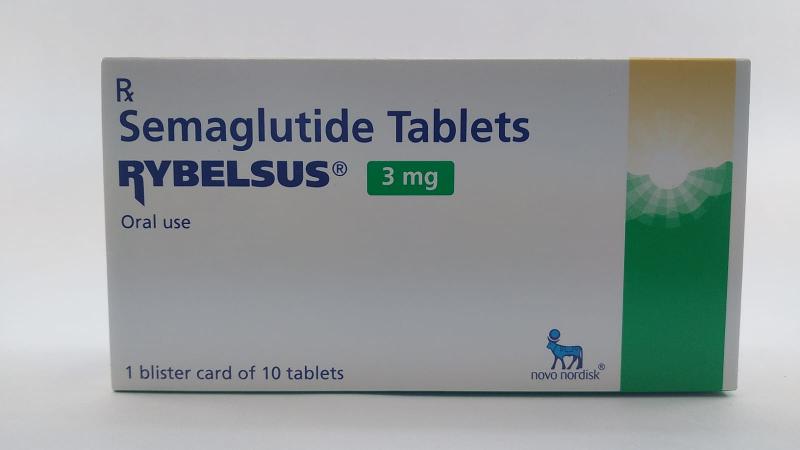
RYBELSUS 3MG TABLETS
Manufactured By NOVO NORDISK PHARMA INDIA LTD
Composition SEMAGLUTIDE 3MG
RS 2674.69
MRP RS 2971.88
(10% OFF)
Includes all taxes
Package SIZE
( 10`s )

100% Authentic
Products

Free
Shipping*

Products
Return Policy
Description:
Rybelsus 3mg Tablet is the world's first oral GLP-1 receptor agonist, containing Semaglutide 3mg, manufactured by Novo Nordisk Pharma India Ltd. It is indicated as an adjunct to diet and exercise for the management of blood glucose in adults with Type 2 Diabetes Mellitus (T2DM). The 3mg dose is specifically the starting dose used during the first 30 days of treatment to improve gastrointestinal tolerability before stepping up to the therapeutic 7mg or 14mg doses. Available from Shabbir Medical Hall at the best price in India, this genuine prescription tablet is available online with fast delivery nationwide.
BENEFITS: Rybelsus 3mg is part of the semaglutide GLP-1 receptor agonist class — the most clinically advanced category of oral antidiabetic therapy available today. Semaglutide lowers blood glucose through a multi-targeted mechanism: stimulating glucose-dependent insulin secretion, suppressing inappropriate glucagon release, slowing gastric emptying, and reducing appetite and food intake through central hypothalamic pathways. Clinical data from the PIONEER trials demonstrate significant HbA1c reductions with semaglutide 7mg and 14mg, along with meaningful body weight reduction — a dual benefit highly relevant for overweight T2DM patients. Rybelsus offers the convenience of a once-daily oral tablet — eliminating the need for daily injections required by injectable GLP-1 receptor agonists such as liraglutide or injectable semaglutide (Ozempic).
USAGE OVERVIEW: Rybelsus 3mg is taken ONCE DAILY on an empty stomach, upon waking, with no more than 120 mL (half a glass) of plain water only — at least 30 minutes before the first food, drink (other than water), or other oral medications of the day. After 30 days on 3mg, the dose is increased to 7mg once daily; after a further 30 days, if additional glycaemic control is needed, the dose is increased to 14mg once daily.
SAFETY OVERVIEW: Most common side effects are gastrointestinal — nausea, vomiting, diarrhoea, and reduced appetite — typically occurring at treatment initiation and improving over time. This medicine is NOT recommended for Type 1 Diabetes, diabetic ketoacidosis, severe renal impairment, or during pregnancy.
Uses / Indications:
• Type 2 Diabetes Mellitus (T2DM) in adults: as adjunct to diet and exercise to improve glycaemic control
• Monotherapy: when metformin is not tolerated or is contraindicated
• Add-on therapy: in combination with other oral antidiabetics (metformin, SGLT2 inhibitors, sulfonylureas, thiazolidinediones) or basal insulin when existing therapy does not provide adequate blood glucose control
DOSE-SPECIFIC ROLE OF RYBELSUS 3MG:
• Rybelsus 3mg is the INITIATION DOSE ONLY — used for the first 30 days to improve gastrointestinal tolerability
• It is NOT a therapeutic (blood-sugar lowering) dose — clinical trials demonstrated minimal HbA1c lowering at 3mg
• After 30 days: step up to Rybelsus 7mg once daily (therapeutic dose)
• After a further 30 days at 7mg: if additional control needed, step up to Rybelsus 14mg once daily (maximum dose)
ADDITIONAL INVESTIGATIONAL / OFF-LABEL CONTEXT:
• Cardiovascular risk reduction: injectable semaglutide (Ozempic) has established CV benefit in T2DM with CVD; oral semaglutide PIONEER 6 trial showed non-inferiority for CV outcomes
• Obesity management: injectable semaglutide 2.4mg (Wegovy) is approved for obesity — Rybelsus is NOT approved for obesity alone
• NOT indicated for Type 1 Diabetes, LADA, or DKA
WHO IS RYBELSUS FOR?
• Adults with T2DM requiring improved glycaemic control with or without other oral antidiabetics
• Patients who prefer an oral formulation over injectable GLP-1 therapy
• Overweight/obese T2DM patients who may benefit from semaglutide's weight-lowering effect
Interactions / Warnings:
PANCREATITIS WARNING: Rybelsus should be used with caution in patients with a history of pancreatitis. DISCONTINUE immediately if acute pancreatitis is suspected (severe abdominal pain, elevated lipase/amylase). Do NOT restart without physician evaluation confirming alternative aetiology.
MEDULLARY THYROID CARCINOMA (MTC) / MEN2 WARNING: CONTRAINDICATED in patients with personal or family history of Medullary Thyroid Carcinoma (MTC) or Multiple Endocrine Neoplasia syndrome type 2 (MEN2). Animal studies (rodents) showed dose-dependent thyroid C-cell tumours with GLP-1 receptor agonists — relevance to humans is uncertain but a precautionary contraindication exists. Advise patients to report neck masses, dysphagia, dysphonia, or persistent hoarseness.
DIABETIC RETINOPATHY: Rapid improvement in blood glucose may transiently worsen diabetic retinopathy complications. Baseline ophthalmological examination and regular follow-up recommended in patients with known retinopathy.
RENAL IMPAIRMENT: No dose adjustment required for mild-moderate renal impairment. Severe renal impairment (eGFR <15 mL/min/1.73m²): limited data — use with caution; monitor renal function. Dehydration from GI side effects can precipitate acute kidney injury — ensure adequate hydration.
HEPATIC IMPAIRMENT: No dose adjustment required for mild-severe hepatic impairment. Use with caution in severe hepatic impairment — limited clinical experience.
HEART RATE: Semaglutide may increase heart rate by 2–3 bpm on average — monitor in patients with known cardiac arrhythmias or tachycardia.
NOT FOR TYPE 1 DIABETES: Rybelsus is NOT indicated for Type 1 Diabetes, LADA (Latent Autoimmune Diabetes in Adults), or diabetic ketoacidosis. It does NOT replace insulin in insulin-dependent patients.
Pregnancy interaction:
• Rybelsus (Semaglutide) is CONTRAINDICATED in pregnancy
• Animal reproduction studies showed embryo-foetal toxicity (skeletal malformations, growth retardation) at doses overlapping clinical exposure — not safe
• GLP-1 receptor agonists may affect foetal organogenesis, particularly in the first trimester
• WOMEN OF CHILDBEARING POTENTIAL: use effective contraception during Rybelsus therapy
• STOP Rybelsus at least 2 months before a planned pregnancy — semaglutide has a long half-life (~1 week) and takes approximately 5 weeks to wash out; additional safety margin recommended
• If pregnancy is detected during treatment: STOP immediately and consult endocrinologist/obstetrician for safe alternative antidiabetic management
• During pregnancy, insulin remains the preferred antidiabetic therapy for T2DM
BREASTFEEDING:
• It is unknown whether semaglutide is excreted in human milk
• Based on animal data and the drug's properties, excretion into breast milk is considered possible
• A decision must be made whether to discontinue breastfeeding or discontinue Rybelsus — consult endocrinologist
FERTILITY:
• Animal studies showed no effects on fertility
• No human data on fertility effects — advise patients to plan pregnancy carefully with their diabetologist
Expert advice:
1. THE 30-MINUTE FASTING RULE IS NON-NEGOTIABLE — AND OFTEN MISUNDERSTOOD:
• Rybelsus 3mg must be taken first thing upon waking, with NO MORE THAN 120 mL of plain water ONLY. No tea, no coffee, no milk, no juice — not even a sip. No other medications. You must then fast for AT LEAST 30 MINUTES before eating, drinking anything else, or taking any other oral medicine. Clinical studies show that taking Rybelsus with a small meal (250 kcal) reduces semaglutide AUC by ~40%, and drinking more than 120 mL of water reduces absorption by ~30%. This is the most commonly violated rule and the most common reason patients see reduced efficacy from Rybelsus.
2. RYBELSUS 3MG IS A STARTER DOSE — NOT THE TREATMENT DOSE:
• Many patients mistakenly believe that if 3mg is not working, the medicine is ineffective. Rybelsus 3mg is not expected to lower blood sugar — it is used ONLY for the first 30 days to allow the body to adjust to semaglutide and reduce gastrointestinal side effects. After 30 days, your diabetologist will increase the dose to 7mg (the first therapeutic dose). Continue taking 3mg as prescribed during this period — it is building tolerance, not treating T2DM directly.
3. MANAGE NAUSEA PROACTIVELY — IT PEAKS EARLY AND THEN IMPROVES:
• Nausea is the most commonly reported side effect of Rybelsus — especially in the first 4–8 weeks as the dose is being escalated. Practical strategies to manage GI side effects: eat smaller, more frequent meals; avoid high-fat, fried, spicy foods; avoid alcohol; keep well hydrated between meals; and eat slowly. If nausea is severe and you are unable to drink fluids, seek medical attention — dehydration can affect kidney function.
4. WATCH FOR PANCREATITIS SYMPTOMS AND SEEK URGENT HELP:
• Any severe, persistent abdominal pain — especially radiating to the back — could indicate acute pancreatitis, a rare but serious complication of GLP-1 receptor agonist therapy. DO NOT wait for a routine appointment. Go to your nearest emergency department immediately, inform the doctor you are on semaglutide (Rybelsus), and STOP the tablet until further assessment.
5. IF YOU TAKE INSULIN OR SULFONYLUREAS, INCREASE YOUR GLUCOSE MONITORING:
• Adding Rybelsus to a sulfonylurea or insulin regimen significantly increases the risk of hypoglycaemia (low blood sugar). Your diabetologist may need to reduce your sulfonylurea or insulin dose when Rybelsus is initiated. Learn to recognise hypoglycaemia symptoms: sweating, shakiness, palpitations, confusion, blurred vision — and always carry a fast-acting glucose source (glucose tablets or juice).
MONITORING ADVICE:
• Blood glucose (fasting and postprandial): Frequency as directed — typically daily or every 2–3 days for non-insulin users; more frequently when adding to insulin/sulfonylurea
• HbA1c: Every 3 months initially; every 6 months once stable (target <7% for most patients)
• Body weight: Monthly — track the weight loss benefit
• Renal function (serum creatinine, eGFR): Baseline; annually or if GI side effects cause dehydration
• Liver Function Tests: Baseline; periodically as indicated
• Lipid profile: Annually — semaglutide may modestly improve lipid profile
• Serum lipase/amylase: If abdominal symptoms develop — pancreatitis monitoring
• Ophthalmological examination: Baseline and annually in patients with existing diabetic retinopathy
• Thyroid examination: Be alert to any neck swelling, hoarseness, or dysphagia — rare MTC concern
COMPLIANCE TIPS:
• Set a daily morning alarm labelled 'Rybelsus — plain water only, no food for 30 min'
• Keep the bottle on your bedside table so you remember to take it BEFORE getting up
• Store the bottle tightly closed in original packaging — semaglutide is moisture-sensitive
• Do NOT transfer tablets to pill organisers — keep in original bottle
• Do NOT crush, split, or chew tablets — the SNAC absorption technology requires an intact tablet
SAFETY TIPS:
• Women planning pregnancy: stop Rybelsus at least 2 months before planned conception and switch to insulin
• Sick-day rules: if vomiting or diarrhoea prevent food intake — hold the Rybelsus dose and contact your diabetologist for glucose management advice
• Before any surgery: inform your surgeon and anaesthetist you are on Rybelsus — gastric emptying delay is relevant to anaesthesia fasting protocols
• Alcohol: moderate intake may be acceptable, but excess alcohol increases hypoglycaemia risk and GI side effects
Side Effects:
• Nausea — most frequently reported; typically peaks in first 4–8 weeks then subsides
• Diarrhoea, vomiting, abdominal pain, constipation
• Decreased appetite — contributes to the weight loss benefit
• Dyspepsia, abdominal distension, eructation (belching), flatulence
COMMON SIDE EFFECTS (1 in 10 to 1 in 100 patients):
• Hypoglycaemia (low blood sugar): LOW RISK when used as monotherapy; significant risk when combined with sulfonylureas or insulin — dose reduction of the sulfonylurea/insulin may be required
• Fatigue, dizziness
• Elevated lipase and amylase (pancreatic enzyme levels) — asymptomatic in most cases
• Gallstones (cholelithiasis) — GLP-1 receptor agonists are associated with increased gallstone formation
SERIOUS SIDE EFFECTS (uncommon/rare — seek immediate medical attention):
• Acute Pancreatitis: severe, persistent abdominal pain radiating to the back, vomiting — STOP Rybelsus immediately and seek emergency care; do NOT restart without physician evaluation
• Diabetic Retinopathy Complications: rapid improvement in blood glucose control can transiently worsen diabetic retinopathy — regular eye examinations recommended in patients with pre-existing retinopathy
• Acute Kidney Injury: secondary to severe dehydration from persistent vomiting/diarrhoea — stay well hydrated; seek medical attention if unable to keep fluids down
• Severe Hypersensitivity / Anaphylaxis: rash, facial/throat swelling, difficulty breathing — SEEK EMERGENCY HELP
• Medullary Thyroid Carcinoma (theoretical risk based on rodent studies — not confirmed in humans; contraindicated in patients with personal/family history of MTC or MEN2)
How to use:
STEP-UP DOSING PROTOCOL:
• Days 1–30: Rybelsus 3mg once daily (initiation / tolerability phase — NOT a glycaemic target dose)
• Days 31–60: Rybelsus 7mg once daily (first therapeutic dose; most patients achieve glycaemic goals here)
• Days 61+: Rybelsus 14mg once daily (maximum dose; for patients needing additional HbA1c reduction)
CRITICAL ADMINISTRATION RULES — MUST BE FOLLOWED EXACTLY:
• Take FIRST THING IN THE MORNING on an empty stomach — immediately upon waking
• Swallow the tablet WHOLE with NO MORE THAN 120 mL (half a glass) of PLAIN WATER ONLY
• No juice, tea, coffee, milk, or flavoured water — these reduce absorption significantly
• No crushing, chewing, or splitting the tablet — the SNAC technology requires the tablet to remain intact
• Wait AT LEAST 30 MINUTES before eating, drinking anything other than plain water, or taking any other oral medicines
• This 30-minute fasting window is NON-NEGOTIABLE for adequate drug absorption
• Even a small sip of coffee or juice during this window can reduce Rybelsus exposure by up to 50%
MISSED DOSE:
• Skip the missed dose entirely if you have already eaten or drunk anything other than plain water that morning
• Take the next dose the following morning as usual
• NEVER double up doses
STORAGE:
• Store in original packaging below 30°C, away from moisture and direct sunlight
• Keep the bottle tightly closed between uses
• Keep out of reach of children
• Do not use after the expiry date printed on the label
How it works:
KEY MECHANISMS:
1. GLUCOSE-DEPENDENT INSULIN STIMULATION (Pancreatic Beta Cells):
• Activates GLP-1 receptors on pancreatic beta cells → stimulates insulin secretion ONLY when blood glucose is elevated
• This glucose-dependence is a critical safety advantage: minimal risk of hypoglycaemia (low blood sugar) when used alone
• Promotes beta cell proliferation and survival — potentially preserving insulin-secreting capacity over time
2. GLUCAGON SUPPRESSION (Pancreatic Alpha Cells):
• Inhibits inappropriate glucagon secretion after meals in a glucose-dependent manner
• Reduces hepatic glucose production (gluconeogenesis and glycogenolysis) — lowers fasting blood glucose
3. GASTRIC EMPTYING DELAY:
• Slows gastric emptying, reducing the rate of glucose absorption after meals
• Attenuates postprandial glucose (PPG) spikes — particularly important for T2DM management
• This effect diminishes with prolonged use (tachyphylaxis), with the pancreatic and hepatic effects remaining dominant
4. CENTRAL APPETITE SUPPRESSION (Hypothalamus):
• Crosses the blood-brain barrier; activates GLP-1 receptors in hypothalamic appetite centres
• Reduces hunger, caloric intake, and body weight — independent of glycaemic effect
• Contributes to the 2–4 kg average weight loss observed with Rybelsus 7mg/14mg in PIONEER trials
ORAL DELIVERY TECHNOLOGY — SALCAPROZATE SODIUM (SNAC):
• Semaglutide is normally degraded by gastric proteases and poorly absorbed orally
• Rybelsus uses SNAC (sodium N-(8-[2-hydroxybenzoyl] amino) caprylate) as an absorption enhancer
• SNAC buffers the local gastric pH around the tablet, protects semaglutide from enzymatic degradation, and transiently enhances its transcellular absorption through the gastric mucosa
• Oral bioavailability: ~1% (compared to near-100% for injectable semaglutide) — hence high drug load and strict fasting administration requirement
Faq for medicine:
Rybelsus 3mg Tablets contain oral Semaglutide, a GLP-1 receptor agonist used as an adjunct to diet and exercise to improve glycaemic control in adults with type 2 diabetes. The 3mg dose is the starting dose intended for the first 30 days of therapy. Rybelsus 3mg helps lower fasting and postprandial blood glucose through glucose-dependent insulin secretion and reduced glucagon release.
2.How should Rybelsus 3mg Tablets be taken for maximum effectiveness?
Rybelsus 3mg Tablets must be taken on an empty stomach, first thing in the morning, with up to 120ml of water. Food, beverages, or other medications should not be consumed for at least 30 minutes after taking the tablet. The tablet must be swallowed whole; crushing or chewing impairs absorption. After 30 days, Rybelsus dose is typically increased to 7mg for better glycaemic control.
3.Can Rybelsus 3mg Tablets cause nausea and how can it be managed?
Nausea is the most common side effect of Rybelsus 3mg Tablets and typically occurs during the dose initiation period. It is usually mild to moderate and decreases as the body adjusts. Rybelsus 3mg is the lowest available dose, introduced specifically to minimize gastrointestinal side effects. Eating small, bland meals and avoiding high-fat foods can help manage nausea during early treatment.
4.Is Rybelsus 3mg suitable for patients who cannot take injectable diabetes medications?
Rybelsus 3mg Tablet is the world's first oral GLP-1 receptor agonist, making it a suitable alternative for type 2 diabetes patients who are averse to injections. It delivers the same mechanism of action as injectable semaglutide (Ozempic) in a convenient tablet form. Rybelsus provides effective blood sugar lowering and is particularly beneficial for needle-phobic or injection-intolerant patients.
5.Does Rybelsus 3mg Tablet help with weight loss in diabetic patients?
Rybelsus 3mg Tablets may provide modest weight loss benefits as Semaglutide suppresses appetite via central GLP-1 receptor activation, reducing caloric intake. While the 3mg starting dose delivers less pronounced weight loss than higher doses, patients transitioning to 7mg or 14mg experience more significant weight reduction. Rybelsus is prescribed for glycaemic control, with weight loss as a favorable secondary outcome.
6.Who should not take Rybelsus 3mg Tablets due to health risks?
Rybelsus 3mg Tablets are contraindicated in patients with type 1 diabetes, personal or family history of medullary thyroid carcinoma, or multiple endocrine neoplasia syndrome type 2. It is not recommended during pregnancy or breastfeeding. Patients with severe gastrointestinal disease, prior pancreatitis, or diabetic gastroparesis require special caution. Renal and hepatic monitoring is advisable during Rybelsus therapy.
Medicine interaction:
1. HYPOGLYCAEMIA RISK — ADDITIVE WITH:
• Sulfonylureas (glibenclamide, glipizide, glimepiride, gliclazide): increased hypoglycaemia risk — consider reducing sulfonylurea dose when initiating Rybelsus
• Insulin: significant hypoglycaemia risk — consider insulin dose reduction and increase glucose monitoring frequency
• Meglitinides (repaglinide, nateglinide): additive hypoglycaemia risk
2. ORAL DRUG ABSORPTION — GASTRIC EMPTYING DELAY EFFECT:
• Rybelsus delays gastric emptying, potentially affecting absorption of other oral medications
• Cyclosporin: increased exposure with semaglutide — monitor closely and take cyclosporin at least 30 minutes before Rybelsus or separate administration as directed
• Oral contraceptives: no clinically significant interaction noted in trials, but take at least 30 minutes after Rybelsus
• Warfarin/other anticoagulants: altered absorption rate possible — monitor INR more closely when starting or stopping Rybelsus
• Thyroxine (levothyroxine): some patients may need TSH monitoring as absorption could be affected
3. ADMINISTRATION INTERACTION:
• ALL other oral medicines should be taken at least 30 minutes AFTER Rybelsus to avoid impaired absorption due to the SNAC-mediated gastric pH buffering effect
SUPPLEMENT INTERACTIONS:
• No established serious supplement interactions
• Alpha-lipoic acid, berberine, chromium supplements: mild blood glucose-lowering properties; monitor glucose more closely