


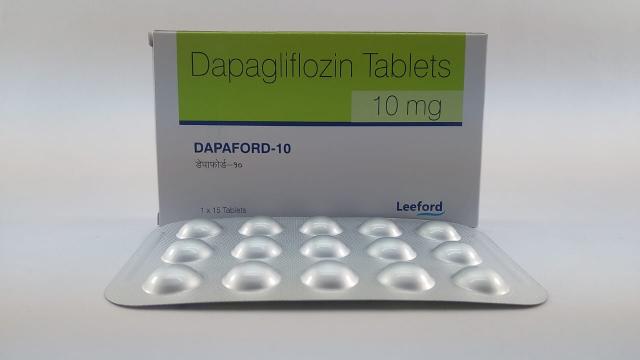
DAPAFORD 10MG TABLETS
 Item requires a valid prescription
Manufactured By LEEFORD HEALTHCARE LTD
Composition DAPAGLIFLOZIN 10MG
RS 135.00
MRP RS 150.00
(10% OFF)
Includes all taxes
Package SIZE
( 15`s )

100% Authentic
Products

Free
Shipping*

Products
Return Policy
Description:
Dapaford 10mg Tablet is a sodium-glucose co-transporter 2 (SGLT2) inhibitor medicine manufactured by Leeford Healthcare Ltd, containing Dapagliflozin 10mg as its active ingredient. It belongs to the modern class of antidiabetic medicines that work through an insulin-independent mechanism — directly targeting the kidney to promote urinary glucose excretion — making it uniquely effective and well-suited for long-term use in adults with Type 2 Diabetes Mellitus (T2DM). Beyond glycaemic control, Dapagliflozin 10mg has demonstrated compelling cardiovascular and renal benefits, and is also approved for the treatment of Heart Failure with Reduced Ejection Fraction (HFrEF) and Chronic Kidney Disease (CKD) in adults. Available from Shabbir Medical Hall at best price in India (10% OFF MRP), this prescription tablet is available online with fast home delivery nationwide.
BENEFITS: Dapaford 10mg Tablet lowers blood glucose levels by blocking SGLT2 receptors in the proximal renal tubule, promoting urinary excretion of glucose (glucosuria) regardless of insulin secretion or sensitivity. In large-scale clinical trials (DECLARE-TIMI 58, DAPA-HF, DAPA-CKD), Dapagliflozin demonstrated: significant HbA1c reduction (average 0.5–1.0%); modest but clinically meaningful weight loss (1–3 kg); blood pressure reduction (systolic 2–4 mmHg); 27% relative risk reduction in hospitalisation for heart failure (DECLARE-TIMI 58); 26% reduction in cardiovascular death or worsening heart failure (DAPA-HF); and significant reduction in CKD progression and renal events (DAPA-CKD). It is a once-daily, insulin-independent, well-tolerated oral tablet suitable for long-term chronic disease management.
USAGE OVERVIEW: Dapaford 10mg Tablets are taken orally, once daily, with or without food, at the same time each day. They are used as monotherapy (diet and exercise inadequate alone) or as add-on therapy to other antidiabetic agents including metformin, sulfonylureas, insulin, DPP-4 inhibitors, and GLP-1 receptor agonists. The tablet is also prescribed as standalone therapy for HFrEF and CKD (independently of diabetes status) under specialist cardiology or nephrology supervision.
SAFETY OVERVIEW: Dapaford 10mg is generally well-tolerated. The most common adverse effects are genital mycotic (fungal) infections and urinary tract infections. Key safety warnings include the risk of diabetic ketoacidosis (DKA) — particularly during illness, fasting, or surgery — and Fournier's gangrene (rare). Dose adjustment or discontinuation is required in patients with renal impairment (eGFR <45 ml/min for T2DM indication).
Uses / Indications:
1. TYPE 2 DIABETES MELLITUS (T2DM) — GLYCAEMIC CONTROL:
• First-line add-on to diet and exercise when metformin is inadequate or not tolerated
• Combination therapy with metformin, sulfonylureas (e.g. glimepiride, glipizide), DPP-4 inhibitors (e.g. sitagliptin, vildagliptin), GLP-1 receptor agonists (e.g. liraglutide), or insulin (basal or bolus)
• Reduces HbA1c by approximately 0.5–1.0% from baseline
• Provides additional benefits of weight reduction (1–3 kg) and systolic blood pressure reduction (~2–4 mmHg)
• Indicated in adults aged 18 years and above with T2DM; not indicated for Type 1 Diabetes Mellitus
2. HEART FAILURE WITH REDUCED EJECTION FRACTION (HFrEF — Left Ventricular Ejection Fraction ≤40%):
• Approved to reduce the risk of cardiovascular death and worsening heart failure (hospitalisation for HF or urgent HF visit)
• Indicated in adults with symptomatic HFrEF regardless of diabetes status (DAPA-HF trial data)
• Used as add-on to optimised guideline-directed medical therapy (ACE inhibitor/ARB/ARNI + beta-blocker + MRA)
3. CHRONIC KIDNEY DISEASE (CKD):
• Approved to reduce the risk of sustained eGFR decline, end-stage kidney disease, cardiovascular death, and hospitalisation in adults with CKD (eGFR 25–75 ml/min/1.73m²) with albuminuria (UACR ≥200 mg/g), regardless of diabetes status (DAPA-CKD trial data)
• Used under nephrologist supervision as part of comprehensive CKD management strategy
ADDITIONAL OFF-LABEL / EMERGING USES (under specialist guidance):
• Heart Failure with Preserved or Mildly Reduced Ejection Fraction (HFpEF / HFmrEF): growing evidence (DELIVER trial) supporting use; specialist cardiology assessment required
• Non-alcoholic fatty liver disease (NAFLD): emerging evidence; not a current approved indication
Interactions / Warnings:
DIABETIC KETOACIDOSIS (DKA) WARNING — EUGLYCAEMIC DKA
SGLT2 inhibitors, including Dapagliflozin, can cause DKA even when blood glucose is only mildly elevated (euglycaemic DKA — blood glucose <14 mmol/L / <250 mg/dL) — making it easy to miss the diagnosis if blood glucose alone is checked. HIGH-RISK SITUATIONS — WITHHOLD DAPAFORD AND SEEK URGENT REVIEW: Prolonged fasting or very low carbohydrate diets (ketogenic diets — AVOID while on Dapagliflozin); Elective surgery: WITHHOLD at least 3–4 days before surgery; restart only after confirmed normal eating and drinking; Acute illness (fever, vomiting, diarrhoea, reduced intake): WITHHOLD and restart only after full recovery; Excessive alcohol intake; Rapid or excessive insulin dose reduction; Any patient with suspected T1DM or latent autoimmune diabetes of adults (LADA). SYMPTOMS OF DKA: nausea, vomiting, abdominal pain, excessive thirst, frequent urination, fatigue, difficulty breathing, confusion, fruity-smelling breath — seek EMERGENCY care immediately; check blood KETONES (not just glucose).
FOURNIER'S GANGRENE (NECROTISING FASCIITIS OF THE PERINEUM)
Rare but potentially fatal; cases reported with all SGLT2 inhibitors including Dapagliflozin. Present as rapidly progressive pain, tenderness, erythema, warmth, or swelling in the perineal/genital area, often with fever and sepsis signs. DISCONTINUE Dapagliflozin IMMEDIATELY; EMERGENCY surgical referral; broad-spectrum antibiotics; ICU support may be required. Educate all patients to present immediately if any genital or perineal pain, swelling, or discolouration develops.
RENAL IMPAIRMENT — DOSE LIMITATION
Efficacy of Dapagliflozin for glycaemic control depends on adequate kidney function (eGFR ≥45 ml/min/1.73m²); below this threshold, glucose-lowering efficacy is significantly reduced — NOT recommended for T2DM glycaemic control if eGFR <45. For HFrEF and CKD indications: may be continued at lower eGFR (≥25 ml/min/1.73m²) under specialist guidance. NOT recommended for patients on dialysis or with eGFR <25 ml/min/1.73m².
VOLUME DEPLETION AND HYPOTENSION
Particularly relevant in elderly patients, those on loop diuretics, ACE inhibitors/ARBs, or NSAIDs; assess volume status before initiating; consider temporary dose reduction of diuretics; ensure adequate hydration; advise sick day rules.
GENITAL INFECTIONS — PATIENT COUNSELLING
Genital mycotic infections are common and expected; counsel patients on genital hygiene, early symptom recognition, and availability of topical antifungal treatment; recurrent/severe infections may require temporary treatment interruption.
Pregnancy interaction:
• Dapaford 10mg (Dapagliflozin) is CONTRAINDICATED during the second and third trimesters of pregnancy
• Animal data suggest potential renal toxicity in the developing foetus during the second and third trimesters (when foetal kidney development is active and SGLT2 expression increases)
• Limited human data available; the risk to the foetus during second/third trimester outweighs any benefit — discontinue Dapagliflozin as soon as pregnancy is confirmed or planned
• First trimester: Not specifically contraindicated on current data, but as a precaution, alternative antidiabetic agents (metformin, insulin — both established safer options) are preferred throughout pregnancy
• Women of childbearing potential: use effective contraception; discuss pregnancy planning with diabetologist prior to conception; switch to metformin and/or insulin before attempting conception
BREASTFEEDING:
• Dapaford 10mg is CONTRAINDICATED during breastfeeding
• Dapagliflozin and its metabolites are excreted into rat milk; human data insufficient; given the potential for adverse effects in the nursing infant (particularly on the developing kidneys), breastfeeding is not recommended during therapy
• Discuss alternative antidiabetic management with your diabetologist if breastfeeding is intended
FERTILITY:
• No data on the effect of Dapagliflozin on human fertility; animal reproductive studies at clinical doses showed no impairment of fertility; recurrent genital infections may impact sexual health — discuss with treating physician
Expert advice:
1. SICK DAY RULES AND PRE-SURGERY WITHHOLDING — THE MOST CRITICAL COUNSELLING POINT FOR SGLT2 INHIBITORS:
• The greatest preventable serious adverse event with Dapagliflozin (Dapaford 10mg) is euglycaemic DKA during illness or peri-operative periods. Every patient must understand and remember the sick day rule: "STOP DAPAFORD if you are unwell, vomiting, not eating properly, having surgery, or planning to fast." Dispense a simple written sick day card with each supply. Emphasise three scenarios: (1) Stop 3–4 days before planned surgery and tell your surgical team and anaesthetist; (2) Stop during any acute illness (fever, vomiting, diarrhoea, reduced food intake) and restart only when eating and drinking normally; (3) Stop if starting a very low carbohydrate/ketogenic diet. The danger is that DKA can occur with normal or near-normal blood glucose — patients and family members should check blood KETONES (not just glucose) if symptoms develop.
2. COUNSEL ON GENITAL INFECTIONS — NORMALISE, PREPARE, AND EMPOWER:
• Genital mycotic infections (thrush) are the most common side effect and the main reason patients discontinue SGLT2 inhibitors unnecessarily. At the first dispense, counsel proactively: explain that glucosuria creates a sugar-rich environment that predisposes to fungal infections; advise good genital hygiene (keep area clean and dry, avoid perfumed products); inform patients that OTC clotrimazole 1% cream is effective for mild episodes; advise them to report recurrent or severe infections. For men, emphasise that uncircumcised males have significantly higher risk of balanitis — hygiene education is essential. Do NOT wait for the patient to raise this; anticipate and counsel upfront at every first dispense.
3. HYPOGLYCAEMIA RISK WHEN COMBINED WITH INSULIN OR SULFONYLUREAS:
• Dapagliflozin alone does NOT cause hypoglycaemia (its mechanism is insulin-independent). However, when combined with insulin or sulfonylureas (a very common combination in T2DM management), hypoglycaemia risk is meaningfully increased. At dispensing, verify the patient's complete antidiabetic regimen: if adding Dapaford to existing insulin therapy, flag to the prescriber that a 10–20% insulin dose reduction is typically recommended. If adding to a sulfonylurea, counsel the patient on hypoglycaemia recognition and management (symptoms: shakiness, sweating, dizziness, confusion; management: 15g fast-acting carbohydrate such as 3 glucose tablets or 150ml fruit juice). Advise patients on sulfonylureas or insulin to carry glucose tablets at all times.
4. COUNSEL ON THE CARDIOVASCULAR AND RENAL BENEFITS — MOTIVATE ADHERENCE:
• Many patients see Dapaford 10mg as 'just another diabetes tablet' and underestimate its importance. At dispensing, contextualise its triple benefit: it lowers blood sugar (HbA1c reduction), protects the heart (reduces hospitalisation for heart failure), and protects the kidneys (slows CKD progression). For patients with established heart disease or CKD, this framing transforms a 'glucose drug' into a life-extending organ-protection therapy. Emphasising cardiovascular and renal benefits dramatically improves long-term adherence in high-risk patients. Use simple language: "This tablet does more than control your sugar — it also helps protect your heart and kidneys."
5. VERIFY RENAL FUNCTION (eGFR) BEFORE DISPENSING — DO NOT DISPENSE WITHOUT RENAL CHECK:
• Dapagliflozin for glycaemic control is not recommended if eGFR <45 ml/min/1.73m². Before dispensing for the first time, or after any period of illness, confirm that recent renal function tests (serum creatinine / eGFR) are available and within the recommended range for the stated indication. If the patient's eGFR is below the threshold for the stated use, flag urgently to the prescribing physician. This is a safety gate, not an optional check.
MONITORING ADVICE:
• HbA1c: Baseline; every 3 months until target achieved; then every 6 months (target typically <7.0% for T2DM, as agreed with diabetologist)
• Renal function (eGFR / serum creatinine): Baseline; at 1 month after initiation; then every 3–6 months (particularly in patients with CKD, elderly, or on concurrent ACE inhibitors/ARBs/diuretics)
• Serum electrolytes (potassium, sodium): Baseline and periodically — particularly in patients on diuretics or ACE inhibitors/ARBs (hypokalaemia risk with loop diuretics; hyperkalaemia risk with ACEi/ARB/MRA combinations in HF/CKD)
• Blood pressure: Baseline and at follow-up — modest BP reduction expected; monitor for hypotension, especially in elderly and volume-depleted patients
• Body weight: Baseline and periodically — modest weight reduction (1–3 kg) expected; document and reinforce as motivational adherence tool
• Fasting lipid profile: Baseline; annually — modest LDL increase possible; monitor and manage as per cardiovascular risk guidelines
• Genital and urinary symptoms: Ask at every follow-up dispense — proactive monitoring improves early detection and management
COMPLIANCE TIPS:
• Take once daily at the same time each day — morning preferred (to reduce nocturia/night-time urination from diuretic effect)
• May be taken with or without food — take it alongside another once-daily medication (e.g. antihypertensive, statin) to build habit association
• Carry a medication alert card stating you are on an SGLT2 inhibitor (Dapagliflozin) — essential for any emergency, illness, or surgical attendance
• Keep a written sick day rule reminder on your phone or in your wallet
SAFETY TIPS:
• Do NOT start a ketogenic or very low carbohydrate diet while on Dapaford without specialist guidance — DKA risk
• Maintain good fluid intake (2–2.5 litres/day unless fluid-restricted by cardiologist for HF) — reduces UTI and volume depletion risk
• Inform ALL treating doctors, dentists, and pharmacists that you are on an SGLT2 inhibitor before any new medicine or procedure
• Do NOT stop Dapaford without diabetologist/cardiologist/nephrologist approval — stopping suddenly may worsen glycaemic control or HF/CKD outcomes
• Avoid regular NSAID use — increased AKI risk when combined with SGLT2 inhibitors
Side Effects:
• Genital mycotic (fungal) infections — MOST COMMON: vulvovaginal candidiasis in women; balanitis/balanoposthitis in men; caused by glucosuria creating a sugar-rich environment favouring fungal growth; usually mild-moderate, manageable with topical antifungals; more frequent in uncircumcised men and women with prior genital infections
• Urinary Tract Infections (UTIs): increased urinary frequency and glucosuria increase UTI risk; typically lower UTIs (cystitis); present as dysuria, frequency, urgency, cloudy urine; treat promptly with appropriate antibiotics; recurrent UTIs may require SGLT2 inhibitor discontinuation
• Increased urination (pollakiuria / nocturia): expected pharmacological effect from osmotic diuresis; usually diminishes after 2–4 weeks as the body adjusts
• Thirst, dry mouth: mild osmotic diuresis-related; ensure adequate hydration
LESS COMMON SIDE EFFECTS (1–10 in 100 people):
• Hypoglycaemia: LOW RISK when used as monotherapy; SIGNIFICANT RISK when combined with insulin or sulfonylureas — Dapagliflozin alone does NOT cause hypoglycaemia (insulin-independent mechanism) but potentiates hypoglycaemia risk when combined with insulin-releasing agents; consider sulfonylurea or insulin dose reduction when adding Dapagliflozin
• Dizziness, postural hypotension: from volume depletion and blood pressure reduction — particularly in elderly patients, those on diuretics or antihypertensives; monitor BP and hydration status at initiation
• Back pain, pain in extremities
• Dyslipidaemia: modest increase in LDL cholesterol reported; monitor lipid profile periodically
• Elevated haematocrit / haemoglobin: due to plasma volume contraction (haemoconcentration); usually clinically insignificant
SERIOUS SIDE EFFECTS (urgent medical attention required):
• DIABETIC KETOACIDOSIS (DKA) — RARE BUT LIFE-THREATENING: Euglycaemic DKA (blood glucose may be only mildly elevated or normal, masking the diagnosis) has been reported; presents with nausea, vomiting, abdominal pain, breathlessness, confusion, fatigue; triggered by: reduced carbohydrate intake, prolonged fasting, surgery, alcohol excess, illness, T1DM off-label use, or rapid insulin dose reduction; withhold Dapagliflozin during fasting, surgery, or acute illness; seek emergency care for any unexplained nausea/vomiting/abdominal pain in a patient on SGLT2 inhibitor
• FOURNIER'S GANGRENE (Necrotising Fasciitis of the Perineum) — VERY RARE: Rare but potentially fatal bacterial infection of the genital/perineal tissue; presents as pain, swelling, erythema, or tenderness in the genital/perineal area with fever or systemic illness; MEDICAL EMERGENCY — discontinue Dapagliflozin immediately and seek emergency surgical care; more common in males, elderly, immunocompromised patients
• UROSEPSIS / PYELONEPHRITIS: Serious upper UTI (pyelonephritis) and urosepsis (sepsis from UTI) have been reported; present with high fever, rigors, loin pain, dysuria; withhold Dapagliflozin and seek urgent medical care
• ACUTE KIDNEY INJURY (AKI): Risk in volume-depleted patients (vomiting, diarrhoea, excessive sweating, low fluid intake); withhold during acute dehydrating illnesses and restart only after recovery and adequate rehydration
• LOWER LIMB AMPUTATION RISK (class effect — primarily canagliflozin; also reported with dapagliflozin in select populations): monitor peripheral circulation in high-risk patients (peripheral artery disease, neuropathy, prior amputation)
EMERGENCY WARNING SIGNS — SEEK IMMEDIATE MEDICAL HELP:
• Nausea, vomiting, abdominal pain, breathlessness, confusion (DKA — even if blood sugar not very high)
• Pain, swelling, redness, or pus in the genital or perineal area with fever (Fournier's gangrene)
• High fever, shaking, loin pain, burning urination (urosepsis / pyelonephritis)
• Symptoms of severe dehydration or acute kidney injury
How to use:
FOR TYPE 2 DIABETES:
• Standard Adult Dose: ONE tablet (Dapagliflozin 10mg) ONCE DAILY
• Starting dose: 10mg once daily (no titration required for glycaemic efficacy; some guidelines suggest 5mg in select patients, but 10mg is standard)
• Renal dose adjustment:
• eGFR ≥45 ml/min/1.73m²: full dose 10mg once daily (no adjustment)
• eGFR 25–44 ml/min/1.73m²: NOT recommended for glycaemic control (reduced efficacy); may continue if already established for HF/CKD indication under specialist guidance
• eGFR <25 ml/min/1.73m²: NOT recommended
FOR HEART FAILURE (HFrEF):
• Dose: ONE tablet (Dapagliflozin 10mg) ONCE DAILY, regardless of diabetes status
• No dose adjustment needed for renal impairment in the HF indication within trial-studied range
• Initiated and monitored by cardiologist as part of guideline-directed medical therapy
FOR CHRONIC KIDNEY DISEASE (CKD):
• Dose: ONE tablet (Dapagliflozin 10mg) ONCE DAILY, regardless of diabetes status
• Indicated if eGFR 25–75 ml/min/1.73m² with UACR ≥200 mg/g
• Initiated and monitored by nephrologist
ROUTE OF ADMINISTRATION:
• Oral (tablet) — swallow whole with water
• May be taken with OR without food
• Take at the same time each day (preferably morning to minimise overnight nocturia from diuretic effect)
• Do NOT crush, chew, or break tablets
MISSED DOSE:
• If remembered the same day: take immediately
• If the next day has arrived: skip the missed dose; resume normal schedule
• NEVER double up doses
PRE-SURGERY / SICK DAY RULE — CRITICAL:
• WITHHOLD Dapaford 10mg at least 3–4 days before any elective surgery, major procedure, or prolonged fasting (DKA prevention protocol)
• Withhold during acute illness with reduced oral intake, vomiting, or dehydration — restart only when eating and drinking normally; consult your doctor
• Inform your surgeon, anaesthetist, and all treating doctors that you are on an SGLT2 inhibitor
STORAGE:
• Store below 30°C in a cool, dry place away from direct sunlight and moisture
• Keep in original blister strip
• Keep out of reach of children
• Do not use after the expiry date printed on the strip
How it works:
MECHANISM IN DETAIL:
STEP 1 — NORMAL RENAL GLUCOSE HANDLING:
• Under normal physiological conditions, virtually all glucose filtered by the glomerulus (~180g/day) is reabsorbed by the kidney back into the bloodstream via SGLT2 (90% reabsorption) and SGLT1 (remaining 10%) transporters in the PCT. This prevents glucose loss in urine (glucosuria).
STEP 2 — DAPAGLIFLOZIN BLOCKS SGLT2:
• Dapagliflozin selectively binds to and inhibits SGLT2 in the PCT, blocking the reabsorption of approximately 50–70g of glucose per day. This glucose is retained in the tubular lumen and excreted in the urine as glucosuria — an insulin-independent mechanism that does not rely on beta-cell function or insulin sensitivity.
STEP 3 — DOWNSTREAM EFFECTS:
• Blood glucose lowering: urinary glucose loss directly reduces plasma glucose and HbA1c
• Osmotic diuresis: glucosuria creates osmotic diuresis → modest reduction in plasma volume, blood pressure (systolic ~2–4 mmHg), and preload
• Natriuresis: SGLT2 inhibition also promotes urinary sodium excretion, reducing plasma volume and blood pressure further
• Weight loss: caloric loss from glucosuria (~200–300 kcal/day equivalent) contributes to modest weight reduction (1–3 kg)
• Ketogenesis shift: mild shift toward fatty acid oxidation and ketone production (explains DKA risk in susceptible patients)
CARDIOVASCULAR & RENAL MECHANISMS (beyond glycaemia):
• Reduction in cardiac preload and afterload via diuresis and natriuresis → beneficial in heart failure
• Intraglomerular pressure reduction via tubuloglomerular feedback (afferent arteriole constriction) → renoprotective, slows CKD progression
• Possible direct cardiac and renal anti-inflammatory and anti-fibrotic effects (under investigation)
• Reduction in uric acid levels (modest)
NET RESULT:
• Insulin-independent urinary glucose excretion → HbA1c reduction + weight loss + BP reduction + cardiac unloading + renoprotection
Faq for medicine:
Dapaford 10mg Tablets contain Dapagliflozin 10mg, an SGLT2 inhibitor that reduces blood glucose by inhibiting sodium-glucose cotransporter 2 in the kidneys, promoting urinary excretion of excess glucose. This insulin-independent mechanism helps lower HbA1c and fasting glucose levels. Dapaford 10mg is prescribed as monotherapy or in combination with other antidiabetic agents for comprehensive type 2 diabetes management.
2.Is Dapaford 10mg Tablet more effective than the 5mg dose for diabetes control?
Dapaford 10mg Tablets provide greater HbA1c reduction and weight loss compared to the 5mg dose. Clinical studies show Dapagliflozin 10mg lowers HbA1c by approximately 0.6–0.9% more than placebo and reduces body weight by 2–3 kg. For most adults with type 2 diabetes requiring significant glycaemic improvement, Dapaford 10mg is the recommended standard dose prescribed by physicians.
3.Can Dapaford 10mg Tablet be used in patients with chronic heart failure?
Yes, Dapaford 10mg Tablets are indicated in adults with heart failure with reduced ejection fraction (HFrEF) to reduce cardiovascular death and hospitalization risk. In the DAPA-HF trial, Dapagliflozin 10mg significantly improved outcomes in heart failure patients regardless of diabetes status. Dapaford 10mg is now a guideline-recommended therapy in heart failure management due to its robust cardiorenal benefits.
4.What precautions should diabetic patients on Dapaford 10mg follow during illness?
Patients taking Dapaford 10mg Tablets should temporarily discontinue the medication during acute illness, surgery, fasting periods, or prolonged vomiting to reduce the risk of dehydration and diabetic ketoacidosis. Adequate fluid intake must be maintained. Patients should monitor for signs of DKA (nausea, breathlessness, abdominal pain) and promptly seek medical attention. Dapaford should be restarted only after clinical stabilization.
5.How does Dapaford 10mg Tablet support weight management in type 2 diabetes?
Dapaford 10mg Tablets promote weight reduction by causing daily caloric loss through urinary glucose excretion (approximately 70–80g of glucose eliminated per day). This mechanism results in a mean weight loss of 2–3 kg over 6 months in type 2 diabetes patients. While not a dedicated weight loss drug, the weight-reducing effect of Dapagliflozin in Dapaford 10mg benefits overweight diabetic individuals.
6.Is Dapaford 10mg safe for use in older patients with type 2 diabetes?
Dapaford 10mg Tablets can be used in older patients with type 2 diabetes but require careful consideration of renal function and hydration status. Elderly patients are more prone to volume depletion, orthostatic hypotension, and urinary tract infections with SGLT2 inhibitors. A lower 5mg dose may be considered in frail elderly patients. Regular monitoring of blood pressure, electrolytes, and kidney function is essential for safe Dapaford therapy.
Medicine interaction:
HYPOGLYCAEMIA RISK — INSULIN AND SULFONYLUREAS (MOST IMPORTANT):
• INSULIN (all types — basal, bolus, premixed): addition of Dapagliflozin to insulin therapy significantly increases hypoglycaemia risk due to additive glucose-lowering effects and insulin-independent glucosuria; REDUCE INSULIN DOSE by 10–20% when initiating Dapagliflozin; monitor blood glucose closely; adjust insulin doses as required
• SULFONYLUREAS (glimepiride, glibenclamide/glyburide, glipizide, gliclazide): increased hypoglycaemia risk — consider reducing sulfonylurea dose when adding Dapagliflozin, particularly in elderly patients or those with erratic meals; educate patient on hypoglycaemia recognition and management
• MEGLITINIDES (repaglinide, nateglinide): similar hypoglycaemia risk as sulfonylureas — dose reduction may be required
DIURETICS AND ANTIHYPERTENSIVES — VOLUME DEPLETION:
• LOOP DIURETICS (furosemide, torsemide): additive diuretic and natriuretic effect — monitor for excessive volume depletion, hypotension, and electrolyte abnormalities (hypokalaemia); common combination in HF patients — monitor BP, renal function, and electrolytes regularly
• THIAZIDE DIURETICS (hydrochlorothiazide, indapamide): additive diuresis and BP-lowering; monitor volume status and electrolytes
• ACE INHIBITORS / ARBs (ramipril, enalapril, losartan, telmisartan): additive BP-lowering and renal haemodynamic effects; combination is common and beneficial in CKD/HF management; monitor BP, renal function (eGFR), and serum potassium at baseline and periodically
• NSAIDs (ibuprofen, diclofenac, naproxen): NSAIDs reduce renal perfusion and may compound Dapagliflozin-associated volume depletion; increased AKI risk — AVOID regular NSAID use; use paracetamol/acetaminophen for pain relief where possible
INTERFERENCE WITH URINE GLUCOSE TESTS:
• Dapagliflozin causes intentional glucosuria — standard urine glucose dipstick tests will read POSITIVE in patients on SGLT2 inhibitors; this is expected and pharmacological, NOT indicative of poor diabetes control; inform laboratory and treating physicians to avoid misinterpretation
OTHER INTERACTIONS:
• LITHIUM: Dapagliflozin-induced natriuresis and volume contraction may reduce lithium renal clearance, increasing lithium plasma levels and toxicity risk — monitor lithium levels and signs of toxicity in patients on concurrent lithium
• RIFAMPICIN and potent CYP3A4 inducers: may reduce Dapagliflozin plasma levels by ~22%; clinically modest — routine dose adjustment not required, but monitor glycaemic response
• ALCOHOL: excessive alcohol increases DKA risk in patients on SGLT2 inhibitors — advise moderation
Available Substitutes