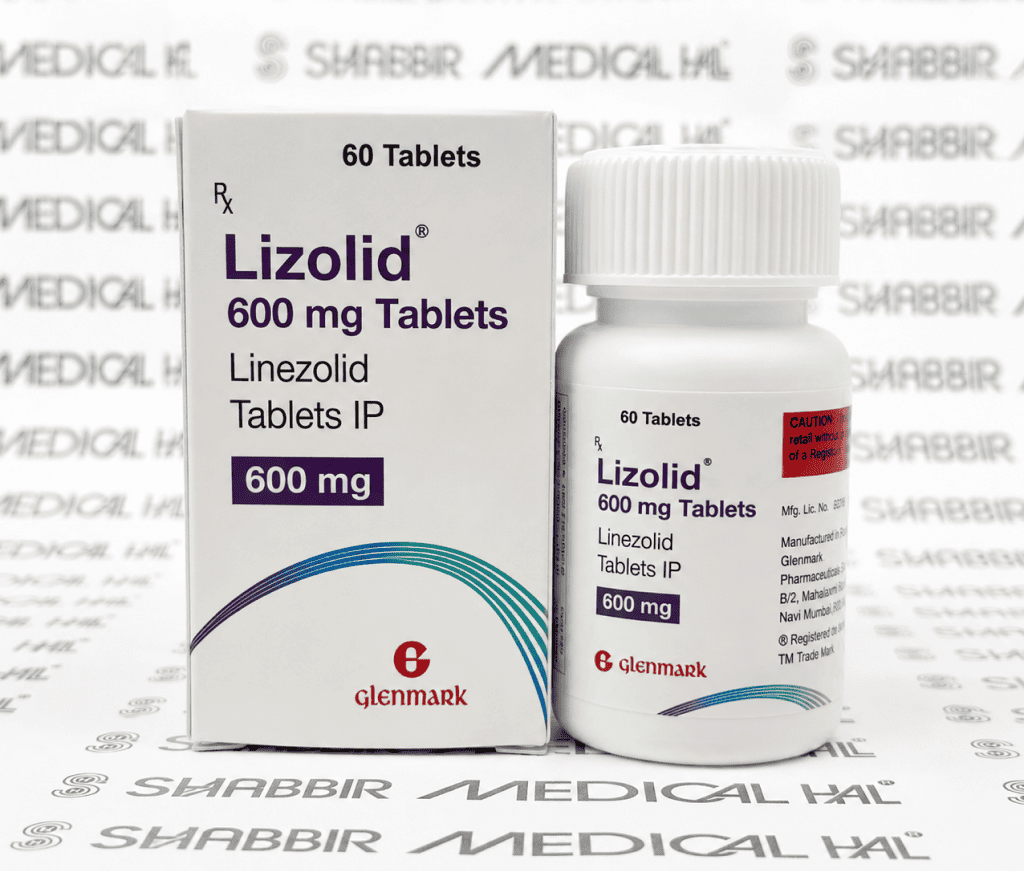


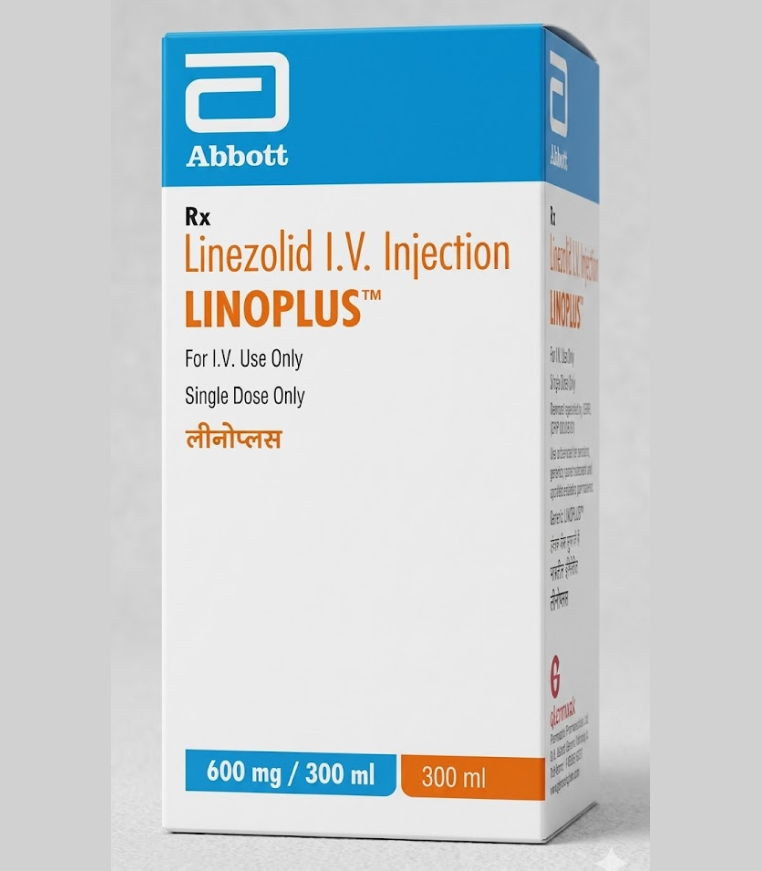
LIZOLID IV INJECTION
Manufactured By GLENMARK PHARMACEUTICALS LTD
Composition LINEZOLID 600MG
RS 592.25
MRP RS 658.06
(10% OFF)
Includes all taxes
Package SIZE
( 300ML )

100% Authentic
Products

Free
Shipping*

Products
Return Policy
Description:
Lizolid IV Injection(Linezolid 600mg) is a hospital-grade intravenous antibiotic belonging to the oxazolidinone class, manufactured by Glenmark Pharmaceuticals Ltd, and specifically indicated for the treatment of serious gram-positive bacterial infections caused by susceptible strains — including methicillin-resistant Staphylococcus aureus (MRSA) and vancomycin-resistant Enterococci (VRE). Each 300 mL infusion bag delivers 600mg of Linezolid and is administered by healthcare professionals in hospital or clinical settings. Available from Shabbir Medical Hall at the best price in India, this genuine prescription antibiotic injection is available to order online with fast delivery across major Indian cities.
Benefits:
Lizolid IV works by inhibiting bacterial protein synthesis at the ribosomal level — a unique mechanism not shared by most other antibiotic classes — making it effective against multi-drug resistant organisms (MDROs) where beta-lactams, glycopeptides, and other antibiotics fail. It is active against MRSA, VRSA, VRE, and drug-resistant streptococci and staphylococci, providing critical treatment options in resistant infection scenarios.
Usage overview:
Lizolid IV is administered as a slow intravenous infusion over 30–120 minutes, typically 600mg every 12 hours for adults. Treatment duration varies by infection type — from 10 to 28 days depending on clinical severity and physician guidance. This is a hospital-administered or specialist-prescribed injection; it must not be self-administered.
The most common side effects include nausea, diarrhoea, headache, and reversible myelosuppression (low blood counts). Rare but serious effects include serotonin syndrome (especially with serotonergic drugs), lactic acidosis, optic and peripheral neuropathy with prolonged use. Complete blood counts (CBCs) should be monitored weekly during treatment. Inform your doctor about all current medications and pre-existing conditions before starting therapy.
Uses / Indications:
• Hospital-Acquired Pneumonia (HAP) and Ventilator-Associated Pneumonia (VAP) caused by MRSA and susceptible Staphylococcus aureus
• Community-Acquired Pneumonia (CAP) — including cases caused by multi-drug resistant Streptococcus pneumoniae
• Complicated Skin and Skin Structure Infections (cSSSI) — including diabetic foot infections caused by gram-positive organisms
• Bacteraemia associated with the above infections
• Vancomycin-Resistant Enterococcal (VRE) infections — including Enterococcus faecalis and E. faecium
COMMON / OFF-LABEL USES:
• Drug-Resistant Tuberculosis (DR-TB) — as part of a multi-drug regimen (off-label)
• Central nervous system infections caused by gram-positive organisms (off-label, specialist use)
• Osteomyelitis caused by MRSA (off-label, prolonged IV then oral step-down)
Interactions / Warnings:
LIVER DISEASE:
• No dose adjustment required for mild to moderate hepatic impairment. Data is limited for severe hepatic impairment; use with caution and enhanced monitoring.
KIDNEY DISEASE:
• No dose adjustment is required based on renal function alone, including patients on dialysis. However, two inactive metabolites of Linezolid may accumulate in severe renal impairment — clinical significance is uncertain; monitor for adverse effects.
HAEMATOLOGICAL MONITORING:
• MANDATORY: Complete Blood Count (CBC) must be performed weekly during Lizolid IV therapy due to risk of myelosuppression (anaemia, thrombocytopaenia, neutropaenia). Treatment should be discontinued if clinically significant myelosuppression occurs.
DURATION LIMIT:
• Lizolid IV should not be used for more than 28 consecutive days. Prolonged use is associated with increased risk of peripheral neuropathy, optic neuropathy, and lactic acidosis. Reassess treatment necessity at each clinical review.
ALLERGY WARNING:
• Do not use Lizolid IV if you are known to be allergic to Linezolid or any excipients in the formulation. Allergic reactions, while rare, may include rash, urticaria, or anaphylaxis.
ELDERLY USE (≥65 years):
• No dose adjustment required based on age alone. However, elderly patients may be at increased risk of drug-drug interactions due to polypharmacy, particularly with serotonergic drugs. Close monitoring is advised.
DRIVING & MACHINERY:
• Lizolid IV may cause dizziness, headache, or visual disturbances. Patients should be assessed before returning to activities requiring alertness.
Pregnancy interaction:
• The safety of Linezolid in human pregnancy has not been established through controlled clinical trials.
• Animal studies have shown foetotoxicity at high doses. Lizolid IV is generally NOT recommended during pregnancy except when the benefit clearly outweighs the risk, as assessed by a specialist physician.
• Linezolid should be used in pregnancy only if no safer antibiotic alternative is available for the specific resistant organism.
• Women of childbearing age should inform their treating doctor if they are pregnant or planning pregnancy before starting Linezolid therapy.
BREASTFEEDING:
• Linezolid is excreted into human breast milk. Breastfeeding is NOT recommended while receiving Lizolid IV treatment.
• The potential risk to the nursing infant includes alteration of gut flora, potential bone marrow suppression, and gastrointestinal disturbance.
• Discuss temporary cessation of breastfeeding with your doctor during the treatment course.
DOCTOR CONSULTATION WARNING:
• Lizolid IV is a hospital-only prescription medicine. Never obtain or administer outside a supervised clinical setting without specialist guidance.
Expert advice:
1. MANDATORY CBC MONITORING:
• Weekly complete blood count (CBC) testing is non-negotiable during Lizolid IV therapy.
• Myelosuppression (low blood counts) can develop rapidly and requires prompt discontinuation if detected.
• Never skip scheduled blood tests.
2. WATCH FOR SEROTONIN SYNDROME:
• If you are taking any antidepressants (SSRIs, SNRIs), tramadol, or other serotonergic medicines, inform your treating doctor before starting Linezolid.
• Serotonin syndrome can be life-threatening if not identified early.
• Symptoms include agitation, high temperature, rapid heartbeat, and muscle rigidity.
3. MAXIMUM 28-DAY DURATION:
• Linezolid should not be continued for more than 28 consecutive days without specialist reassessment.
• Prolonged use significantly increases the risk of peripheral neuropathy, optic nerve damage, and lactic acidosis.
4. WATCH FOR VISUAL CHANGES:
• Report any blurred vision, colour vision changes, or visual field loss immediately to your doctor.
• Optic neuropathy, while rare, requires prompt discontinuation of Linezolid.
5. TYRAMINE DIET RESTRICTION:
• While on Lizolid IV, avoid aged cheeses, cured meats, fermented foods, tap beer, red wine, and other high-tyramine foods.
• Linezolid has weak MAO-inhibitory activity that can cause hypertensive crises with excessive tyramine intake.
MONITORING ADVICE:
• Complete Blood Count (CBC / FBC): Weekly — mandatory for all patients
• Liver Function Tests (LFTs): At baseline and if symptoms suggest hepatotoxicity
• Kidney Function (eGFR / serum creatinine): At baseline; note metabolite accumulation risk in severe impairment
• Blood Pressure: Monitor for hypertensive reactions especially if on sympathomimetic agents
• Ophthalmological Review: If treatment extends beyond 28 days or if any visual symptoms appear
• Lactic Acid Level: If patient develops persistent nausea, vomiting, or metabolic acidosis symptoms
COMPLIANCE TIPS:
• Lizolid IV is administered by trained healthcare staff in hospital or infusion clinic settings — never attempt self-administration
• Always carry your full current medication list to every hospital appointment — drug interactions with Linezolid can be serious
• If you experience any new symptoms (numbness, tingling in hands/feet, visual changes, confusion, fever with rigidity), report them to the ward nurse or physician immediately
• Do not stop the prescribed course early even if symptoms improve — completing the full course prevents antibiotic resistance
• Dispose of any unused infusion solutions as per hospital biohazard/pharmaceutical waste protocols — never pour down drains
SAFETY TIPS:
• Use a soft toothbrush and electric shaver to minimise bleeding risk if platelets are low
• Report any new or worsening peripheral numbness or tingling to your doctor — early detection prevents permanent nerve damage
• If you are prescribed concurrent serotonergic medications (even temporarily), request your doctor reassess Linezolid use
• Carry a medication alert card noting Linezolid use to flag interactions in emergency situations
Side Effects:
• Nausea and vomiting
• Diarrhoea
• Headache
• Anaemia (low red blood cells — fatigue, pallor, weakness)
• Thrombocytopaenia (low platelets — increased bruising, prolonged bleeding)
• Leucopaenia / neutropaenia (low white blood cells — increased infection risk)
• Raised liver enzyme levels (transaminases)
SERIOUS SIDE EFFECTS (contact your doctor immediately):
• Myelosuppression — significant falls in haemoglobin, platelets, or white blood cell counts (requires weekly CBC monitoring)
• Serotonin Syndrome — hyperthermia, agitation, tremor, confusion, tachycardia (especially if on serotonergic agents; can be life-threatening)
• Lactic Acidosis — persistent nausea, vomiting, abdominal pain, low bicarbonate (rare but serious metabolic complication)
• Peripheral Neuropathy — numbness, tingling, burning sensation in hands/feet (with prolonged use >28 days)
• Optic Neuropathy — blurred vision, visual field defects, colour vision changes (with prolonged use)
EMERGENCY WARNING SIGNS — SEEK IMMEDIATE MEDICAL HELP:
• High fever, rapid heartbeat, agitation, severe confusion, muscle stiffness (serotonin syndrome)
• Severe difficulty breathing, persistent vomiting, extreme weakness (lactic acidosis)
• Sudden vision loss or significant visual changes
• Signs of severe myelosuppression: uncontrolled bleeding, infection with high fever
How to use:
• Hospital-Acquired / Ventilator-Associated Pneumonia (MRSA): 600mg IV every 12 hours for 10–14 days
• Community-Acquired Pneumonia (CAP): 600mg IV every 12 hours for 10–14 days
• Complicated Skin & Soft Tissue Infections: 600mg IV every 12 hours for 14–28 days
• VRE Infections: 600mg IV every 12 hours for 14–28 days
PAEDIATRIC DOSAGE (under specialist guidance only):
• Children <5 years: 10mg/kg IV every 8 hours
• Children 5–11 years: 10mg/kg IV every 12 hours
• Adolescents ≥12 years: 600mg IV every 12 hours
ADMINISTRATION:
• Administer as a slow IV infusion over 30–120 minutes — do NOT give as IV push or bolus
• Lizolid IV infusion bag is ready to use — no dilution required
• Compatible with 5% dextrose, 0.9% saline, and lactated Ringer's solution
• Protect infusion bag from light during storage; inspect for particulates before use
MISSED DOSE:
• In a hospital setting, nursing staff administer doses on schedule
• If a dose is missed, administer as soon as possible; do not double up
STORAGE:
• Store at room temperature (15–30°C / 59–86°F)
• Do not freeze; protect from light
• Use within the stated shelf life; discard unused infusion solution within 12 hours of opening
How it works:
Lizolid IV contains Linezolid, a synthetic oxazolidinone antibiotic with a unique bacterial protein synthesis inhibition mechanism.
Bacteria require ribosomes to translate mRNA into functional proteins essential for growth and survival. Linezolid works by binding to the 23S ribosomal RNA of the 50S subunit — specifically, it binds at the peptidyl transferase active site and prevents the formation of the 70S initiation complex, which is the first step in bacterial protein synthesis.
This mechanism is unique: unlike other antibiotics targeting the 50S subunit (macrolides, chloramphenicol, lincosamides), Linezolid acts at the initiation stage rather than elongation — making cross-resistance with other ribosomal antibiotics very rare.
KEY ADVANTAGES:
• Active against MRSA, VRSA, VRE, and drug-resistant streptococci
• Bacteriostatic against most organisms; bactericidal against streptococci
• Excellent tissue penetration including lungs, skin, and bone
• 100% oral bioavailability allows seamless IV-to-oral step-down therapy (using Linezolid 600mg tablets) for continuing care
Faq for medicine:
Lizolid IV Injection (Linezolid 600mg) is used in hospitalized patients to treat serious gram-positive bacterial infections including MRSA, VRE, hospital-acquired pneumonia, skin and soft tissue infections, and complicated bacteremia. It is reserved for infections unresponsive to standard antibiotics, under infectious disease specialist guidance.
2.Is Lizolid IV effective against vancomycin-resistant Enterococcus infections?
Lizolid IV (Linezolid) is effective against vancomycin-resistant Enterococcus (VRE) and is one of the few approved treatments for VRE infections. Its oxazolidinone mechanism of action differs entirely from glycopeptides like vancomycin, making Lizolid active against strains that have developed resistance to conventional antibiotics.
3.Can Lizolid IV be switched to an oral formulation during treatment?
Lizolid IV can be switched to oral Linezolid 600mg tablets once the patient's clinical condition improves and oral intake is feasible. Oral and IV Linezolid have essentially identical bioavailability (~100%), enabling seamless step-down therapy. This transition reduces hospitalization duration and healthcare costs without compromising efficacy.
4.What are the contraindications for using Lizolid IV injection?
Lizolid IV is contraindicated in patients taking MAO inhibitors, including certain antidepressants (phenelzine, tranylcypromine), due to risk of serious serotonin syndrome. It should be used cautiously in patients with uncontrolled hypertension, carcinoid syndrome, or pheochromocytoma, and in those on serotonergic agents.
5.Does Lizolid IV cause bone marrow suppression with long-term use?
Prolonged use of Lizolid IV beyond two weeks is associated with myelosuppression, including thrombocytopenia, anemia, and leukopenia. Weekly complete blood count monitoring is recommended. If significant cytopenias develop, dose reduction or discontinuation should be considered in consultation with the treating physician.
6.How does Lizolid IV compare to vancomycin for treating MRSA?
Lizolid IV (Linezolid) and vancomycin are both effective for MRSA infections. Clinical data suggest Linezolid may have superior lung tissue penetration for MRSA pneumonia, while vancomycin requires therapeutic drug monitoring. Lizolid is preferred when vancomycin minimum inhibitory concentration creep is observed or renal toxicity is a concern.
Medicine interaction:
• Serotonergic Agents (CRITICAL — risk of SEROTONIN SYNDROME):
– SSRIs: fluoxetine, sertraline, citalopram, escitalopram, paroxetine
– SNRIs: venlafaxine, duloxetine
– MAOIs: phenelzine, tranylcypromine, selegiline — CONTRAINDICATED; do not use within 2 weeks of MAOIs
– Tramadol, meperidine (pethidine) — increased serotonin syndrome risk
– Triptans (sumatriptan) — risk of serotonin toxicity
• Adrenergic / Sympathomimetic Agents:
– Pseudoephedrine, dopamine, adrenaline — may cause significant blood pressure elevation due to weak MAO-inhibitory activity of Linezolid; use with caution and dose adjustment
• Myelosuppressive Drugs:
– Methotrexate, azathioprine, chemotherapy agents — increased risk of severe bone marrow suppression and cytopenias
• Rifampicin:
– May reduce Linezolid plasma concentrations by approximately 32%; monitor clinical response closely
FOOD / TYRAMINE INTERACTION:
• Avoid excessive intake of tyramine-rich foods such as aged cheeses, cured meats, fermented foods, soy sauce, tap beer, and red wine during Linezolid therapy — risk of hypertensive crisis
SUPPLEMENT INTERACTIONS:
• St. John’s Wort — may trigger serotonin syndrome; strictly avoid during Linezolid therapy
Available Substitutes