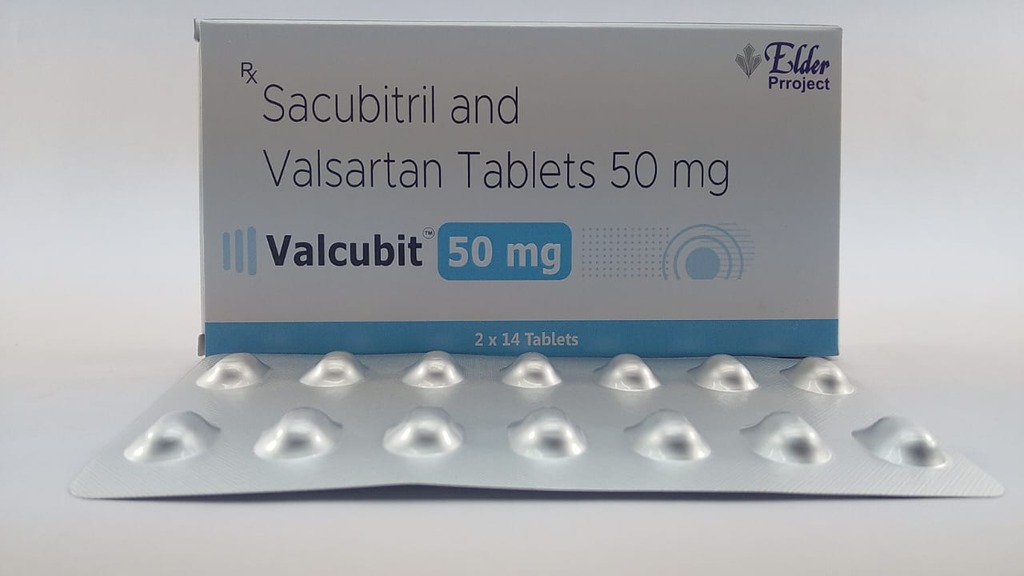


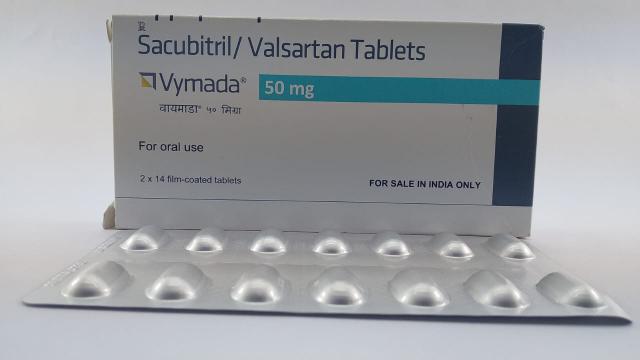
Vymada 50mg Tablet
 Item requires a valid prescription
Manufactured By Novartis India Limited
Composition Sacubitril 24mg Valsartan 26mg
RS 659.25
MRP RS 732.50
(10% OFF)
Includes all taxes
Package SIZE
( 14 tablets in 1 strip )

100% Authentic
Products

Free
Shipping*

Products
Return Policy
Description:
Vymada 50mg Tablet is a first-in-class Angiotensin Receptor-Neprilysin Inhibitor (ARNI) medicine manufactured by Novartis India Limited, containing two active components: Sacubitril 24mg (a neprilysin inhibitor prodrug) and Valsartan 26mg (an angiotensin II receptor blocker / ARB). It represents a landmark advance in heart failure pharmacotherapy — the first drug to demonstrate superior cardiovascular mortality reduction compared to an ACE inhibitor (enalapril) in the pivotal PARADIGM-HF trial. Vymada 50mg is indicated for the treatment of symptomatic chronic Heart Failure with Reduced Ejection Fraction (HFrEF, LVEF ≤40%) in adults, to reduce the risk of cardiovascular death and hospitalisation for heart failure. Available from Shabbir Medical Hall at the best price in India (10% OFF MRP), this genuine Novartis prescription tablet is available online with fast home delivery nationwide.
BENEFITS: In the landmark PARADIGM-HF randomised controlled trial (8,442 patients), Sacubitril/Valsartan demonstrated a 20% relative risk reduction in the primary composite endpoint of cardiovascular death or first hospitalisation for heart failure compared to enalapril, a 20% reduction in cardiovascular mortality, a 21% reduction in all-cause mortality, and a 21% reduction in first hospitalisation for HF. Patients also reported significantly improved symptoms and quality of life (KCCQ scores). Guideline bodies including the European Society of Cardiology (ESC) and the American Heart Association (AHA/ACC) recommend ARNI as the preferred renin-angiotensin system (RAS) agent in HFrEF — superseding ACE inhibitors — as part of optimised four-pillar GDMT.
USAGE OVERVIEW: Vymada 50mg Tablets are taken orally, twice daily (every 12 hours), with or without food. The standard starting dose is 50mg twice daily, uptitrated every 2–4 weeks to the target dose of 200mg twice daily (as individual 200mg tablets), as tolerated. Patients must discontinue any ACE inhibitor therapy at least 36 hours before initiating Vymada to avoid the risk of angioedema.
SAFETY OVERVIEW: The most common adverse effects are hypotension, hyperkalaemia, and renal impairment. Angioedema is a rare but serious adverse effect. Vymada is absolutely contraindicated in pregnancy (foetal toxicity), in patients with a history of angioedema with ARB/ACEi, and must never be combined with an ACE inhibitor or aliskiren (in diabetes).
Uses / Indications:
Interactions / Warnings:
ACE INHIBITOR WASHOUT — 36-HOUR RULE: THE SINGLE MOST CRITICAL SAFETY PROTOCOL FOR VYMADA
The 36-hour ACE inhibitor washout before starting Vymada is non-negotiable. The combination of sacubitril (neprilysin inhibitor — raises bradykinin) with an ACE inhibitor (raises bradykinin) produces dangerous accumulation of bradykinin, causing potentially fatal angioedema. Every prescriber and every pharmacist dispensing Vymada must verify this washout has occurred. Document the last ACE inhibitor dose date and confirm the 36-hour gap has passed before dispensing the first strip. Patients switching from enalapril or any ACE inhibitor: stop the ACE inhibitor → wait 36 hours → take first Vymada tablet. Patients switching from an ARB (losartan, telmisartan, irbesartan, valsartan): no washout needed; start Vymada the next day.
ANGIOEDEMA — RACIAL RISK AND EMERGENCY MANAGEMENT
Angioedema risk is significantly higher in patients of Black African origin (due to higher baseline bradykinin-mediated vasoreactivity and genetic polymorphisms in bradykinin metabolism). Counsel Black African patients specifically about angioedema symptoms and emergency response. Any swelling of the face, lips, tongue, or throat is a medical emergency: STOP VYMADA IMMEDIATELY; call emergency services; airway may need securing urgently. Adrenaline (epinephrine) and corticosteroids may be required. If a patient has EVER had angioedema with any ARB or ACE inhibitor, Vymada is ABSOLUTELY CONTRAINDICATED.
HYPOTENSION ON INITIATION — PRE-EMPTIVE MANAGEMENT STRATEGY
Hypotension is the most common reason for premature Vymada discontinuation in clinical practice. To minimise risk: (1) ensure the patient is not volume-depleted before initiation — if taking a loop diuretic, consider reducing the furosemide/torsemide dose 24–48 hours before first Vymada dose; (2) ensure serum sodium is >130 mmol/L; (3) start at the lowest dose (50mg BD or 25mg BD for high-risk patients); (4) advise slow position changes from lying/sitting to standing; (5) review concurrent antihypertensives — dose reduction may be temporarily required at initiation.
HYPERKALAEMIA AND RENAL MONITORING — NON-NEGOTIABLE ROUTINE
Serum potassium and eGFR must be checked at baseline, 1–2 weeks after initiation, after each dose uptitration, and every 3–6 months in stable patients. Establish a protocol at the first dispense: provide the patient with a monitoring schedule card listing the expected blood test dates. Hyperkalaemia (K⁺ >5.4 mmol/L) and significant eGFR deterioration require Vymada dose reduction or temporary withholding under cardiologist guidance.
PREGNANCY ABSOLUTE CONTRAINDICATION — IMMEDIATE DISCONTINUATION
Vymada must be discontinued immediately if pregnancy is confirmed. Every female patient of childbearing age on Vymada must be counselled explicitly about the teratogenic risk of the valsartan component, the requirement for effective contraception, and the protocol for immediate discontinuation upon confirmed pregnancy. Document this counselling at every dispense.
Pregnancy interaction:
• Vymada 50mg Tablet (Sacubitril/Valsartan) is ABSOLUTELY CONTRAINDICATED throughout pregnancy — at any stage (first, second, and third trimesters)
• Valsartan (the ARB component) acts on the renin-angiotensin-aldosterone system (RAAS), which is essential for normal foetal renal development during the second and third trimesters; ARB/ACEi exposure in the second and third trimesters causes: foetal renal dysplasia (underdeveloped kidneys); oligohydramnios (reduced amniotic fluid) — leading to foetal limb contractures, craniofacial deformities, and hypoplastic lung development; neonatal renal failure; neonatal hypotension; neonatal death
• The teratogenic risk of the valsartan component makes Vymada Category D/X equivalent in pregnancy — DO NOT USE AT ANY STAGE
• WOMEN OF CHILDBEARING POTENTIAL: Must use effective contraception throughout Vymada therapy; Vymada must be DISCONTINUED IMMEDIATELY once pregnancy is confirmed or suspected; switch to methyldopa or labetalol (safer antihypertensives in pregnancy) or seek urgent cardiologist and obstetrician joint review for heart failure management during pregnancy
• PLANNING PREGNANCY: Discuss with cardiologist before attempting conception; heart failure management plan must be restructured before conception — alternative HF agents with safer pregnancy profiles are required
BREASTFEEDING:
• Vymada is NOT RECOMMENDED during breastfeeding
• It is unknown whether sacubitril, its active metabolite (LBQ657), or valsartan are excreted into human breast milk; given the potential for serious adverse effects in nursing infants (particularly renal effects from valsartan), breastfeeding is not recommended during Vymada therapy
• Discuss alternative HF management and infant feeding options with cardiologist and paediatrician
Expert advice:
1. VERIFY THE 36-HOUR ACE INHIBITOR WASHOUT — THE SINGLE MOST CRITICAL CHECK AT FIRST DISPENSE:
• Before dispensing the first strip of Vymada 50mg to any patient, the most important safety verification is confirming that the patient is NOT currently taking an ACE inhibitor AND that at least 36 hours have elapsed since the last ACE inhibitor dose. This is not a routine check — it is a life-safety gate. Sacubitril (in Vymada) inhibits neprilysin and raises bradykinin. ACE inhibitors do the same. Combining both causes dangerous bradykinin accumulation leading to potentially fatal angioedema of the airway. Ask explicitly: "What was your last heart medication? Have you been on enalapril, ramipril, lisinopril, or any similar tablet ending in '-pril'? When did you take your last dose?" If the answer is within 36 hours, DO NOT DISPENSE — contact the prescribing cardiologist immediately. Document the last ACE inhibitor dose date and confirm the washout in the dispensing record.
2. COUNSEL ON ANGIOEDEMA — EVERY PATIENT, EVERY FIRST DISPENSE:
• Every patient starting Vymada must understand angioedema: what it looks like (sudden swelling of the face, lips, tongue, throat), why it is dangerous (airway obstruction), and what to do (STOP VYMADA, call emergency services — 112 in India — immediately; do not wait and watch). Angioedema can occur within hours of the first dose or weeks into therapy. Patients of Black African origin carry higher risk — counsel them with explicit emphasis. Provide a written emergency card: "If you develop swelling of the face, lips, or throat — STOP this tablet and call 112 immediately." This counselling is mandatory at every first dispense.
3. PRE-EMPT HYPOTENSION — THE #1 REASON PATIENTS STOP VYMADA PREMATURELY:
• Symptomatic hypotension (dizziness, light-headedness, fainting on standing) at Vymada initiation is the leading cause of premature discontinuation in clinical practice — costing patients the proven mortality benefit of this landmark therapy. At the first dispense, counsel proactively: advise the patient to sit on the edge of the bed for 30 seconds before standing; ensure adequate fluid intake (unless fluid-restricted by the cardiologist for congestion); confirm the cardiologist has reviewed the diuretic regimen (loop diuretic dose reduction before Vymada initiation is commonly required). Reassure the patient that hypotension is expected and manageable — and that stopping Vymada unnecessarily removes a life-saving benefit. Flag severe symptomatic hypotension (syncope, pre-renal AKI) back to the cardiologist rather than advising self-discontinuation.
4. ESTABLISH AND COMMUNICATE THE MONITORING SCHEDULE AT EVERY DISPENSE:
• Vymada requires structured biochemical monitoring — blood pressure, renal function (eGFR), and serum potassium — at initiation (baseline), 1–2 weeks after each dose uptitration, and every 3–6 months in stable patients. This monitoring is essential because hyperkalaemia and renal impairment can develop silently. Provide the patient with a written monitoring schedule card listing their expected blood test dates at the current dose. At every dispense, ask: "Have you had your kidney function and potassium blood test checked recently?" If the patient has not been monitored as scheduled, proactively contact the prescribing cardiologist. The monitoring schedule is as important as the medicine itself.
5. FRAME VYMADA AS A LIFE-SAVING UPGRADE — MOTIVATE ADHERENCE THROUGH CLINICAL CONTEXT:
• Many patients starting Vymada have previously been on enalapril or another ACE inhibitor. They may perceive the switch as just a 'tablet change' and underestimate the importance of adherence and uptitration. At the first dispense, contextualise this medicine's significance: "Vymada (Sacubitril/Valsartan) is the most effective heart failure medicine currently available. In a clinical trial of over 8,000 heart failure patients, it reduced the risk of cardiovascular death by 20% and hospitalisation for heart failure by 21% compared to the previous best treatment. Completing uptitration to the target dose of 200mg twice daily — as your cardiologist guides — maximises this life-saving benefit." This framing drives adherence, supports uptitration, and ensures patients continue therapy despite initial side effects like mild dizziness.
MONITORING SCHEDULE (provide as written card):
• Blood pressure: at home daily during initiation and uptitration (target: SBP 90–130 mmHg in stable HF)
• Serum potassium (K⁺): Baseline → Week 1–2 post-initiation → after each dose uptitration → every 3 months stable
• Renal function (eGFR / serum creatinine): same schedule as potassium
• NYHA class / HF symptoms (dyspnoea, oedema, exercise tolerance): at each cardiology review
• BNP / NT-proBNP: baseline and at 3–6 months (biomarker of HF severity; expected to fall with effective Vymada therapy)
• Heart rate: at each review (resting HR target 50–70 bpm on beta-blocker + Vymada GDMT)
• 12-lead ECG: baseline and periodically (for hyperkalaemia-related conduction changes, rhythm monitoring)
COMPLIANCE TIPS:
• Take Vymada TWICE DAILY — morning and evening, 12 hours apart; set two daily phone alarms
• Take at the same times every day — consistent twice-daily dosing is critical for stable plasma levels and BP control
• May be taken with or without food — take alongside beta-blocker and other morning/evening heart tablets to build a routine
• Rise slowly from lying or sitting to standing — hold onto something for support; take 30 seconds before walking; this minimises dizziness from BP reduction
• Carry a medication card listing Vymada (Sacubitril/Valsartan) and the ACE inhibitor contraindication for any emergency medical attendance
• Attend all scheduled blood tests — these protect you from silent side effects
SAFETY TIPS:
• NEVER take an ACE inhibitor (ramipril, enalapril, lisinopril, perindopril, etc.) at the same time as Vymada — even one dose can cause dangerous swelling
• If you develop swelling of the face, lips, tongue, or throat at any time — STOP VYMADA AND CALL EMERGENCY SERVICES (112) IMMEDIATELY
• Avoid potassium supplements and potassium-rich salt substitutes unless specifically prescribed by your cardiologist
• Avoid regular NSAID painkillers (ibuprofen, diclofenac) — use paracetamol instead; NSAIDs worsen kidney function and raise potassium
• Do NOT stop Vymada without cardiologist approval — even if you feel well; the medicine is preventing future events, not just treating current symptoms
• Avoid sildenafil (Viagra) and similar PDE5 inhibitors — dangerous blood pressure drop when combined with Vymada
Side Effects:
• HYPOTENSION (LOW BLOOD PRESSURE) — MOST COMMON: symptomatic hypotension (dizziness, light-headedness, near-fainting on standing) occurs in up to 18% of patients, especially during initiation and uptitration; more frequent in patients on diuretics, with low sodium diet, or pre-existing low BP; managed by reducing diuretic dose before initiation, ensuring adequate hydration, and cautious uptitration
• HYPERKALAEMIA (HIGH BLOOD POTASSIUM): elevated serum potassium, particularly in patients with pre-existing CKD, diabetes, or those on potassium-sparing diuretics/MRAs; monitor serum potassium at baseline, after each dose uptitration, and periodically; dose reduction or withholding required if K⁺ >5.4–5.5 mmol/L
• RENAL IMPAIRMENT: modest and usually reversible decrease in eGFR common at initiation due to reduction in glomerular filtration pressure (similar to ACE inhibitor / ARB class effect); monitor renal function; discontinue if severe progressive renal impairment develops
LESS COMMON SIDE EFFECTS (1–10 in 100 people):
• Cough: less common than with ACE inhibitors (sacubitril/valsartan does not inhibit ACE; therefore does not impair ACE-mediated bradykinin metabolism significantly compared to ACEi); dry cough is a known class effect but less frequent than with enalapril/ramipril
• Dizziness, headache (related to BP reduction)
• Fatigue
• Nausea
• Elevated serum creatinine (see renal impairment above)
• Orthostatic hypotension: dizziness and light-headedness upon standing; advise patients to rise slowly from sitting or lying position
SERIOUS SIDE EFFECTS (seek urgent medical attention):
• ANGIOEDEMA — RARE BUT LIFE-THREATENING: Angioedema (swelling of the face, lips, tongue, throat, or larynx) has been reported, particularly in patients of Black African origin who carry a higher genetic susceptibility to bradykinin-mediated angioedema. Sacubitril raises bradykinin levels via neprilysin inhibition; valsartan does not further increase bradykinin (unlike ACEi), but the neprilysin inhibition component alone can trigger angioedema. STOP Vymada immediately; seek emergency airway management. Prior history of angioedema with ARB or ACEi is an absolute contraindication.
• SEVERE HYPOTENSION leading to syncope (fainting) or pre-renal acute kidney injury: particularly on initiation or after dose uptitration in volume-depleted patients — optimise volume status and reduce diuretic dose before starting Vymada
• SEVERE HYPERKALAEMIA (K⁺ >6.0 mmol/L): risk of cardiac arrhythmia — monitor regularly; manage with dietary potassium restriction, diuretic optimisation, or potassium binders if required
• SEVERE RENAL FAILURE: in patients with bilateral renal artery stenosis or single functioning kidney — avoid use; discontinue if progressive and severe renal impairment develops
EMERGENCY SIGNS — SEEK IMMEDIATE MEDICAL HELP:
• Swelling of face, lips, tongue, or throat; difficulty breathing or swallowing (angioedema — EMERGENCY)
• Severe dizziness, fainting, very low blood pressure (hypotension with syncope)
• Very low or absent urine output, severe back/flank pain (acute kidney injury)
• Palpitations, muscle weakness, or ECG changes (severe hyperkalaemia)
How to use:
STANDARD ADULT DOSING REGIMEN:
• Starting dose: Vymada 50mg TWICE DAILY (every 12 hours — morning and evening)
• Uptitration: Double the dose every 2–4 weeks as tolerated, targeting:
• → Vymada 100mg twice daily (intermediate target)
• → Vymada 200mg twice daily (TARGET MAINTENANCE DOSE — maximum)
• Titration is guided by blood pressure, renal function (eGFR), and serum potassium tolerance
• If 200mg twice daily is not tolerated, return to the highest tolerated dose
INITIATION FROM ACE INHIBITOR — CRITICAL WASHOUT RULE:
• MANDATORY 36-HOUR WASHOUT: If the patient is switching from an ACE inhibitor (enalapril, ramipril, lisinopril, perindopril, etc.) to Vymada, the ACE inhibitor MUST be stopped at least 36 hours before the first dose of Vymada
• Reason: Sacubitril raises bradykinin levels; ACE inhibitors also raise bradykinin; combining both risks life-threatening angioedema
• This washout rule is non-negotiable and is the most critical safety protocol for this medicine
• Switching from ARB (losartan, telmisartan, valsartan alone): no washout required — Vymada can be started the next day
INITIATION FROM SCRATCH (ACE-inhibitor-naive / ARB-naive patients):
• De novo initiation is possible under specialist guidance; start at 50mg twice daily with careful monitoring
• Consider lower starting dose (25mg twice daily — Vymada 25mg tablet) in patients with: systolic BP <100 mmHg, eGFR 30–60 ml/min/1.73m², moderate hepatic impairment (Child-Pugh B), or elderly patients who are volume-depleted
SPECIAL POPULATIONS — DOSE ADJUSTMENTS:
• Renal impairment:
• eGFR >30 ml/min/1.73m²: no initial dose adjustment; use with caution; monitor renal function and potassium
• eGFR 15–30 ml/min/1.73m²: start at 25mg twice daily; uptitrate cautiously under specialist supervision; NOT recommended for eGFR <15 or dialysis
• Hepatic impairment:
• Mild (Child-Pugh A): no dose adjustment required
• Moderate (Child-Pugh B): start at 25mg twice daily; uptitrate cautiously
• Severe (Child-Pugh C): CONTRAINDICATED — insufficient data
• Elderly (≥65 years): no mandatory dose adjustment, but start low (50mg twice daily) and uptitrate slowly; enhanced monitoring for hypotension and renal function required
ROUTE OF ADMINISTRATION:
• Oral (film-coated tablet) — swallow whole with water
• May be taken with OR without food
• Take at the SAME TIMES each day — morning and evening, approximately 12 hours apart
• Do NOT crush, chew, or break tablets
MISSED DOSE:
• If remembered within 6 hours of the scheduled time: take immediately
• If more than 6 hours have elapsed: skip the missed dose entirely
• Resume the next scheduled dose at the normal time
• NEVER double up doses
MONITORING AFTER INITIATION:
• Blood pressure: check 1–2 weeks after each dose increase; hold or reduce dose if symptomatic hypotension (SBP <90 mmHg)
• Renal function (eGFR / serum creatinine): baseline; 1–2 weeks post-initiation; after each uptitration
• Serum potassium: baseline; 1–2 weeks post-initiation; after each uptitration — hold if K⁺ >5.4 mmol/L; reduce or withhold if K⁺ >5.5 mmol/L
• Symptoms (oedema, dyspnoea, NYHA class): at each cardiology review
STORAGE:
• Store below 30°C in a cool, dry place away from direct sunlight and moisture
• Keep in original blister strip
• Keep out of reach of children
• Do not use after the expiry date printed on the packaging
How it works:
COMPONENT 1 — SACUBITRIL: NEPRILYSIN INHIBITOR (NI):
• Sacubitril is an ethyl ester prodrug that is rapidly converted by plasma esterases after absorption to its active form, LBQ657 (sacubitrilat). LBQ657 inhibits neprilysin — a neutral endopeptidase (also called enkephalinase or neutral endopeptidase 24.11) — which is the primary enzyme responsible for breaking down natriuretic peptides (ANP, BNP, CNP) and other vasoactive peptides (bradykinin, adrenomedullin, substance P).
CONSEQUENCES OF NEPRILYSIN INHIBITION:
• Natriuresis and diuresis: natriuretic peptides promote urinary sodium and water excretion, reducing cardiac preload and congestion
• Vasodilation: ANP/BNP relax vascular smooth muscle → reduced afterload
• Anti-fibrotic / anti-remodelling effects: natriuretic peptides inhibit cardiac fibrosis, hypertrophy, and ventricular remodelling
• Sympatholytic effect: reduced sympathetic nervous system activation
• Suppression of renin and aldosterone release (additional neurohormonal benefit)
• Increased cGMP in cardiomyocytes: cardioprotective signalling pathway
COMPONENT 2 — VALSARTAN: ANGIOTENSIN II RECEPTOR BLOCKER (ARB):
• Blocks angiotensin II-mediated vasoconstriction → reduces afterload
• Blocks angiotensin II-mediated aldosterone release → reduces sodium retention and preload; reduces hyperkalaemia risk compared to ACEi (no bradykinin accumulation)
• Blocks angiotensin II-mediated cardiac fibrosis, hypertrophy, and ventricular remodelling
• Reduces sympathetic nervous system activation via AT1 blockade
WHY VALSARTAN IS USED (NOT AN ACE INHIBITOR):
• Sacubitril raises bradykinin levels via neprilysin inhibition. ACE inhibitors also raise bradykinin. Combining sacubitril with an ACE inhibitor would cause dangerous bradykinin accumulation → markedly increased angioedema risk. Therefore, the ARB valsartan (which does NOT affect bradykinin) is specifically paired with sacubitril to avoid this interaction.
SYNERGISTIC NET EFFECT OF ARNI:
• ↑ Natriuretic peptides (via neprilysin inhibition) PLUS simultaneous RAAS blockade (via AT1 receptor antagonism) → dual neurohormonal suppression → profound reduction in cardiac preload and afterload → reverse cardiac remodelling → ↓ CV mortality + ↓ HF hospitalisations + improved symptoms and quality of life
Faq for medicine:
Vymada 50mg Tablet is a combination of Sacubitril 24mg and Valsartan 26mg. Sacubitril is a neprilysin inhibitor that increases natriuretic peptide levels, promoting vasodilation and sodium excretion. Valsartan is an ARB that blocks angiotensin II receptors, reducing blood pressure. Together, Vymada 50mg reduces cardiac preload and afterload, lowering hospitalization and mortality in heart failure with reduced ejection fraction.
2.Who is Vymada 50mg Tablet prescribed for in cardiac care?
Vymada 50mg Tablet is prescribed for adults with symptomatic chronic heart failure with reduced ejection fraction (HFrEF, LVEF ≤40%). It is used in patients who have been stabilized on ACE inhibitor or ARB therapy. Vymada 50mg is the starting dose and is typically titrated upward. It is particularly beneficial for patients with NYHA class II–III heart failure to reduce morbidity and cardiovascular death.
3.What is the difference between Vymada 50mg and higher doses of sacubitril/valsartan?
Vymada 50mg Tablet is the starting or low-tolerance dose for heart failure patients, containing Sacubitril 24mg and Valsartan 26mg. The 100mg tablet contains Sacubitril 49mg/Valsartan 51mg, and 200mg contains the highest strength. Patients are typically titrated from 50mg to 100mg and then to 200mg every 2–4 weeks as tolerated. Target maintenance with maximum tolerated dose optimizes heart failure outcomes.
4.Can Vymada 50mg Tablet be used in patients previously on ACE inhibitors?
Patients switching from ACE inhibitors to Vymada 50mg Tablet must observe a mandatory 36-hour washout period to prevent angioedema caused by dual ACE/neprilysin inhibition. Vymada must never be used concurrently with ACE inhibitors. Patients on ARBs can switch directly to Vymada 50mg. The washout period is a critical safety requirement that both patients and clinicians must strictly follow.
5.What side effects are associated with Vymada 50mg Tablet?
Common side effects of Vymada 50mg Tablet include hypotension (low blood pressure), hyperkalemia (high potassium), and renal impairment. Angioedema is a rare but serious adverse event, especially in Black patients and those previously on ACE inhibitors. Dizziness and fatigue may occur. Blood pressure, renal function, and potassium levels should be monitored regularly during Vymada 50mg therapy.
6.How long does it take for Vymada 50mg to show improvement in heart failure symptoms?
Improvements with Vymada 50mg Tablet may begin within weeks, with measurable reductions in NT-proBNP levels (a heart failure biomarker) observed early in treatment. Clinical benefits including improved exercise tolerance, reduced dyspnea, and lower hospitalization rates accumulate over months. In the landmark PARADIGM-HF trial, Sacubitril/Valsartan significantly reduced mortality after a median follow-up of 27 months compared to enalapril.
Medicine interaction:
1. ACE INHIBITORS (enalapril, ramipril, lisinopril, perindopril, captopril, etc.) — ABSOLUTE CONTRAINDICATION:
• Combining Vymada (sacubitril raises bradykinin via neprilysin inhibition) with an ACE inhibitor (also raises bradykinin via inhibition of ACE-mediated bradykinin degradation) causes DANGEROUS BRADYKININ ACCUMULATION → markedly elevated angioedema risk, including life-threatening laryngeal angioedema
• ACE inhibitor MUST be stopped at least 36 hours before starting Vymada
• DO NOT restart ACE inhibitor while on Vymada — EVER
• This combination is an absolute contraindication — no exceptions
2. ALISKIREN (direct renin inhibitor) — CONTRAINDICATED IN DIABETES:
• Co-administration of Vymada with aliskiren is CONTRAINDICATED in patients with diabetes mellitus (Type 1 or Type 2) due to markedly increased risk of hypotension, hyperkalaemia, and renal impairment
• Avoid in patients with moderate-severe renal impairment (eGFR <60 ml/min/1.73m²) regardless of diabetes status
3. HISTORY OF ANGIOEDEMA WITH ARB OR ACEi — CONTRAINDICATED:
• Patients with a prior history of angioedema triggered by any ARB or ACE inhibitor must NOT receive Vymada — absolute contraindication
DRUG INTERACTIONS — CLINICALLY SIGNIFICANT (MONITOR / DOSE ADJUST):
POTASSIUM-RAISING AGENTS — HYPERKALAEMIA RISK:
• POTASSIUM-SPARING DIURETICS (spironolactone, eplerenone, amiloride): significant additive hyperkalaemia risk — monitor serum potassium closely; particularly relevant as spironolactone/eplerenone (MRA) is a core component of HFrEF GDMT alongside Vymada; potassium monitoring protocol essential
• POTASSIUM SUPPLEMENTS / POTASSIUM-CONTAINING SALT SUBSTITUTES: avoid unless specifically prescribed; can precipitate hyperkalaemia
• OTHER ARBs: do not combine with a second ARB — dual RAAS blockade with Vymada + ARB is not indicated
ANTIHYPERTENSIVES AND DIURETICS — HYPOTENSION RISK:
• LOOP DIURETICS (furosemide, torsemide): additive BP-lowering; consider reducing loop diuretic dose at Vymada initiation to reduce hypotension risk; do not stop diuretics abruptly in congested HF patients — balance carefully under cardiologist supervision
• OTHER ANTIHYPERTENSIVES (calcium channel blockers, beta-blockers, alpha-blockers): additive BP-lowering; monitor BP and symptoms; beta-blockers are an integral part of HFrEF GDMT alongside Vymada and should be continued
• NSAIDs (ibuprofen, diclofenac, naproxen): reduce renal perfusion, blunt the BP-lowering effect of Vymada, and increase hyperkalaemia risk; AVOID regular NSAID use; use paracetamol for pain
STATINS:
• Valsartan modestly increases rosuvastatin plasma levels via OATP1B1/1B3 transporter inhibition; clinical significance is limited but use the lowest effective rosuvastatin dose
LITHIUM:
• ARBs and ACEi reduce lithium renal clearance; Valsartan (in Vymada) may increase lithium plasma concentrations — risk of lithium toxicity; monitor lithium levels closely; consider dose reduction
DIABETES MEDICINES:
• INSULIN and SULFONYLUREAS: Valsartan (ARB component) may enhance the blood glucose-lowering effect of insulin and antidiabetic agents — monitor blood glucose more closely at Vymada initiation
PHOSPHODIESTERASE-5 (PDE5) INHIBITORS (sildenafil, tadalafil):
ACE INHIBITOR WASHOUT — 36-HOUR RULE: THE SINGLE MOST CRITICAL SAFETY PROTOCOL FOR VYMADA The 36-hour ACE inhibitor washout before starting Vymada is non-negotiable. The combination of sacubitril (neprilysin inhibitor — raises bradykinin) with an ACE inhibitor (raises bradykinin) produces dangerous accumulation of bradykinin, causing potentially fatal angioedema. Every prescriber and every pharmacist dispensing Vymada must verify this washout has occurred. Document the last ACE inhibitor dose date and confirm the 36-hour gap has passed before dispensing the first strip. Patients switching from enalapril or any ACE inhibitor: stop the ACE inhibitor → wait 36 hours → take first Vymada tablet. Patients switching from an ARB (losartan, telmisartan, irbesartan, valsartan): no washout needed; start Vymada the next day. ANGIOEDEMA — RACIAL RISK AND EMERGENCY MANAGEMENT Angioedema risk is significantly higher in patients of Black African origin (due to higher baseline bradykinin-mediated vasoreactivity and genetic polymorphisms in bradykinin metabolism). Counsel Black African patients specifically about angioedema symptoms and emergency response. Any swelling of the face, lips, tongue, or throat is a medical emergency: STOP VYMADA IMMEDIATELY; call emergency services; airway may need securing urgently. Adrenaline (epinephrine) and corticosteroids may be required. If a patient has EVER had angioedema with any ARB or ACE inhibitor, Vymada is ABSOLUTELY CONTRAINDICATED. HYPOTENSION ON INITIATION — PRE-EMPTIVE MANAGEMENT STRATEGY Hypotension is the most common reason for premature Vymada discontinuation in clinical practice. To minimise risk: (1) ensure the patient is not volume-depleted before initiation — if taking a loop diuretic, consider reducing the furosemide/torsemide dose 24–48 hours before first Vymada dose; (2) ensure serum sodium is >130 mmol/L; (3) start at the lowest dose (50mg BD or 25mg BD for high-risk patients); (4) advise slow position changes from lying/sitting to standing; (5) review concurrent antihypertensives — dose reduction may be temporarily required at initiation. HYPERKALAEMIA AND RENAL MONITORING — NON-NEGOTIABLE ROUTINE Serum potassium and eGFR must be checked at baseline, 1–2 weeks after initiation, after each dose uptitration, and every 3–6 months in stable patients. Establish a protocol at the first dispense: provide the patient with a monitoring schedule card listing the expected blood test dates. Hyperkalaemia (K⁺ >5.4 mmol/L) and significant eGFR deterioration require Vymada dose reduction or temporary withholding under cardiologist guidance. PREGNANCY ABSOLUTE CONTRAINDICATION — IMMEDIATE DISCONTINUATION Vymada must be discontinued immediately if pregnancy is confirmed. Every female patient of childbearing age on Vymada must be counselled explicitly about the teratogenic risk of the valsartan component, the requirement for effective contraception, and the protocol for immediate discontinuation upon confirmed pregnancy. Document this counselling at every dispense.
Available Substitutes