


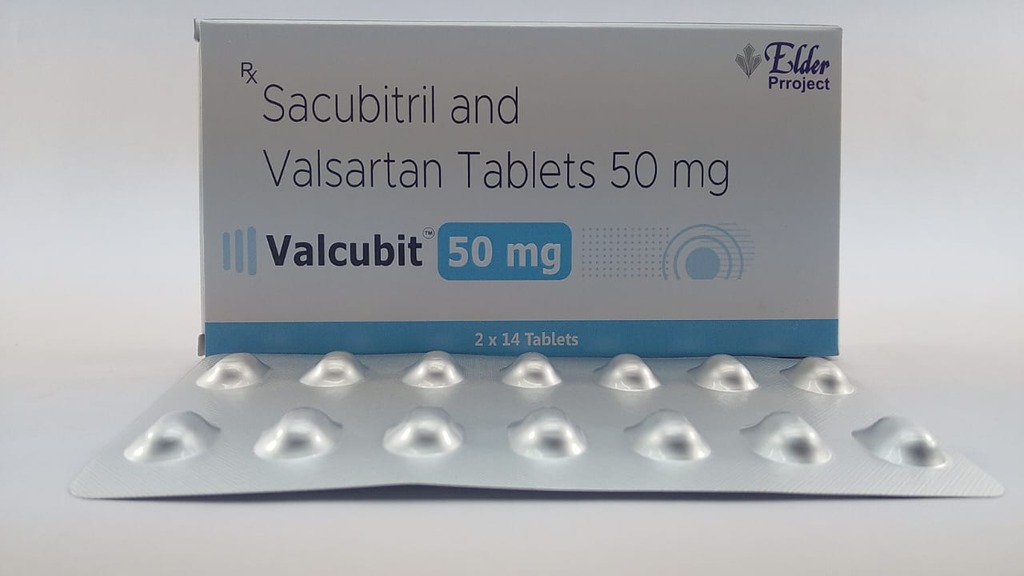
VALCUDER 50MG TABLETS
 Item requires a valid prescription
Manufactured By ELDER PROJECTS LTD
Composition Sacubitril 24mg Valsartan 26mg
RS 377.34
MRP RS 539.06
(30% OFF)
Includes all taxes
Package SIZE
( 14S )

100% Authentic
Products

Free
Shipping*

Products
Return Policy
Description:
Valcuder 50mg Tablets (Sacubitril 24mg + Valsartan 26mg) is a first-in-class Angiotensin Receptor-Neprilysin Inhibitor (ARNI) manufactured by Elder Projects Ltd, used for the treatment of symptomatic chronic heart failure with reduced ejection fraction (HFrEF) in adult patients. It is a prescription-only cardiovascular medicine representing a landmark advance in heart failure management — the only class of drug proven to reduce cardiovascular mortality beyond standard ACE inhibitor or ARB therapy alone. Available from Shabbir Medical Hall at the best price in India — 30% OFF MRP — with genuine stock and fast home delivery.
BENEFITS: Valcuder 50mg combines two complementary mechanisms in a single tablet: Sacubitril (a neprilysin inhibitor prodrug) prevents the breakdown of natriuretic peptides, bradykinin, and other vasoactive substances — promoting vasodilation, natriuresis, and reduction of pathological cardiac remodelling. Valsartan (an ARB) simultaneously blocks the angiotensin II AT1 receptor, preventing harmful vasoconstriction, aldosterone release, and fibrosis. Together, this dual ARNI mechanism — validated in the landmark PARADIGM-HF trial — reduced cardiovascular death and heart failure hospitalisation by 20% compared to enalapril (ACE inhibitor), making Sacubitril-Valsartan a Class I recommendation in international heart failure guidelines (ESC, ACC/AHA).
USAGE OVERVIEW: Valcuder 50mg is taken orally, twice daily (every 12 hours), with or without food. The 50mg formulation is typically used as the starting dose after initiation or as the intermediate dose during up-titration to the target maintenance dose of Sacubitril-Valsartan 100mg or 200mg. Therapy requires careful initiation — patients must discontinue ACE inhibitors for at least 36 hours before starting this medicine to prevent angioedema risk.
SAFETY OVERVIEW: The most important safety concerns are hypotension (low blood pressure), hyperkalaemia (high potassium), and renal impairment — all of which require monitoring. Angioedema risk is elevated if switched from ACE inhibitors without the mandatory washout period. This medicine is absolutely contraindicated in pregnancy.
Uses / Indications:
- Symptomatic Chronic Heart Failure with Reduced Ejection Fraction (HFrEF): treatment of adult patients with NYHA Class II–IV heart failure and LVEF <=40%, to reduce the risk of cardiovascular death and heart failure hospitalisation
- Substitution of ACE inhibitor or ARB therapy: used in patients already tolerated on an ACE inhibitor or ARB who are being optimised for heart failure outcomes
- Starting dose: Valcuder 50mg (Sacubitril 24mg + Valsartan 26mg) twice daily — for patients previously on low-dose or no RAAS inhibitor, or with eGFR <30 mL/min/1.73m²
ADDITIONAL / EMERGING USES:
- Heart Failure with Mildly Reduced Ejection Fraction (HFmrEF, LVEF 41–49%): growing evidence; may be considered per cardiologist decision
- Post-myocardial infarction heart failure (with reduced LVEF): emerging guideline support
- Paediatric heart failure (>=1 year): specialist use under paediatric cardiologist guidance only
- NOTE: Valcuder 50mg is NOT indicated for heart failure with preserved ejection fraction (HFpEF) — consult your cardiologist
Interactions / Warnings:
ACE INHIBITOR WASHOUT — CRITICAL WARNING: The most dangerous drug interaction with Valcuder is concurrent use with ACE inhibitors. MANDATORY washout: stop ACE inhibitor >=36 hours BEFORE starting Valcuder. History of angioedema on any RAAS agent is an ABSOLUTE CONTRAINDICATION to Sacubitril-Valsartan.
BLOOD PRESSURE MONITORING: Hypotension is the most common reason for dose reduction. Monitor BP at every clinical visit. Patients on diuretics, low-sodium diets, or with hypovolaemia are at highest risk. If systolic BP <100 mmHg, consider temporary dose reduction or diuretic adjustment before continuing.
RENAL FUNCTION MONITORING: Check eGFR and serum creatinine before initiation and regularly during treatment. Use with caution if eGFR <30 mL/min/1.73m²; the 50mg starting dose is specifically recommended for this group. Bilateral renal artery stenosis: CONTRAINDICATED — severe renal failure risk.
HYPERKALAEMIA MONITORING: Check serum potassium before initiation and periodically during treatment. Avoid potassium >5.4 mmol/L before initiating. Dose reduce or temporarily suspend if potassium rises to >5.4 mmol/L on treatment. Diabetes, renal impairment, and concurrent mineralocorticoid antagonist use all increase hyperkalaemia risk.
HEPATIC IMPAIRMENT: Mild hepatic impairment (Child-Pugh A): no dose adjustment required; monitor closely. Moderate hepatic impairment (Child-Pugh B): use 50mg starting dose; up-titrate slowly with monitoring. Severe hepatic impairment (Child-Pugh C): CONTRAINDICATED — insufficient safety data.
ELDERLY PATIENTS (>=65 years): Higher risk of hypotension, hyperkalaemia, and renal impairment. Start at 50mg twice daily; titrate slowly.
DRIVING & MACHINERY: Dizziness and hypotension may impair driving ability, especially during initiation or dose titration. Assess personal response before driving.
Pregnancy interaction:
- Valcuder 50mg (Sacubitril-Valsartan) is ABSOLUTELY CONTRAINDICATED in pregnancy — Category D/X equivalent.
- The valsartan (ARB) component causes foetotoxicity: oligohydramnios, foetal renal dysfunction, skull ossification defects, limb contractures, and foetal/neonatal death — particularly dangerous in 2nd and 3rd trimesters.
- Women of childbearing potential MUST use highly effective contraception throughout treatment.
- If pregnancy is detected during treatment, Valcuder must be DISCONTINUED IMMEDIATELY and alternative antihypertensive/heart failure therapy initiated.
- Inform your cardiologist immediately if pregnancy is confirmed or suspected.
- Sacubitril-Valsartan should NOT be used during breastfeeding due to potential risk to the nursing infant via breast milk.
BREASTFEEDING:
- It is not known whether sacubitril, LBQ657, or valsartan pass into human breast milk.
- Given the significant pharmacological activity and potential for neonatal harm, breastfeeding is NOT recommended during treatment.
- A risk-benefit decision must be made in consultation with the cardiologist.
FERTILITY:
- No dedicated fertility studies available. Animal studies showed no adverse effects on fertility at clinically relevant doses.
DOCTOR CONSULTATION WARNING:
- NEVER stop Valcuder without consulting your cardiologist. Abrupt discontinuation can cause acute haemodynamic decompensation and worsening heart failure.
Expert advice:
- 1. THE 36-HOUR ACE INHIBITOR WASHOUT IS NON-NEGOTIABLE: This is the most critical safety instruction for Valcuder. If you are currently on an ACE inhibitor (enalapril, ramipril, lisinopril, perindopril, trandolapril), you MUST stop it for at least 36 hours before taking the first Valcuder tablet. Taking both together — even briefly — dramatically increases the risk of life-threatening angioedema (throat swelling that can block the airway). If you are switching from an ARB (losartan, telmisartan, olmesartan), no washout is needed; you can switch directly.
- 2. KNOW THE SIGNS OF ANGIOEDEMA: All patients starting Valcuder — especially those with prior ACE inhibitor use — must be counselled about angioedema symptoms: sudden swelling of the lips, face, tongue, or throat; difficulty swallowing; voice changes; or throat tightness. If any of these occur, STOP the medication IMMEDIATELY and call emergency services. This is a medical emergency requiring hospitalisation.
- 3. STAND UP SLOWLY — EVERY TIME: Valcuder lowers blood pressure significantly, especially in the first weeks of therapy. Rise from bed or a chair slowly to avoid dizziness and falls (orthostatic hypotension). This is especially important for elderly patients, those on diuretics, and patients with low sodium intake. If you feel dizzy or lightheaded, sit or lie down immediately.
- 4. NEVER STOP WITHOUT CONSULTING YOUR CARDIOLOGIST: Heart failure patients who abruptly stop Sacubitril-Valsartan may experience rapid haemodynamic deterioration, worsening breathlessness, and acute decompensation. Even if you feel well, this is a lifelong heart failure therapy — continue as prescribed.
- 5. MONITOR AND REPORT URINE OUTPUT CHANGES: Reduced urination, ankle swelling getting worse, or rapid weight gain (>2 kg in 24 hours) are warning signs of worsening heart failure or acute kidney injury. Weigh yourself daily at the same time and contact your cardiologist if your weight increases unexpectedly.
MONITORING ADVICE:
- Blood pressure (lying and standing): Before each dose adjustment; every clinical visit thereafter
- Serum potassium & sodium: Before initiation, at 1–2 weeks, then monthly for 3 months, then every 3–6 months
- Renal function (eGFR, creatinine, urea): Same schedule as electrolytes
- Daily body weight: Self-monitoring at home — same time each morning before breakfast
- NYHA functional class reassessment: Every 3–6 months by cardiologist
- NT-proBNP / BNP: Periodic cardiologist-directed monitoring of cardiac stress markers
- ECG: If symptoms of arrhythmia, palpitations, or syncope develop
COMPLIANCE TIPS:
- Use a twice-daily pill alarm (morning and evening, 12 hours apart) — consistency of timing is important
- Carry a medication alert card listing Valcuder (Sacubitril-Valsartan) and its ACE inhibitor interaction warning for any emergency medical contact
- Maintain a daily symptom and weight diary — share with cardiologist at each visit
- Store in original blister pack in a cool, dry place — away from bathroom humidity
- Keep at least 1–2 weeks of supply on hand to avoid gaps in therapy
- Inform ALL healthcare providers (dentists, surgeons, anaesthetists) about this medication
SAFETY TIPS:
- Reduce dietary salt (sodium) to support blood pressure control and reduce fluid retention
- Maintain moderate potassium intake — avoid excessive potassium-rich foods if potassium is already borderline high
- Avoid NSAIDs and ibuprofen for pain relief — use paracetamol instead, as directed by your doctor
- Do NOT use herbal supplements for blood pressure without cardiologist approval
- If you develop a persistent dry cough (less common than ACE inhibitors but possible), inform your cardiologist — do not self-discontinue
- During hot weather, illness with vomiting/diarrhoea, or fasting, you are at higher risk of dehydration and hypotension — inform your cardiologist about dose adjustment during such periods
Side Effects:
- Hypotension (low blood pressure): dizziness, lightheadedness on standing (orthostatic hypotension) — most common, especially at initiation and dose increases
- Hyperkalaemia (elevated serum potassium): fatigue, muscle weakness, palpitations — requires potassium and renal monitoring
- Renal impairment: elevated serum creatinine, reduced urine output — monitor eGFR regularly
- Cough: less common than with ACE inhibitors, but may occur (valsartan component)
- Dizziness and fatigue
- Nausea
LESS COMMON BUT NOTABLE:
- Anaemia: haemoglobin reduction — more common in elderly patients
- Headache
- Falls and syncope (secondary to hypotension) — especially in elderly patients
- Elevated serum urea / BUN
SERIOUS SIDE EFFECTS (contact your doctor immediately):
- Angioedema: sudden swelling of face, lips, tongue, throat, or extremities — MEDICAL EMERGENCY; stop immediately, seek emergency care (Risk is HIGHER if switched from ACE inhibitor without the 36-hour washout; history of prior angioedema is contraindication)
- Severe hypotension: especially with concomitant diuretic use; may cause syncope or acute kidney injury
- Severe hyperkalaemia (>6.0 mmol/L): life-threatening cardiac arrhythmia risk
- Acute kidney injury: particularly in patients with bilateral renal artery stenosis
EMERGENCY SIGNS — SEEK IMMEDIATE MEDICAL HELP:
- Sudden swelling of lips, tongue, face, or throat (angioedema)
- Severe dizziness, fainting, or loss of consciousness
- Markedly reduced urine output with leg swelling (acute kidney injury)
- Irregular or very fast heartbeat (hyperkalaemia-related arrhythmia)
How to use:
- STARTING DOSE (this product): Valcuder 50mg (Sacubitril 24mg + Valsartan 26mg) TWICE DAILY (every 12 hours)
- Used when initiating in: patients on low or no RAAS therapy, eGFR <30 mL/min/1.73m², or moderate hepatic impairment (Child-Pugh B)
- UP-TITRATION (cardiologist-directed): After 2–4 weeks on 50mg (if tolerated): increase to Sacubitril-Valsartan 100mg twice daily
- Target maintenance dose: Sacubitril-Valsartan 200mg twice daily (if BP and renal function allow)
CRITICAL ACE INHIBITOR WASHOUT:
- MANDATORY: Discontinue any ACE inhibitor (enalapril, ramipril, lisinopril, perindopril) for AT LEAST 36 HOURS before starting Valcuder
- Reason: Concurrent use of ACE inhibitor + sacubitril dramatically increases risk of life-threatening angioedema
- ARB users (losartan, telmisartan): No washout required — switch directly
ROUTE OF ADMINISTRATION:
- Take with or without food — can be taken at any time
- Take at the SAME TIMES each day (e.g., morning and evening, 12 hours apart)
- Swallow whole with water — do NOT crush or chew
- If a dose is missed: take as soon as remembered if within 6 hours; otherwise skip and take the next dose at the usual time
- NEVER double dose
STORAGE:
- Store below 30°C in original blister pack
- Protect from moisture and light
- Keep out of reach of children
How it works:
- Sacubitril is a prodrug converted in vivo to LBQ657 (active neprilysin inhibitor)
- Neprilysin is a neutral endopeptidase that degrades natriuretic peptides (ANP, BNP, CNP), bradykinin, and adrenomedullin
- By inhibiting neprilysin, LBQ657 elevates levels of these protective peptides, producing:
- Vasodilation (reduced preload and afterload on the failing heart)
- Natriuresis and diuresis (reduced fluid overload and oedema)
- Anti-fibrotic and anti-hypertrophic effects on cardiac tissue
- Reduced neurohormonal activation and sympathetic tone
- Improved glomerular filtration via efferent arteriole dilation
COMPONENT 2 — VALSARTAN (Angiotensin II Receptor Blocker — AT1):
- Blocks AT1 receptors, preventing angiotensin II-mediated vasoconstriction, aldosterone secretion, and adverse cardiac remodelling
- Provides the RAAS-inhibiting counterpart needed to prevent the pro-constrictive effects of elevated angiotensin I that would otherwise occur with neprilysin inhibition alone
COMBINED ARNI ADVANTAGE (PARADIGM-HF Trial Data):
- 20% relative risk reduction in CV death + HF hospitalisation vs enalapril (ACE inhibitor)
- 16% relative risk reduction in all-cause mortality
- Significant reductions in BNP/NT-proBNP (markers of cardiac stress)
- Improved NYHA functional class and patient-reported quality of life
- Approved in international HF guidelines (ESC 2021, ACC/AHA 2022) as Class I recommendation
Faq for medicine:
Valcuder 50mg Tablets contain Sacubitril 24mg and Valsartan 26mg, prescribed for adults with symptomatic heart failure with reduced ejection fraction (HFrEF). This combination reduces the risk of cardiovascular death and heart failure hospitalizations. Valcuder 50mg acts by simultaneously enhancing natriuretic peptide effects and blocking the renin-angiotensin system, providing superior cardiac outcomes versus ACE inhibitor monotherapy.
2.How does Valcuder 50mg compare to Vymada 50mg in treating heart failure?
Valcuder 50mg Tablets and Vymada 50mg Tablet both contain identical active ingredients: Sacubitril 24mg and Valsartan 26mg, making them therapeutic equivalents for heart failure management. Both are angiotensin receptor-neprilysin inhibitors (ARNIs). The primary difference is the brand name and manufacturer. Clinicians may choose between Valcuder and Vymada based on availability, pricing, and patient access considerations.
3.What precautions are needed before starting Valcuder 50mg Tablets?
Before initiating Valcuder 50mg Tablets, patients must discontinue ACE inhibitors at least 36 hours prior to avoid angioedema risk. Baseline blood pressure, renal function, and serum potassium levels must be assessed. Valcuder is contraindicated in patients with a history of angioedema, severe hepatic impairment, or bilateral renal artery stenosis. Pregnancy is an absolute contraindication due to severe fetal risk from Valsartan.
4.Can Valcuder 50mg Tablets be taken with food and other heart medications?
Valcuder 50mg Tablets can be taken with or without food. They are commonly prescribed alongside beta-blockers, mineralocorticoid receptor antagonists (e.g., spironolactone), and SGLT2 inhibitors as part of guideline-directed heart failure therapy. Valcuder must never be combined with ACE inhibitors or aliskiren (in diabetic patients). Regular medication review ensures no contraindicated drug combinations are present.
5.How does Valcuder 50mg Tablet lower blood pressure in heart failure patients?
Valcuder 50mg Tablets lower blood pressure through the dual mechanisms of neprilysin inhibition (Sacubitril component) and angiotensin II blockade (Valsartan component). Sacubitril enhances vasodilatory natriuretic peptides, while Valsartan blocks vasoconstriction. This combined effect reduces systemic vascular resistance and cardiac filling pressures. Hypotension is a recognized side effect requiring blood pressure monitoring during Valcuder 50mg initiation.
6.Who should not use Valcuder 50mg Tablets due to safety risks?
Valcuder 50mg Tablets are contraindicated in patients with hypersensitivity to Sacubitril or Valsartan, prior angioedema with ACE inhibitors or ARBs, severe hepatic impairment (Child-Pugh class C), and pregnancy. Concurrent use with ACE inhibitors, aliskiren (in diabetes or renal impairment), or potassium-sparing diuretics requires caution. Patients with symptomatic hypotension or serum potassium above 5.4 mmol/L should not initiate Valcuder.
Medicine interaction:
- ACE Inhibitors (enalapril, ramipril, lisinopril, perindopril): STRICTLY CONTRAINDICATED in combination — severe angioedema risk. Mandatory 36-hour washout of ACE inhibitor before starting Valcuder.
- Aliskiren (direct renin inhibitor): CONTRAINDICATED in combination — dual RAAS blockade, risk of hypotension, hyperkalaemia, renal failure. Especially avoid in diabetic patients.
- Potassium-sparing diuretics (spironolactone, eplerenone, amiloride): Increased hyperkalaemia risk — monitor potassium closely; dose adjustment may be required.
- Potassium supplements / Potassium-containing salt substitutes: Additive hyperkalaemia — avoid unless specifically directed by cardiologist.
- NSAIDs (ibuprofen, naproxen, diclofenac): Reduce antihypertensive effect; increase risk of renal impairment and fluid retention — avoid regular use.
- Lithium: Sacubitril-valsartan increases lithium plasma levels — risk of lithium toxicity; monitor levels closely.
- Statins (simvastatin, atorvastatin): Sacubitril may increase statin exposure (OATP1B1/1B3 inhibition) — monitor for statin-related muscle symptoms; dose adjustment may be needed.
- Sildenafil / PDE5 inhibitors: Additive hypotension risk — use with extreme caution; do NOT co-administer at initiation.
- Diuretics (furosemide, hydrochlorothiazide): Increased hypotension risk, especially at initiation — consider temporary diuretic dose reduction.
- Metformin: Sacubitril may increase metformin exposure via OCT1/OCT2 inhibition — monitor glycaemic control.
VACCINE INTERACTIONS:
- No specific vaccine interactions documented for Valcuder 50mg; consult your cardiologist before any vaccination during therapy.
SUPPLEMENT INTERACTIONS:
- Herbal supplements affecting BP (ginseng, liquorice, ephedra): May counteract antihypertensive effect; avoid
- Always inform your cardiologist and pharmacist of all medications, supplements, and herbal products
Available Substitutes