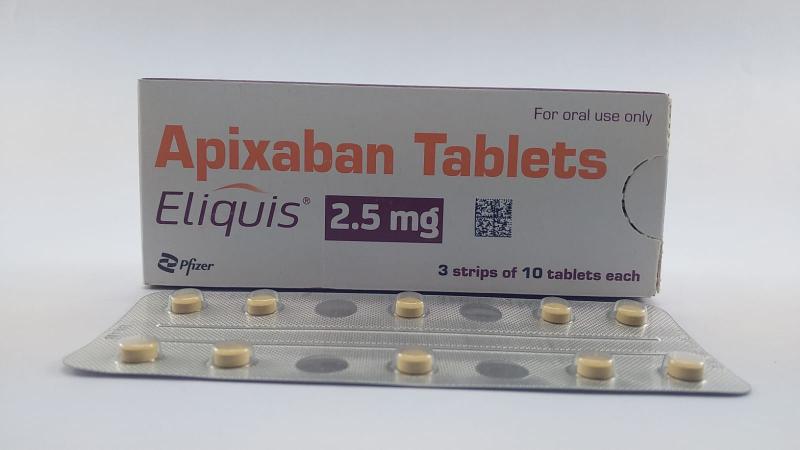


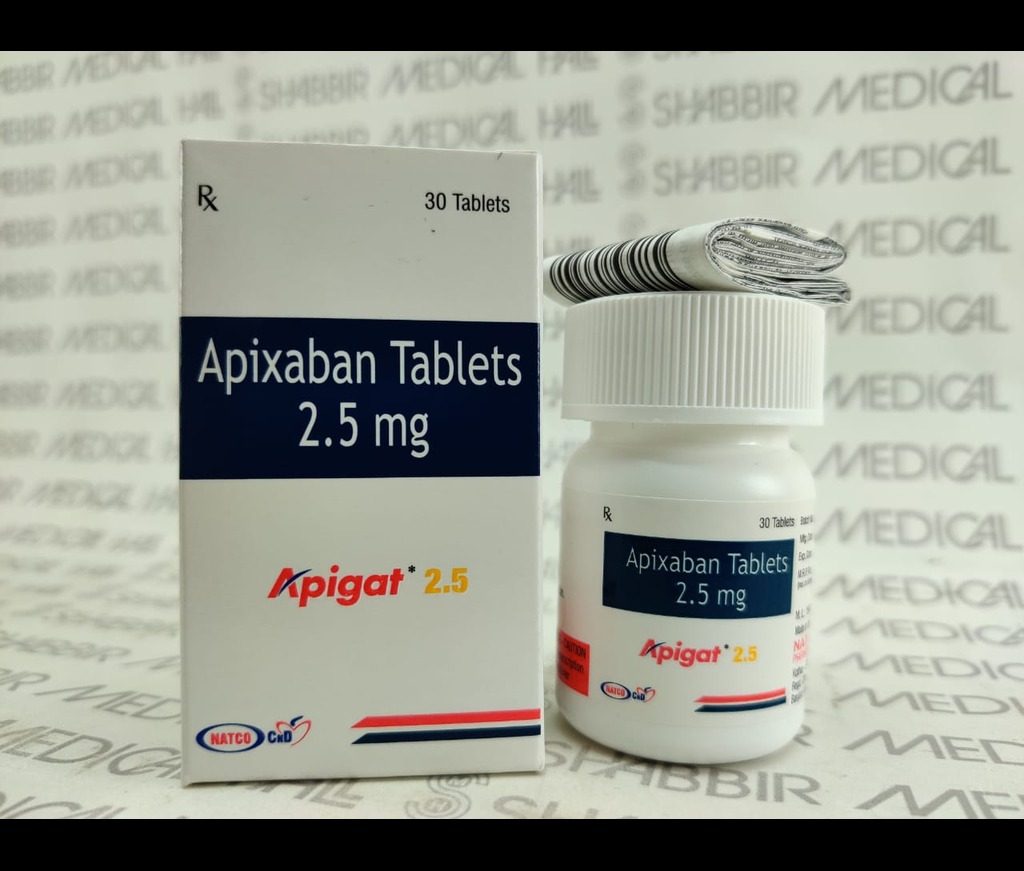
APIGAT 2 5MG TABS
Manufactured By Natco Pharma Limited
Composition Apixaban 2 5mg
RS 573.75
MRP RS 675.00
(15% OFF)
Includes all taxes
Package SIZE
( Bottle of 30 Tablets )

100% Authentic
Products

Free
Shipping*

Products
Return Policy
Description:
Apigat 2.5mg Tablet (Apixaban 2.5mg) is an oral anticoagulant (blood thinner) belonging to the class of direct Factor Xa inhibitors, manufactured by Natco Pharma Ltd. and used to prevent and treat life-threatening blood clots in adults. It is prescribed to reduce the risk of stroke and systemic embolism in patients with non-valvular atrial fibrillation (irregular heartbeat), and to prevent and treat deep vein thrombosis (DVT) and pulmonary embolism (PE). It is also used after elective hip or knee replacement surgery to reduce clot formation risk. Available from Shabbir Medical Hall at the best price in India, this genuine prescription medicine is easy to order online with fast home delivery.
BENEFITS: Apigat 2.5mg works by selectively blocking Factor Xa — a pivotal enzyme in the blood coagulation cascade — preventing the conversion of prothrombin to thrombin and, ultimately, stopping clot formation. Unlike older anticoagulants such as warfarin, Apigat does not require routine blood monitoring (PT-INR tests), offers predictable pharmacokinetics, and has fewer food interactions, making it a preferred choice in modern cardiovascular care.
USAGE OVERVIEW: Take Apigat 2.5mg exactly as prescribed by your cardiologist or physician. For atrial fibrillation, the typical dose is 2.5mg or 5mg twice daily. For post-surgical DVT prevention, 2.5mg twice daily is standard. Swallow tablets whole with or without food at the same time each day. Never stop treatment without consulting your doctor as this increases the risk of stroke or clot recurrence.
SAFETY OVERVIEW: The most common side effect is an increased tendency to bleed (bruising, nosebleeds). Serious effects such as major bleeding episodes, blood in stools or urine, or sudden severe headache require immediate medical attention. Inform your doctor about all current medications, liver or kidney conditions, and pregnancy status before starting therapy.
Uses / Indications:
• Non-valvular Atrial Fibrillation (AF) — reduction of risk of stroke and systemic embolism
• Deep Vein Thrombosis (DVT) — treatment and prevention of recurrence
• Pulmonary Embolism (PE) — treatment and prevention of recurrence
• Prevention of DVT/PE after elective hip or knee replacement surgery
ADDITIONAL USES:
• Secondary prevention of cardiovascular events in selected high-risk patients
• Management of venous thromboembolism (VTE) in cancer patients (off-label in select protocols)
• Dose reduction regimen (2.5mg twice daily) in elderly/low-body-weight AF patients
Interactions / Warnings:
LIVER DISEASE Apigat 2.5mg is NOT recommended in patients with severe hepatic impairment or liver disease associated with coagulopathy. Patients with mild to moderate liver disease should use with caution — consult doctor.
KIDNEY DISEASE Use with caution in patients with moderate to severe renal impairment (CrCl <25 ml/min or eGFR <15). Not recommended in patients on dialysis — consult your nephrologist.
HEART CONDITIONS Apigat is primarily used in AF patients — it replaces warfarin in many cases. Patients with prosthetic (mechanical) heart valves should NOT use Apigat; warfarin is preferred.
ALLERGY WARNING Do not use Apigat 2.5mg if you are allergic to Apixaban or any excipients in the formulation.
ELDERLY USE (≥75 years) Use with increased caution — dose reduction criteria apply. Elderly patients are at higher risk of bleeding. The 2.5mg dose is specifically calibrated for eligible elderly AF patients meeting specific criteria (age ≥80, weight ≤60kg, creatinine ≥1.5mg/dL — any two of three triggers dose reduction).
DRIVING & MACHINERY Apigat may cause dizziness or fainting (from hypotension or anaemia-related weakness). Patients should assess their response before driving.
Pregnancy interaction:
• The effects of Apixaban on pregnancy and the unborn baby are not fully established.
• Apigat 2.5mg is generally NOT recommended during pregnancy due to potential risk of fetal harm (possible haemorrhage, teratogenicity based on animal studies).
• Women of childbearing potential should use effective contraception during treatment.
• Inform your doctor immediately if pregnancy is suspected or confirmed during treatment.
BREASTFEEDING:
• It is not known if Apixaban passes into human breast milk.
• Breastfeeding is NOT recommended while taking Apigat 2.5mg as a precautionary measure.
• Discuss alternative feeding options with your doctor.
CONTRACEPTION WARNING / DOCTOR CONSULTATION WARNING:
• Never start, stop, or change Apigat dosing without consulting your cardiologist or physician. Stopping abruptly significantly increases stroke risk in AF patients.
Expert advice:
1. NEVER STOP ABRUPTLY
• Stopping Apigat suddenly without medical guidance significantly increases your risk of stroke or clot recurrence, especially if you have atrial fibrillation. Always consult your cardiologist before making any changes.
2. CONSISTENT TWICE-DAILY TIMING
• Take your doses approximately 12 hours apart (e.g., 8 AM and 8 PM) every day for stable plasma drug levels and maximum efficacy.
3. NO ROUTINE BLOOD MONITORING NEEDED
• Unlike warfarin, Apigat does not require regular INR/PT blood tests. However, periodic kidney and liver function checks are still recommended by your doctor.
4. BLEEDING PRECAUTIONS
• Inform all healthcare providers (dentists, surgeons, emergency doctors) that you are on Apixaban before any procedure. Carry a medication alert card or use a medical ID bracelet.
5. REPORT ALL MEDICINES
• Always inform your cardiologist and pharmacist about every medicine, supplement, or herbal product you are taking before starting Apigat.
MONITORING ADVICE:
• Kidney function (serum creatinine / eGFR): At baseline and at least annually — dose adjustment thresholds depend on renal function.
• Liver function tests (LFTs): Baseline and periodically; Apixaban is contraindicated in significant hepatic impairment.
• Full Blood Count (FBC/CBC): If symptoms of anaemia appear (fatigue, pallor, shortness of breath).
• Blood pressure monitoring: Hypertension increases stroke risk even on anticoagulants.
COMPLIANCE TIPS:
• Store tablets in original child-proof packaging in a cool, dry location.
• Use a pill organiser or phone alarm to remember twice-daily doses.
• Never share your prescription medicine with others.
• Keep all scheduled cardiology follow-up appointments.
• Do not take OTC pain relievers (ibuprofen, aspirin) without consulting your doctor — they significantly increase bleeding risk with Apixaban.
SAFETY TIPS:
• Use a soft-bristle toothbrush and electric razor to minimise bleeding from minor cuts.
• Avoid contact sports and activities with high injury risk.
• If you cut yourself and bleeding does not stop within 10 minutes of direct pressure, seek medical attention.
• Dispose of unused tablets through a pharmacy take-back programme — never flush or bin them.
Side Effects:
• Increased tendency to bleed (bruising, nosebleeds, bleeding gums)
• Anaemia (low red blood cell count — fatigue, pallor, weakness)
• Haematoma (collection of blood under the skin)
• Nausea and mild dizziness
• Low blood pressure (hypotension)
• Skin rash
SERIOUS SIDE EFFECTS (contact your doctor immediately):
• Major bleeding episodes — blood in vomit, stools (black/tarry stools), or urine (pink/red/brown urine)
• Coughing up blood
• Intracranial/spinal haemorrhage — sudden severe headache, vision changes, confusion, weakness
• Retroperitoneal or intra-abdominal bleeding — persistent abdominal pain
• Severe bruising or unusual swelling
EMERGENCY WARNING SIGNS — SEEK IMMEDIATE MEDICAL HELP:
• Sudden severe headache with no known cause (may indicate intracranial bleed)
• Dizziness, fainting, or extreme weakness
• Swelling of the face, lips, tongue, or throat (possible allergic reaction / anaphylaxis)
• Signs of liver damage: yellowing of skin/eyes, dark urine, persistent nausea
How to use:
• Atrial Fibrillation (stroke prevention): 2.5mg or 5mg twice daily (dose determined by doctor based on age, weight, creatinine level)
• DVT/PE Treatment (initial 7 days): 10mg twice daily, then 5mg twice daily
• DVT/PE Prevention of Recurrence: 2.5mg twice daily after at least 6 months of treatment
• Post Hip/Knee Replacement Surgery: 2.5mg twice daily, starting 12–24 hours after surgery
ROUTE OF ADMINISTRATION / TIMING:
• Take at the same time(s) each day for consistent blood levels.
• Swallow tablets whole — do not crush, chew, split, or break them.
FOOD INTERACTIONS:
• Can be taken with or without food.
• No significant dietary restrictions (unlike warfarin). Avoid excessive alcohol.
MISSED DOSE:
• If you miss a dose on the same day it was due, take it as soon as you remember. If you remember the next day, skip the missed dose and continue your usual schedule. Never double up.
STORAGE:
• Store at room temperature (below 30°C / 86°F).
• Keep in original packaging, away from moisture and sunlight.
• Keep out of reach of children.
How it works:
• Apigat 2.5mg contains Apixaban, a potent oral direct Factor Xa inhibitor.
The Coagulation Cascade:
• Blood clotting (coagulation) is a cascade of enzyme reactions. Factor Xa is a critical enzyme at the convergence of the intrinsic and extrinsic pathways — it converts prothrombin into thrombin, which then converts fibrinogen into fibrin to form a blood clot.
How Apixaban Acts:
• Apixaban works by directly and selectively binding to Factor Xa's active site, blocking its activity without requiring the cofactor antithrombin. This interrupts the coagulation cascade, preventing thrombin generation and subsequent fibrin clot formation.
KEY ADVANTAGES over warfarin:
• No routine INR/PT monitoring required
• Predictable pharmacokinetics with fixed dosing
• Fewer food interactions (no dietary vitamin K restriction)
• Rapid onset of action (peak plasma levels in 3–4 hours)
Result:
• Blood flows more freely through blood vessels, reducing the risk of dangerous clots forming in the heart, legs, or lungs.
Faq for medicine:
1.What conditions is Apigat 2.5mg prescribed to treat?
Apigat 2.5mg (Apixaban 2.5mg) is prescribed to reduce the risk of stroke and systemic embolism in adults with non-valvular atrial fibrillation. It is also used to prevent deep vein thrombosis (DVT) and pulmonary embolism (PE), particularly after hip or knee replacement surgery, under medical supervision.
2.How does Apigat 2.5mg prevent blood clots from forming?
Apigat 2.5mg works by selectively inhibiting Factor Xa, a key enzyme in the coagulation cascade. By blocking Factor Xa, Apixaban reduces the formation of thrombin and subsequent blood clots without requiring routine blood monitoring, making Apigat a convenient oral anticoagulant for long-term use.
3.Does Apigat 2.5mg require INR monitoring like warfarin?
Unlike warfarin, Apigat 2.5mg does not require routine INR (International Normalized Ratio) monitoring. This is a significant advantage of Apixaban-based therapy. However, patients should attend regular clinical follow-ups to assess bleeding risk, kidney function, and medication interactions throughout treatment.
4.Who should not take Apigat 2.5mg tablets?
Apigat 2.5mg is contraindicated in patients with active bleeding, severe liver disease, or known hypersensitivity to Apixaban. It is not recommended during pregnancy or breastfeeding. Patients with prosthetic heart valves or antiphospholipid syndrome should consult their physician before starting Apigat therapy.
5.Can Apigat 2.5mg be taken alongside other blood thinners safely?
Combining Apigat 2.5mg with other anticoagulants, antiplatelet agents, or NSAIDs significantly increases bleeding risk and is generally not recommended without specialist guidance. Always inform the prescribing doctor of all medications, including over-the-counter drugs and supplements, before starting Apigat 2.5mg.
6.What should a patient do if they miss a dose of Apigat 2.5mg?
If a dose of Apigat 2.5mg is missed, it should be taken as soon as remembered on the same day. If the next scheduled dose is near, skip the missed dose. Never double the dose. Consistent daily use of Apigat helps maintain steady anticoagulation and reduces thromboembolic risk.
Medicine interaction:
• Strong CYP3A4 + P-gp Inhibitors (increase Apixaban levels — AVOID or use with caution): Ketoconazole, itraconazole, clarithromycin, ritonavir, other HIV protease inhibitors
• Strong CYP3A4 + P-gp Inducers (decrease Apixaban levels — AVOID): Rifampicin, phenytoin, carbamazepine, phenobarbital, St. John's Wort
• Other Anticoagulants/Antithrombotics: Warfarin, heparin, clopidogrel, aspirin — concurrent use significantly increases bleeding risk; use only if medically justified with close monitoring
• NSAIDs (ibuprofen, naproxen): Increase bleeding risk when combined with Apixaban
• Antidepressants (SSRIs/SNRIs): May increase bleeding risk
VACCINE INTERACTIONS / ALCOHOL INTERACTION:
• Moderate alcohol may increase bleeding risk. Limit consumption and avoid binge drinking.
SUPPLEMENT INTERACTIONS:
• St. John's Wort: Significantly reduces Apixaban plasma levels — strictly avoid.
• Omega-3/fish oil, garlic, ginkgo, vitamin E at high doses: May enhance antiplatelet/anticoagulant effect and increase bleeding risk.