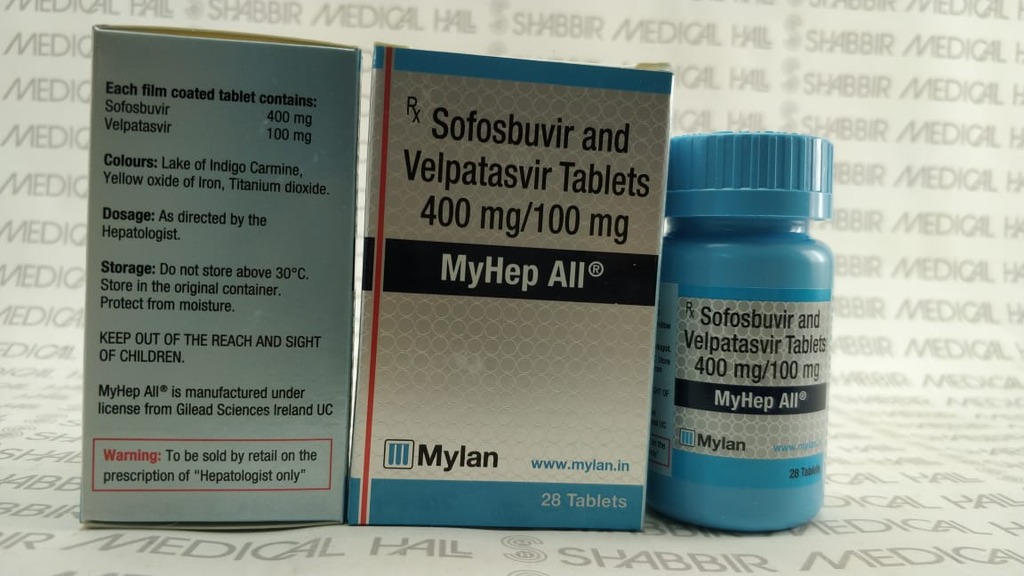


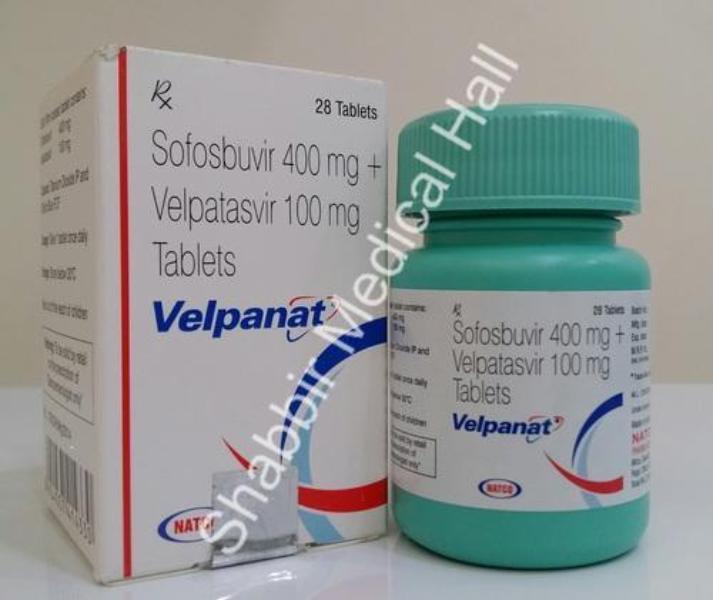
Velpanat 400mg 100mg Tablet
 Item requires a valid prescription
Manufactured By Natco Pharma Limited
Composition Sofosbuvir 400mg Velpatasvir 100mg
RS 10664.00
MRP RS 16406.20
(35% OFF)
Includes all taxes
Package SIZE
( 28 tablets in 1 bottle )

100% Authentic
Products

Free
Shipping*

Products
Return Policy
Description:
Velpanat 400mg/100mg Tablet is a fixed-dose combination (FDC) direct-acting antiviral (DAA) medicine manufactured by Natco Pharma Limited, containing two active ingredients: Sofosbuvir 400mg (a pan-genotypic NS5B RNA polymerase inhibitor) and Velpatasvir 100mg (a pan-genotypic NS5A replication complex inhibitor). It is indicated for the treatment of chronic Hepatitis C Virus (HCV) infection in adults across all major genotypes (1–6), including patients with compensated or decompensated cirrhosis, HIV-HCV co-infection, and those who have previously failed interferon-based or NS5A/NS5B inhibitor-based treatments. Available from Shabbir Medical Hall at the best price in India, this genuine prescription tablet is available online with fast delivery nationwide.
BENEFITS: Velpanat 400mg/100mg Tablet delivers a convenient once-daily single-tablet regimen that achieves Sustained Virological Response (SVR12 — undetectable HCV RNA 12 weeks post-treatment completion) in over 95% of patients across all HCV genotypes in pivotal clinical trials. As a truly pan-genotypic combination, it removes the need for pre-treatment genotype testing in most clinical settings, simplifying HCV care pathways significantly. The finite 12-week cure course is well-tolerated and interferon-free. Natco Pharma Limited is a globally recognised Indian pharmaceutical manufacturer with an established record of producing high-quality, affordable generic medicines used in government and private HCV elimination programmes across India and internationally.
USAGE OVERVIEW: Velpanat Tablets are taken orally, once daily, with or without food, for 12 weeks (standard regimen for non-cirrhotic patients of all genotypes). Patients with decompensated cirrhosis may require 24 weeks of therapy with added ribavirin, as directed by the treating specialist. Dosing must always be confirmed and monitored by the prescribing hepatologist or gastroenterologist.
SAFETY OVERVIEW: Velpanat 400mg/100mg Tablet is generally well-tolerated. Most common adverse effects include fatigue, headache, nausea, and insomnia. Important safety considerations include the absolute contraindication with amiodarone (serious bradycardia risk) and avoidance of potent P-gp/CYP inducers such as rifampicin and St. John's Wort. All patients must be screened for Hepatitis B before initiating therapy.
Uses / Indications:
• Chronic Hepatitis C Virus (HCV) Infection — All Genotypes (1–6): Treatment of chronic HCV infection in adults; achieves Sustained Virological Response (SVR12 — undetectable HCV RNA 12 weeks after completing treatment), which is considered a functional cure; pan-genotypic efficacy across HCV genotypes 1, 2, 3, 4, 5, and 6
• HCV with Compensated Cirrhosis (Child-Pugh A): Effective in patients with stable, compensated liver disease; standard 12-week regimen (ribavirin may be added for genotype 3 with cirrhosis, per specialist discretion and clinical guidelines)
• HCV with Decompensated Cirrhosis (Child-Pugh B/C): Approved in combination with ribavirin for 24 weeks under mandatory specialist hepatology supervision; liver function must be monitored closely throughout
• HIV-HCV Co-infection: Effective in adults co-infected with HIV-1 and HCV; careful management of antiretroviral drug-drug interactions required by HIV/hepatology specialist
ADDITIONAL USES:
• HCV in Prior Treatment-Experienced Patients: Effective in patients who have failed prior interferon-based, NS3/4A protease inhibitor-based, or NS5A inhibitor-based regimens (specialist hepatology assessment required for re-treatment strategy)
• Recurrent HCV Post-Liver Transplant: Used in recurrent HCV infection following liver transplantation; specialist transplant hepatology and drug interaction review essential (particularly with immunosuppressants)
• Use within government National Viral Hepatitis Control Programme (NVHCP) and free HCV treatment centres across India
Interactions / Warnings:
SYMPTOMATIC BRADYCARDIA WARNING — AMIODARONE COMBINATION (BLACK BOX EQUIVALENT): LIFE-THREATENING symptomatic bradycardia has been observed when sofosbuvir is co-administered with amiodarone (and potentially dronedarone); onset may be within hours to days of starting the DAA regimen; cases have required pacemaker intervention; deaths have occurred. ABSOLUTE CONTRAINDICATION — do not co-administer under any circumstances. If no alternative antiarrhythmic is possible (exceptional cases only): refer for inpatient cardiac monitoring for the first 48 hours, then daily outpatient monitoring for at least 2 additional weeks; counsel patient explicitly on symptoms of bradycardia (dizziness, light-headedness, near-syncope, syncope, dyspnoea, chest pain) and instruct them to present to emergency care immediately if any occur. Note: amiodarone's extremely long half-life (weeks to months) means bradycardia risk persists even after amiodarone discontinuation.
HEPATITIS B VIRUS (HBV) REACTIVATION WARNING: Potentially fatal HBV reactivation, including fulminant hepatitis, hepatic failure, and death, has been reported in HCV/HBV co-infected patients starting DAA therapy. MANDATORY: Screen ALL patients for HBV infection (HBsAg, anti-HBc, anti-HBs) before initiating Velpanat. HBsAg-positive patients: initiate concurrent HBV-active antiviral therapy and monitoring before or simultaneously with DAA initiation; refer to hepatologist. Anti-HBc positive (occult HBV) patients: monitor HBV DNA and liver function tests during and for at least 3 months post-completion of DAA therapy.
RENAL IMPAIRMENT: Velpanat 400mg/100mg is NOT recommended for patients with eGFR <30 ml/min (CKD stages 4–5) or those on haemodialysis due to limited pharmacokinetic and safety data. Sofosbuvir's predominant renally-cleared metabolite (GS-331007) accumulates significantly in severe renal impairment — consult hepatologist for alternative regimens.
HEPATIC IMPAIRMENT: No dose adjustment required for mild (Child-Pugh A) hepatic impairment. Decompensated cirrhosis (Child-Pugh B/C): Velpanat + ribavirin × 24 weeks under specialist hepatology centre only; monitor closely for hepatic decompensation events throughout therapy.
DRIVING & MACHINERY: Fatigue and dizziness associated with Velpanat may impair ability to drive or operate machinery — individual patient assessment required.
Pregnancy interaction:
Velpanat 400mg/100mg Tablet (without ribavirin): Limited human safety data during pregnancy; animal studies have not demonstrated teratogenicity for sofosbuvir or velpatasvir; however, use during pregnancy is NOT recommended unless the benefit clearly outweighs the risk — specialist hepatologist and obstetrician assessment is mandatory
Velpanat + RIBAVIRIN (decompensated cirrhosis regimen): ABSOLUTELY CONTRAINDICATED in pregnancy — ribavirin is a known teratogen (causes serious birth defects and foetal death, Pregnancy Category X); pregnancy must be excluded before starting and effective contraception maintained throughout therapy and for 6 months after completion of ribavirin
Women of childbearing potential: must use two reliable forms of contraception (see below) during Velpanat + ribavirin therapy and for 6 months after the last dose of ribavirin
Male patients whose female partners are pregnant or could become pregnant: must use condoms throughout ribavirin-containing treatment and for 6 months post-completion
BREASTFEEDING:
Breastfeeding is NOT recommended during Velpanat treatment due to insufficient human safety data on excretion of sofosbuvir and velpatasvir metabolites into breast milk
In ribavirin-containing regimens: breastfeeding is contraindicated due to potential infant ribavirin exposure
Discuss risks and feeding alternatives with hepatologist and paediatrician before and during treatment
CONTRACEPTION WARNING:
For Velpanat alone (non-ribavirin): standard contraception recommended; note that velpatasvir does not significantly affect hormonal contraceptive plasma levels (unlike nevirapine-based ART regimens)
For Velpanat + ribavirin: two forms of effective contraception are mandatory throughout treatment and for 6 months post-completion; both partner contraception must be addressed
PREGNANCY SAFETY:
• Velpanat 400mg/100mg Tablet (without ribavirin): Limited human safety data during pregnancy; animal studies have not demonstrated teratogenicity for sofosbuvir or velpatasvir; however, use during pregnancy is NOT recommended unless the benefit clearly outweighs the risk — specialist hepatologist and obstetrician assessment is mandatory
• Velpanat + RIBAVIRIN (decompensated cirrhosis regimen): ABSOLUTELY CONTRAINDICATED in pregnancy — ribavirin is a known teratogen (causes serious birth defects and foetal death, Pregnancy Category X); pregnancy must be excluded before starting and effective contraception maintained throughout therapy and for 6 months after completion of ribavirin
• Women of childbearing potential: must use two reliable forms of contraception (see below) during Velpanat + ribavirin therapy and for 6 months after the last dose of ribavirin
• Male patients whose female partners are pregnant or could become pregnant: must use condoms throughout ribavirin-containing treatment and for 6 months post-completion
BREASTFEEDING:
• Breastfeeding is NOT recommended during Velpanat treatment due to insufficient human safety data on excretion of sofosbuvir and velpatasvir metabolites into breast milk
• In ribavirin-containing regimens: breastfeeding is contraindicated due to potential infant ribavirin exposure
• Discuss risks and feeding alternatives with hepatologist and paediatrician before and during treatment
CONTRACEPTION WARNING:
• For Velpanat alone (non-ribavirin): standard contraception recommended; note that velpatasvir does not significantly affect hormonal contraceptive plasma levels (unlike nevirapine-based ART regimens)
• For Velpanat + ribavirin: two forms of effective contraception are mandatory throughout treatment and for 6 months post-completion; both partner contraception must be addressed
• Suitable contraceptive options: combined oral contraceptive pill (acceptable — no significant interaction with velpatasvir), barrier methods (condoms), copper IUD, or contraceptive injections
Expert advice:
1. MANDATORY HBV SCREENING BEFORE EVERY FIRST DISPENSE — NON-NEGOTIABLE:
• Confirm with the prescribing hepatologist that the patient has been fully screened for HBV co-infection (HBsAg, anti-HBc, anti-HBs) before dispensing Velpanat for the first time. Fatal HBV reactivation during DAA therapy in undetected HBV/HCV co-infected patients is well documented. This is not an assumption that can be made — proactively verify at the point of dispense. If screening has not been done, flag urgently to the prescriber and withhold dispensing until confirmed.
2. THE AMIODARONE CONTRAINDICATION IS ABSOLUTE — CONDUCT A COMPLETE CARDIAC MEDICATION HISTORY AT EVERY FIRST DISPENSE:
• Sofosbuvir (contained in Velpanat) combined with amiodarone causes potentially fatal bradycardia. Perform a structured cardiac medication review at the first dispense: ask explicitly about amiodarone, dronedarone, and all other antiarrhythmic agents. Crucially, ask whether the patient has recently stopped amiodarone — due to its extremely prolonged half-life (weeks to months), the risk persists for a significant period after cessation. If any amiodarone exposure is identified, DO NOT DISPENSE without specialist cardiology and hepatology co-review.
3. SVR12 FOLLOW-UP TEST IS THE PROOF OF CURE — COUNSEL PATIENTS TO ATTEND:
• Completing the 12-week course is necessary but not sufficient to confirm cure. Patients must attend their SVR12 blood test (HCV RNA PCR test) exactly 12 weeks after taking the last tablet. SVR12 (undetectable HCV RNA) is the internationally recognised definition of cure. Many patients, feeling well after treatment completion, do not return for this critical test. Counsel every patient explicitly: "Your cure is only confirmed by a blood test 12 weeks after your last tablet — this appointment is essential."
4. MANAGE PPI AND ANTACID INTERACTIONS PROACTIVELY AT EVERY DISPENSE:
• Velpatasvir absorption is pH-sensitive. In practice, many HCV patients are on long-term PPIs for gastro-oesophageal reflux or peptic ulcer prophylaxis. The correct management is: if the patient is on a PPI, take Velpanat at the same time as the PPI WITH food (co-administration with food partially offsets the pH effect). Antacids must be separated by at least 4 hours. Ask about self-medicated antacid use at every dispense. Patients frequently purchase OTC antacids without disclosing this — it is a common, preventable interaction.
5. RIBAVIRIN COMBINATION REGIMENS REQUIRE EXPLICIT TERATOGENICITY COUNSELLING AND CONFIRMED CONTRACEPTION:
• For decompensated cirrhosis patients on Velpanat + ribavirin: ribavirin is an absolute teratogen (Pregnancy Category X). Before dispensing ribavirin, confirm that a pregnancy test has been performed in women of childbearing potential, that both patient and partner understand the contraception requirement (two effective methods for 6 months post-treatment), and that this counselling is documented. This is a regulatory and ethical obligation, not optional.
MONITORING ADVICE:
• HCV RNA (viral load PCR): Baseline (pre-treatment); end of treatment (week 12 or 24); SVR12 (12 weeks post-completion) — confirms cure
• Liver Function Tests (ALT, AST, bilirubin, albumin, INR/PT): Baseline; week 4; end of treatment; SVR12 — particularly critical in cirrhotic patients; monitor more frequently in decompensated cirrhosis
• Full Blood Count (FBC/CBC): Baseline; weeks 2, 4, 8, 12 in ribavirin-containing regimens — monitor for haemolytic anaemia; more frequent if haemoglobin drops significantly
• Renal function (eGFR / serum creatinine): Baseline; monitor periodically particularly in patients on tenofovir-containing HIV ART or pre-existing renal impairment
• HBV monitoring (HBV DNA and LFTs): If anti-HBc positive — monitor during DAA therapy and for 3 months post-completion for HBV reactivation
• Cardiac monitoring: Baseline resting heart rate and ECG if any history of arrhythmia, cardiac conduction disease, or recent antiarrhythmic use
COMPLIANCE TIPS:
• Take one tablet at the same time each day — once-daily dosing is straightforward; set a single daily phone alarm
• If on a PPI, take Velpanat simultaneously with your PPI WITH food each morning
• Use a 12-week pill organiser to track the course (84 tablets total) — a visual reminder that every tablet matters
• Carry a medication alert card listing Velpanat, the treatment start date, and the course end date
• Do not miss the SVR12 blood test appointment at 12 weeks after completing treatment — this confirms your cure
SAFETY TIPS:
• NEVER share Velpanat tablets — HCV treatment is individually prescribed based on disease severity and medical history
• Inform ALL treating doctors, dentists, and pharmacists that you are on DAA HCV therapy before any new medication is prescribed
• Do NOT stop Velpanat without hepatologist approval — premature discontinuation risks treatment failure and HCV resistance
• Avoid St. John's Wort and all undisclosed herbal or nutritional supplements — many interact with DAA pharmacokinetics
• If you develop dizziness, slow heartbeat, or near-fainting: seek emergency medical attention immediately
Side Effects:
• Fatigue: the most frequently reported adverse effect; typically mild-to-moderate in severity and manageable
• Headache
• Nausea
• Insomnia (sleep disturbance)
• Nasopharyngitis (upper respiratory tract infection symptoms)
• Elevated bilirubin: particularly relevant in patients with decompensated cirrhosis receiving ribavirin combination
• Anaemia: primarily when ribavirin is co-administered; monitor haemoglobin levels regularly
LESS COMMON SIDE EFFECTS (1–10 in 100 people):
• Rash, pruritus (skin itching)
• Diarrhoea, vomiting, abdominal discomfort
• Decreased appetite, weight loss
• Myalgia (muscle aches and pains)
• Depression, irritability, mood changes (more pronounced in ribavirin-containing regimens)
• Elevated serum lipase (monitor for pancreatitis symptoms in symptomatic patients)
• Dizziness
SERIOUS SIDE EFFECTS (seek immediate medical attention):
• Symptomatic Bradycardia — AMIODARONE INTERACTION: Serious, symptomatic, and potentially life-threatening slowing of heart rate has been reported when sofosbuvir-based regimens are co-administered with amiodarone or other antiarrhythmics affecting cardiac conduction — ABSOLUTE CONTRAINDICATION; patients experiencing palpitations, near-syncope, syncope, or chest discomfort must present to emergency care immediately
• Hepatic Decompensation: In patients with pre-existing cirrhosis, clinical deterioration of liver function (new onset jaundice, ascites, hepatic encephalopathy, variceal bleeding) may occur — closely monitor LFTs and clinical status throughout therapy
• Severe Haemolytic Anaemia (ribavirin-containing regimens): may necessitate ribavirin dose reduction or permanent discontinuation; monitor full blood count (FBC) regularly
• Hepatitis B Virus (HBV) Reactivation: HBV reactivation, including fulminant hepatitis and hepatic failure with fatal outcomes, has been reported in patients with HCV/HBV co-infection initiating DAA therapy — pre-treatment HBV screening is mandatory
EMERGENCY SIGNS — SEEK IMMEDIATE MEDICAL HELP:
• Slow, irregular, or pounding heartbeat; dizziness; near-fainting; syncope (bradycardia — especially if on amiodarone or recent amiodarone exposure)
• Jaundice (yellowing of skin/eyes), dark urine, severe right upper abdominal pain (hepatic decompensation or HBV reactivation)
• Severe breathlessness, extreme fatigue, very pale skin (severe anaemia)
How to use:
• Standard Adult Dose (Non-Cirrhotic, All Genotypes 1–6): ONE tablet ONCE DAILY for 12 WEEKS
• Compensated Cirrhosis (Child-Pugh A, All Genotypes): ONE tablet ONCE DAILY for 12 WEEKS (add ribavirin for genotype 3 with cirrhosis per specialist decision)
• Decompensated Cirrhosis (Child-Pugh B/C): ONE tablet ONCE DAILY + RIBAVIRIN (weight-based) for 24 WEEKS — specialist hepatology centre mandatory
• HIV-HCV Co-infection (non-cirrhotic): ONE tablet ONCE DAILY for 12 WEEKS — careful ARV interaction management
• Renal Impairment (eGFR <30 ml/min / haemodialysis): Not recommended — insufficient safety and pharmacokinetic data; consult hepatologist
• Paediatric use: Not indicated; dedicated paediatric HCV DAA formulations are available separately
ROUTE OF ADMINISTRATION:
• Oral (tablet) — swallow whole with water
• May be taken with or without food
• If co-administered with a PPI: take WITH FOOD simultaneously with the PPI dose
• Do NOT crush, chew, or break tablets
TIMING:
• Take at the same time each day — once-daily adherence throughout the full 12-week (or 24-week) course is critical for SVR
• Completing the full prescribed course is non-negotiable; early discontinuation risks SVR failure and development of resistance-associated substitutions
MISSED DOSE:
• If remembered within 18 hours of the scheduled time: take immediately and resume next dose at the normal scheduled time
• If more than 18 hours have elapsed: skip the missed dose entirely; do NOT double up; resume the regular schedule at the next dose time
STORAGE:
• Store below 30°C in a cool, dry place away from moisture and direct sunlight
• Keep in original tightly closed container
• Keep out of reach of children
• Do not use after the expiry date printed on the label
How it works:
• Sofosbuvir is a phosphoramidate prodrug that is metabolised intracellularly to its pharmacologically active uridine triphosphate analogue (GS-461203)
• This active metabolite is incorporated into the elongating HCV RNA strand by the NS5B RNA-dependent RNA polymerase, acting as a chain terminator and halting de novo HCV RNA synthesis
• Critically, sofosbuvir's NS5B target site is distinct from the NS5A site targeted by velpatasvir
• Sofosbuvir's high genetic barrier to resistance at the NS5B level (the S282T resistance mutation is rarely selected and confers only low-level resistance) makes it an essential backbone of modern DAA regimens
VELPATASVIR (VEL) — NS5A Replication Complex Inhibitor (Pan-Genotypic):
• Velpatasvir binds to the HCV NS5A protein — a multifunctional non-structural phosphoprotein that is essential for both HCV RNA replication (within the membranous web replication complex) and for HCV virion assembly and secretion
• By binding Domain I and Domain II of NS5A, velpatasvir disrupts the formation of the replication complex and prevents production of new viral particles
• Velpatasvir's pan-genotypic design provides robust antiviral activity across HCV genotypes 1a, 1b, 2, 3, 4, 5, and 6, including many common NS5A resistance-associated substitutions
NET RESULT:
• Dual-target attack on HCV NS5B (RNA polymerase / viral replication) and NS5A (replication complex / virion assembly) → profound suppression of HCV RNA to undetectable levels → SVR12 achieved in >95% of patients → functional cure of chronic hepatitis C
KEY ADVANTAGES:
• Truly pan-genotypic — no genotype testing required before treatment initiation in most clinical settings
• Once-daily single tablet — simplified 12-week treatment course (or 24 weeks with ribavirin for decompensated cirrhosis)
• High SVR12 rates (>95%) across all genotypes, treatment-naïve and treatment-experienced
• Interferon-free, well-tolerated safety profile
• Manufactured by Natco Pharma Limited — a trusted Indian generic pharmaceutical leader
Faq for medicine:
Velpanat 400mg/100mg contains Sofosbuvir and Velpatasvir, a pan-genotypic direct-acting antiviral combination for chronic Hepatitis C. Velpanat targets both HCV NS5B polymerase and NS5A replication complex, suppressing viral replication comprehensively. It achieves cure rates above 95% across HCV genotypes 1–6 in a single once-daily oral tablet taken for 12 weeks.
2.How effective is Velpanat 400mg/100mg in achieving SVR12 for hepatitis C?
Velpanat 400mg/100mg demonstrated SVR12 rates exceeding 95% across all major HCV genotypes in the ASTRAL trials. For genotype 3 with cirrhosis, SVR12 was approximately 89%. Adding Ribavirin to Velpanat improves outcomes in decompensated cirrhosis patients. These results represent a significant advance over interferon-based regimens in hepatitis C treatment across all major genotypes.
3.Can Velpanat 400mg/100mg be taken with proton pump inhibitors?
Velpanat's Velpatasvir component is pH-sensitive and co-administration with PPIs like omeprazole may reduce Velpatasvir bioavailability. If a PPI is required, it should be taken simultaneously with Velpanat under fasting conditions at doses equivalent to omeprazole 20mg or less. H2-receptor antagonists are preferred over PPIs during Velpanat therapy to avoid significant drug absorption interactions.
4.What are the potential drug interactions with Velpanat 400mg/100mg?
Velpanat interacts significantly with amiodarone (serious bradycardia risk), rifampicin (reduces efficacy), carbamazepine, St. John's Wort, PPIs, and some antiretrovirals including efavirenz. A full medication review by an infectious disease pharmacist or hepatologist is essential before prescribing Velpanat to identify and manage clinically significant interactions that could compromise treatment outcomes.
5.Is Velpanat 400mg/100mg suitable for HCV patients with compensated cirrhosis?
Yes, Velpanat 400mg/100mg is approved for HCV patients with compensated cirrhosis (Child-Pugh A) across genotypes, usually without requiring Ribavirin. For decompensated cirrhosis (Child-Pugh B or C), Velpanat plus Ribavirin for 12 weeks is recommended. Regular liver function monitoring during Velpanat therapy is important in cirrhotic patients, with response evaluated at 4 weeks and SVR12.
6.How does Velpanat 400mg/100mg prevent the need for genotype testing in HCV?
Velpanat 400mg/100mg is effective against all 6 major HCV genotypes, eliminating the need for genotype testing before initiating treatment in most clinical settings. This pan-genotypic activity simplifies decision-making and reduces diagnostic costs, which is particularly valuable in resource-limited environments. Genotype testing may still be useful for guiding Ribavirin use decisions in genotype 3 patients with cirrhosis.
Medicine interaction:
• AMIODARONE (antiarrhythmic): ABSOLUTE CONTRAINDICATION with sofosbuvir-containing regimens — serious, symptomatic, life-threatening bradycardia reported; some cases required pacemaker insertion; fatalities documented; do NOT co-administer under any circumstances
• ST. JOHN'S WORT (Hypericum perforatum — herbal supplement): potent P-glycoprotein (P-gp) and CYP inducer — markedly reduces velpatasvir plasma concentrations, risking SVR failure; ABSOLUTELY CONTRAINDICATED
• RIFAMPICIN (standard TB treatment): potent P-gp and CYP3A4 inducer — reduces sofosbuvir and velpatasvir levels substantially; CONTRAINDICATED; use alternative anti-TB regimens or switch to rifabutin after specialist review
DRUG INTERACTIONS — AVOID (SIGNIFICANT PHARMACOKINETIC INTERACTION):
• CARBAMAZEPINE, PHENYTOIN, PHENOBARBITAL, OXCARBAZEPINE (antiepileptics): CYP inducers — reduce DAA levels; AVOID; consider alternative epilepsy management options
• MODAFINIL: mild-to-moderate CYP inducer; AVOID where possible
DRUG INTERACTIONS — CAUTION / DOSE TIMING MANAGEMENT:
• ANTACIDS (aluminium/magnesium hydroxide, sodium bicarbonate): reduce velpatasvir absorption via pH elevation — separate administration: take Velpanat at least 4 hours before antacid
• PROTON PUMP INHIBITORS (omeprazole, pantoprazole, esomeprazole, lansoprazole): high gastric pH reduces velpatasvir bioavailability — if PPI cannot be avoided, take Velpanat simultaneously with PPI WITH FOOD (do not separate); use the lowest effective PPI dose; omeprazole ≤20mg equivalent preferred
• H2 RECEPTOR ANTAGONISTS (famotidine, ranitidine): moderate pH interaction — take Velpanat simultaneously with H2RA dose WITH FOOD, or take Velpanat at least 12 hours apart from H2RA
• HIV ANTIRETROVIRALS — INTERACTIONS VARY SIGNIFICANTLY BY AGENT:
• Tenofovir alafenamide (TAF)-containing regimens: velpatasvir may increase TAF exposure via P-gp inhibition — use with caution; monitor renal function
• Efavirenz, etravirine, nevirapine: significant induction of velpatasvir metabolism — AVOID; alternative ARV regimens preferred
• Boosted atazanavir (atazanavir/ritonavir or atazanavir/cobicistat): pH-mediated reduction of velpatasvir absorption; specialist HIV/hepatology review essential
• Tenofovir disoproxil fumarate (TDF): sofosbuvir may increase TDF exposure — monitor renal function
• ROSUVASTATIN: velpatasvir and sofosbuvir increase rosuvastatin exposure — use the lowest effective rosuvastatin dose and monitor for statin-related adverse effects
SUPPLEMENT INTERACTIONS:
• St. John's Wort: ABSOLUTELY CONTRAINDICATED — reduces velpatasvir levels, risking HCV treatment failure
• Echinacea, grapefruit products, and other herbal products affecting CYP/P-gp: disclose all supplements to hepatologist before starting therapy
Available Substitutes