


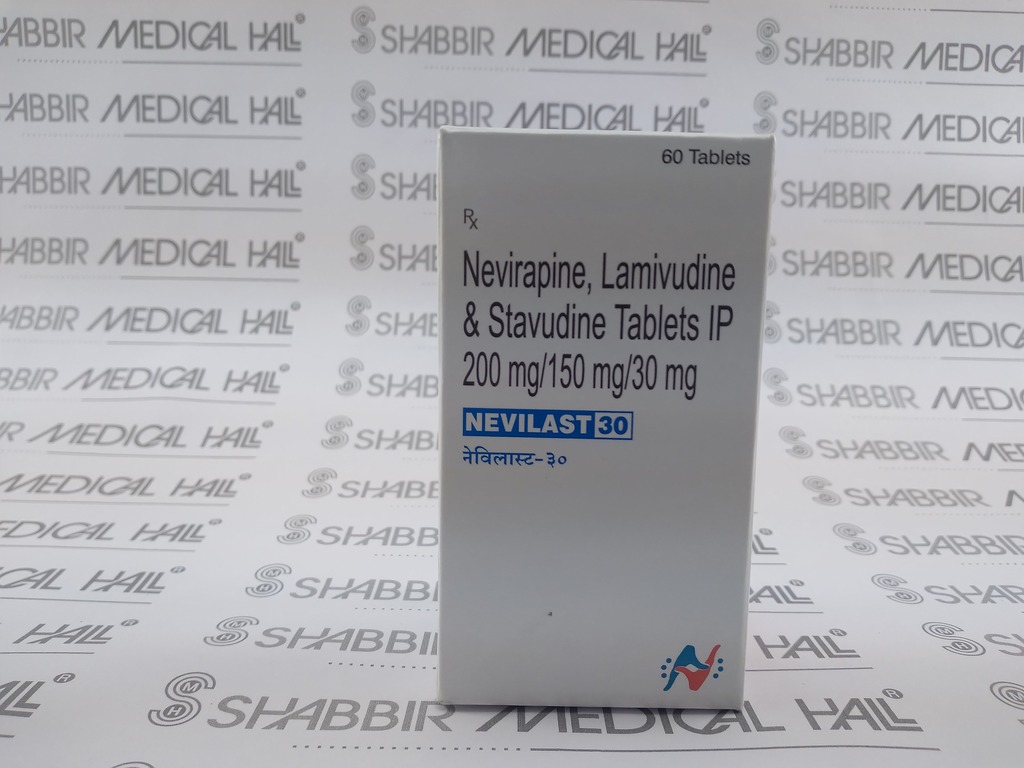
Nevilast 30mg Tablet
 Item requires a valid prescription
Manufactured By Hetero Drugs Ltd
Composition Lamivudine 150mg Stavudine 30mg Nevirapine 200mg
RS 979.60
MRP RS 1088.44
(10% OFF)
Includes all taxes
Package SIZE
( 60 tablets in 1 Bottle )

100% Authentic
Products

Free
Shipping*

Products
Return Policy
Description:
Nevilast 30mg Tablet is a fixed-dose combination (FDC) antiretroviral medicine manufactured by Hetero Drugs Ltd, containing three active ingredients: Lamivudine 150mg (a nucleoside reverse transcriptase inhibitor, NRTI), Stavudine 30mg (NRTI), and Nevirapine 200mg (a non-nucleoside reverse transcriptase inhibitor, NNRTI). It is indicated as part of combination antiretroviral therapy (ART/HAART) for the treatment of HIV-1 infection in adults. Each of the three components attacks the HIV replication cycle at the reverse transcriptase enzyme by different mechanisms, together producing a potent and synergistic suppression of viral replication. Available from Shabbir Medical Hall at the best price in India, this genuine prescription tablet is available online with fast delivery nationwide.
BENEFITS: Nevilast 30mg provides a convenient single-tablet, fixed-dose combination that replaces three separate prescriptions, significantly improving adherence to antiretroviral therapy. Reducing pill burden is one of the most critical factors in sustaining virological suppression and preventing the emergence of drug resistance. The combination of two NRTIs (Lamivudine + Stavudine) with one NNRTI (Nevirapine) represents a well-established first-line ART backbone used globally for decades and endorsed by WHO guidelines for resource-limited settings. Hetero Drugs Ltd is a trusted manufacturer of high-quality, affordable generic antiretrovirals widely used in national HIV programmes across India and internationally.
USAGE OVERVIEW: Nevilast 30mg Tablets are taken orally, once or twice daily as directed by the prescribing HIV physician, with or without food. The standard adult regimen during the nevirapine lead-in phase begins with once-daily dosing for the first 14 days, then progressing to twice-daily dosing if no rash or adverse reactions occur. The exact dosing schedule must always be prescribed and monitored by an HIV specialist.
SAFETY OVERVIEW: The most clinically significant risks include severe hepatotoxicity and life-threatening skin reactions (Stevens-Johnson Syndrome) associated with nevirapine, peripheral neuropathy from stavudine, and lactic acidosis. Regular liver function monitoring and clinical review for cutaneous reactions are mandatory throughout therapy.
Uses / Indications:
• HIV-1 Infection (Antiretroviral Therapy): treatment of HIV-1 infection in adults as part of combination antiretroviral therapy (ART/HAART); used to reduce viral load (HIV RNA) to undetectable levels, preserve and restore CD4+ T-cell counts, prevent AIDS-defining illnesses, and reduce HIV-related morbidity and mortality
• First-Line ART Regimen: Lamivudine + Stavudine + Nevirapine (d4T + 3TC + NVP) is a WHO-approved first-line antiretroviral regimen, particularly used in resource-limited and government HIV programme settings in India
• Prevention of Mother-to-Child Transmission (PMTCT): used in antiretroviral regimens to reduce vertical HIV transmission during pregnancy and delivery (under specialist obstetric/HIV physician guidance)
ADDITIONAL USES:
• Post-Exposure Prophylaxis (PEP): occasionally included in PEP regimens for HIV exposure in occupational and non-occupational settings (specialist prescription only)
• Continuation therapy in stable patients previously initiated on Lamivudine + Stavudine + Nevirapine regimens
• Use within government NACO (National AIDS Control Organisation) ART programmes across India
Interactions / Warnings:
SEVERE HEPATOTOXICITY AND SKIN REACTIONS WARNING (NEVIRAPINE):
LIFE-THREATENING hepatotoxicity (including fulminant and cholestatic hepatitis, hepatic necrosis, and hepatic failure) and severe skin reactions (SJS/TEN) have been reported — most occur in the first 18 weeks of therapy. Highest risk groups for nevirapine hepatotoxicity: women with CD4+ >250 cells/mm³ at treatment initiation, men with CD4+ >400 cells/mm³ — do NOT initiate NVP in these patient groups. Perform liver function tests at baseline, at weeks 2, 4, 8, 12 of therapy, and then 3-monthly. DISCONTINUE IMMEDIATELY if any skin rash, clinical signs of hepatitis, or LFT elevation ≥5× ULN occur — NEVER rechallenge.
NEVIRAPINE LEAD-IN DOSING — MANDATORY:
The 14-day lead-in at once-daily dosing is MANDATORY to reduce risk of rash and hepatotoxicity — skipping the lead-in dramatically increases adverse reaction risk. If therapy is interrupted for more than 7 days, the full 14-day lead-in MUST be restarted.
LACTIC ACIDOSIS / HEPATIC STEATOSIS WARNING (STAVUDINE + LAMIVUDINE):
Nucleoside analogues (especially stavudine) can cause rare but fatal mitochondrial toxicity presenting as lactic acidosis with hepatic steatosis. Risk factors: female sex, obesity, prolonged NRTI use, pregnancy. SUSPEND NRTI therapy in any patient with symptoms or laboratory findings suggestive of lactic acidosis.
STAVUDINE LONG-TERM TOXICITY:
WHO and NACO India guidelines recommend against long-term stavudine use due to risk of irreversible peripheral lipoatrophy, peripheral neuropathy, and cardiovascular complications; transition to tenofovir-based regimens is preferred when available.
RENAL IMPAIRMENT:
Dose adjustment essential for CrCl <50 ml/min for lamivudine and stavudine components — separate prescribing is required in renal disease; consult HIV physician.
DRIVING & MACHINERY:
Dizziness, fatigue, and neurological symptoms may impair driving — assess personally.
Pregnancy interaction:
• Nevilast 30mg is used during pregnancy in the context of PMTCT (prevention of mother-to-child transmission) programmes; however, its use requires careful specialist assessment
• NEVIRAPINE: associated with increased risk of serious hepatotoxicity in pregnant women with CD4+ counts >250 cells/mm³ — NOT recommended as a new initiation in this group during pregnancy; specialist HIV obstetrician guidance essential
• STAVUDINE: potential mitochondrial toxicity in foetus; use during pregnancy only if alternatives are not available; WHO guidelines progressively recommend replacing stavudine with less toxic agents (tenofovir-based regimens)
• LAMIVUDINE: generally considered safe during pregnancy; widely used in PMTCT; crosses placenta providing neonatal prophylaxis
• Women of childbearing potential must discuss family planning with their HIV physician before and during ART
• If pregnancy is confirmed during treatment, do not stop ART abruptly — consult HIV specialist immediately; abrupt discontinuation risks viral rebound and increases MTCT risk
BREASTFEEDING:
• Breastfeeding is generally NOT recommended for HIV-positive mothers in settings where safe infant formula is reliably available, to avoid postnatal HIV transmission through breast milk
• If breastfeeding is unavoidable (resource-limited settings), antiretroviral prophylaxis of the infant and continued maternal ART reduce transmission risk — follow NACO/WHO PMTCT guidelines
• All components of Nevilast 30mg are excreted in breast milk
CONTRACEPTION WARNING:
• Nevirapine is a CYP3A4 inducer and significantly reduces plasma levels of hormonal contraceptives (combined oral contraceptive pill, implants, patches) — USE NON-HORMONAL CONTRACEPTION (condoms, copper IUD) or progestogen-only injectables (medroxyprogesterone — less affected); consult HIV physician
Expert advice:
1. THE 14-DAY NEVIRAPINE LEAD-IN IS NON-NEGOTIABLE — NEVER SKIP IT:
• Nevirapine carries a boxed risk of life-threatening rash (Stevens-Johnson Syndrome) and hepatotoxicity
• The mandatory 14-day lead-in at once-daily dosing allows induction of CYP3A4 and CYP2B6, reducing peak nevirapine plasma concentrations and dramatically lowering adverse reaction risk
• Counsel patients explicitly: the first 14 days are once daily; do NOT self-escalate to twice daily early, and do NOT skip the lead-in period if restarting after a break of more than 7 days
2. ANY RASH IN THE FIRST 6 WEEKS = STOP AND CALL THE DOCTOR IMMEDIATELY:
• Nevirapine-associated rash most commonly appears in the first 6 weeks of therapy
• While many rashes are mild, severe cutaneous reactions (SJS/TEN) are life-threatening
• Counsel patients to photograph any rash and contact their HIV physician or ART centre immediately
• The rule is simple: rash + systemic symptoms (fever, blistering, mucosal involvement) = medical emergency; discontinue and present to hospital
• NEVER reassure a patient that a rash is "probably fine" without medical assessment
3. STRICT ADHERENCE IS THE CORNERSTONE OF HIV TREATMENT SUCCESS:
• HIV resistance mutations develop rapidly when antiretroviral drug levels fall below therapeutic thresholds due to missed doses
• With only three drug classes commonly available in resource-limited settings, losing an NNRTI-based regimen to resistance is a major clinical setback
• Counsel patients: take every dose at the same time every day; set phone alarms; use a pill organiser; involve a trusted family member or treatment supporter; missing even occasional doses risks irreversible drug resistance
4. MONITOR FOR PERIPHERAL NEUROPATHY FROM STAVUDINE — AND REPORT EARLY:
• Stavudine is the component most likely to cause long-term toxicity in this combination
• Peripheral neuropathy — tingling, numbness, or burning pain in the feet and hands — is the most common adverse effect
• Counsel patients to report early symptoms promptly; once neuropathy becomes established and severe, it may be irreversible
• Early substitution of stavudine with tenofovir is the preferred management approach per WHO and NACO India guidelines
5. NEVIRAPINE REDUCES HORMONAL CONTRACEPTIVE EFFICACY — COUNSEL PROACTIVELY:
• Nevirapine is a potent CYP3A4 inducer and substantially reduces plasma concentrations of ethinyl estradiol and progestins in combined oral contraceptive pills and hormonal implants
• Women of childbearing age on Nevilast 30mg who are using hormonal contraception are at significant risk of unintended pregnancy
• Counsel all female patients of childbearing potential to use non-hormonal contraception — condoms, copper IUD — or progestogen-only injectable (medroxyprogesterone acetate, less affected by NVP)
MONITORING ADVICE:
• Liver Function Tests (ALT, AST, bilirubin): Baseline; weeks 2, 4, 8, 12 of therapy; then 3-monthly
• CD4+ T-cell count: Baseline; every 6 months (or more frequently in first year)
• HIV viral load (HIV-1 RNA): Baseline; at 6 months and 12 months; then annually if suppressed
• Full Blood Count (CBC): Baseline; every 3–6 months (anaemia, neutropenia monitoring)
• Renal function (serum creatinine/CrCl): Baseline; annually
• Skin and mucous membrane inspection: At every clinic visit in first 18 weeks
• Peripheral neuropathy assessment: At every visit (ask about tingling/numbness in feet and hands)
• Lipid profile: Baseline and annually (stavudine and nevirapine both affect lipid metabolism)
COMPLIANCE TIPS:
• Take at the same time every day — set two phone alarms (morning and evening for twice-daily phase)
• Use a weekly pill organiser to track doses; a missed pill is immediately visible
• Enrol at the nearest NACO ART Centre for free medicines, counselling, and monitoring in government programme
• Carry a medication alert card listing all antiretrovirals and their dosing times for use in any emergency consultation
• Store tablets in the original tightly closed bottle away from heat, moisture, and sunlight
SAFETY TIPS:
• NEVER share antiretroviral medicines with anyone — different regimens are prescribed for different situations
• Inform all treating doctors (GP, surgeon, dentist, obstetrician) that you are on HIV antiretroviral therapy before any procedure or new prescription
• Do NOT stop Nevilast 30mg without HIV physician instruction — abrupt ART discontinuation risks viral rebound and disease progression
• Avoid St. John's Wort and undisclosed herbal remedies — many reduce antiretroviral drug levels
• Women using contraception: confirm non-hormonal contraceptive use with every dispensing
Side Effects:
• Rash: mild-to-moderate maculopapular rash, most commonly in the first 6 weeks of nevirapine therapy — report to HIV physician immediately; do not self-manage
• Nausea, vomiting, diarrhoea, abdominal discomfort
• Elevated liver enzymes (ALT, AST) — monitor LFTs regularly
• Headache, fatigue, dizziness, insomnia
• Peripheral neuropathy (from stavudine): numbness, tingling, burning pain in hands and feet — most common with long-term stavudine use; may require regimen change
• Anaemia, neutropenia (from lamivudine)
SERIOUS SIDE EFFECTS (contact your doctor immediately):
• Severe Cutaneous Reactions (Nevirapine): Stevens-Johnson Syndrome (SJS), Toxic Epidermal Necrolysis (TEN) — blistering, peeling skin, mucosal involvement (eyes, mouth, genitals) — LIFE-THREATENING; DISCONTINUE IMMEDIATELY and seek emergency care
• Hepatotoxicity (Nevirapine): severe liver damage including fulminant hepatic failure with fatal outcomes — jaundice, dark urine, severe right upper abdominal pain, elevated bilirubin — DISCONTINUE and seek urgent care; highest risk in first 18 weeks
• Lactic Acidosis with Hepatic Steatosis (Stavudine/Lamivudine): nausea, abdominal pain, vomiting, weight loss, rapid breathing, muscle weakness — RARE BUT FATAL; DISCONTINUE IMMEDIATELY
• Lipodystrophy (Stavudine): peripheral fat wasting (lipoatrophy) — especially face, limbs, buttocks — with long-term stavudine use; may be irreversible
• Pancreatitis (Stavudine): severe abdominal pain radiating to the back — DISCONTINUE and seek urgent care
• Hypersensitivity reactions: fever, systemic rash with organ involvement
EMERGENCY SIGNS — SEEK IMMEDIATE MEDICAL HELP:
• Any skin blistering, peeling, or mucosal sores (SJS/TEN)
• Jaundice, dark urine, severe abdominal pain (hepatotoxicity)
• Rapid breathing, muscle weakness, severe fatigue (lactic acidosis)
• Severe unexplained abdominal pain (pancreatitis)
How to use:
• Standard Adult Dose (Nevirapine Lead-In Phase, First 14 Days): ONE tablet ONCE DAILY (to reduce risk of nevirapine-associated rash and hepatotoxicity)
• Standard Adult Dose (After 14 Days, if no rash/adverse reaction): ONE tablet TWICE DAILY (morning and evening)
• Paediatric dosing: not covered by this product; separate paediatric formulations are used
• Renal Impairment: dose adjustment of lamivudine and stavudine required for CrCl <50 ml/min — separate component dosing recommended; consult HIV physician
• Hepatic Impairment: avoid in moderate-to-severe hepatic impairment; nevirapine is contraindicated in Child-Pugh B/C
ROUTE OF ADMINISTRATION:
• Oral (tablet) — swallow whole with water
• May be taken with or without food
• Do NOT crush, chew, or break tablets
TIMING:
• Take at the same time(s) each day — strict adherence is critical; missing doses even occasionally can lead to drug resistance
• Nevirapine lead-in: once daily for exactly 14 days; if rash develops during this period, DO NOT escalate to twice daily — contact HIV physician immediately
MISSED DOSE:
• Take the missed dose as soon as remembered — unless it is almost time for the next dose (within 2 hours); then skip the missed dose and resume the schedule
• NEVER double up doses
• Consistent daily dosing is critical for virological suppression; repeated missed doses risk developing resistance mutations
STORAGE:
• Store below 30°C in a dry place, away from moisture and direct sunlight
• Keep in original container with lid tightly closed
• Keep out of reach of children
• Do not use after the expiry date printed on the label
How it works:
• Lamivudine is a synthetic cytidine analogue
• After intracellular phosphorylation to its active triphosphate form, it is incorporated into the growing HIV DNA chain by reverse transcriptase, causing premature chain termination and halting viral DNA synthesis
• It is also active against Hepatitis B virus (HBV)
STAVUDINE (d4T) — Nucleoside Reverse Transcriptase Inhibitor (NRTI):
• Stavudine is a thymidine analogue NRTI
• It is phosphorylated intracellularly to stavudine triphosphate, which competitively inhibits HIV reverse transcriptase and terminates the proviral DNA chain, blocking reverse transcription of HIV RNA to DNA
NEVIRAPINE (NVP) — Non-Nucleoside Reverse Transcriptase Inhibitor (NNRTI):
• Nevirapine binds directly to a non-substrate site on HIV-1 reverse transcriptase (distinct from the NRTI binding site), causing conformational changes that allosterically inhibit enzyme activity
• Unlike NRTIs, nevirapine does not require intracellular phosphorylation
NET RESULT:
• Triple combination attack on HIV reverse transcriptase → profound suppression of HIV-1 RNA replication → declining viral load → preservation of CD4+ T-cell count → slowed HIV disease progression
KEY ADVANTAGES:
• Fixed-dose combination improves adherence — one tablet replaces three separate medicines
• WHO-approved first-line ART backbone, widely used in NACO India HIV programmes
• High genetic barrier to resistance when viral suppression is maintained
• Cost-effective, high-quality generic ART from Hetero Drugs Ltd
Faq for medicine:
Nevilast 30mg contains Nevirapine, a non-nucleoside reverse transcriptase inhibitor used in combination antiretroviral therapy for HIV-1. It is primarily used in resource-limited settings as part of first-line ART and for prevention of mother-to-child HIV transmission. Nevilast inhibits HIV reverse transcriptase, blocking viral RNA replication in HIV-infected T-cells.
2.What is the lead-in dosing requirement for Nevilast 30mg Nevirapine?
Nevilast 30mg requires a 14-day lead-in period where only one tablet is taken once daily before escalating to twice-daily full dosing. This lead-in is essential to reduce the risk of severe skin rash including Stevens-Johnson syndrome, as Nevirapine induces its own metabolism through autoinduction. Skipping the lead-in period significantly increases rash risk and must never be done.
3.What is the skin rash risk associated with Nevilast 30mg Nevirapine?
Nevilast 30mg carries a significant rash risk, occurring in approximately 16% of patients. Most rashes are mild to moderate, but severe life-threatening reactions including Stevens-Johnson syndrome and toxic epidermal necrolysis can occur, particularly in the first 6 weeks. Women with CD4 counts above 250 cells/µL face the highest risk. If severe rash occurs, Nevilast must be permanently discontinued.
4.How does Nevilast 30mg compare to Efavirenz as an NNRTI in HIV treatment?
Nevilast 30mg and Efavirenz are both NNRTIs but differ significantly in safety and dosing. Efavirenz is preferred in most guidelines due to once-daily dosing and better long-term tolerability. Nevilast carries higher hepatotoxicity and rash risk, especially in women with higher CD4 counts. However, Nevilast remains preferred during first-trimester pregnancy when Efavirenz's teratogenic risk is a concern.
5.What liver toxicity precautions are required with Nevilast 30mg Nevirapine?
Nevilast 30mg should not be started in women with pre-ART CD4 above 250 cells/µL or men with CD4 above 400 cells/µL due to elevated hepatotoxicity risk. Liver function tests must be performed at baseline and monitored regularly, especially in the first 18 weeks. If ALT or AST exceed 5× ULN, Nevilast must be permanently discontinued. HBV or HCV co-infection further increases liver toxicity risk.
6.Is Nevilast 30mg used for prevention of mother-to-child HIV transmission?
Yes, Nevilast 30mg has historically been used for prevention of mother-to-child transmission of HIV. A single intrapartum maternal dose and post-exposure neonatal dose were early PMTCT strategies. Today, full maternal ART regimens provide superior protection. Nevilast-based regimens remain part of PMTCT protocols in resource-limited settings where newer antiretroviral options are unavailable or inaccessible.
Medicine interaction:
• Hormonal contraceptives (OCP, implants, patches): nevirapine markedly reduces plasma levels → contraceptive failure — USE ALTERNATIVE NON-HORMONAL METHOD
• Rifampicin (TB treatment): rifampicin reduces nevirapine levels by ~37–58%; concurrent use not recommended; use rifabutin if possible, or switch to efavirenz-based regimen for TB-HIV co-treatment
• Fluconazole / ketoconazole (azole antifungals): increase nevirapine plasma levels — monitor for nevirapine toxicity (rash, hepatotoxicity)
• Protease inhibitors (lopinavir, atazanavir, saquinavir): nevirapine reduces PI plasma concentrations — monitor virological response and consider dose adjustments
• Methadone (opioid substitution therapy): nevirapine reduces methadone levels → opioid withdrawal risk; dose adjustment of methadone required
• St. John's Wort (herbal): potent CYP3A4 inducer — markedly reduces nevirapine levels; ABSOLUTELY CONTRAINDICATED in HIV patients on NVP
DRUG INTERACTIONS (STAVUDINE):
• Zidovudine (AZT): pharmacological antagonism — CONTRAINDICATED; stavudine and zidovudine compete for intracellular phosphorylation; concomitant use abolishes antiretroviral efficacy
• Didanosine (ddI): combination with stavudine associated with increased risk of peripheral neuropathy, lactic acidosis, and pancreatitis — AVOID; particularly in pregnancy
• Hydroxyurea: potentiates stavudine toxicity (neuropathy, pancreatitis) — AVOID combination
SUPPLEMENT INTERACTIONS:
• St. John's Wort: CONTRAINDICATED with nevirapine — reduces antiretroviral levels and risks treatment failure and resistance
• High-dose vitamin supplements and herbal remedies: always disclose to HIV physician; many herbal products affect CYP enzyme activity