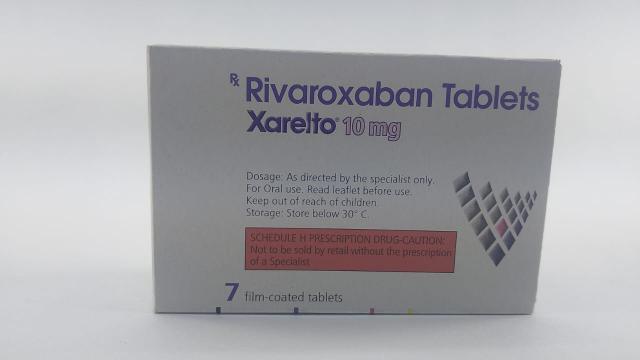


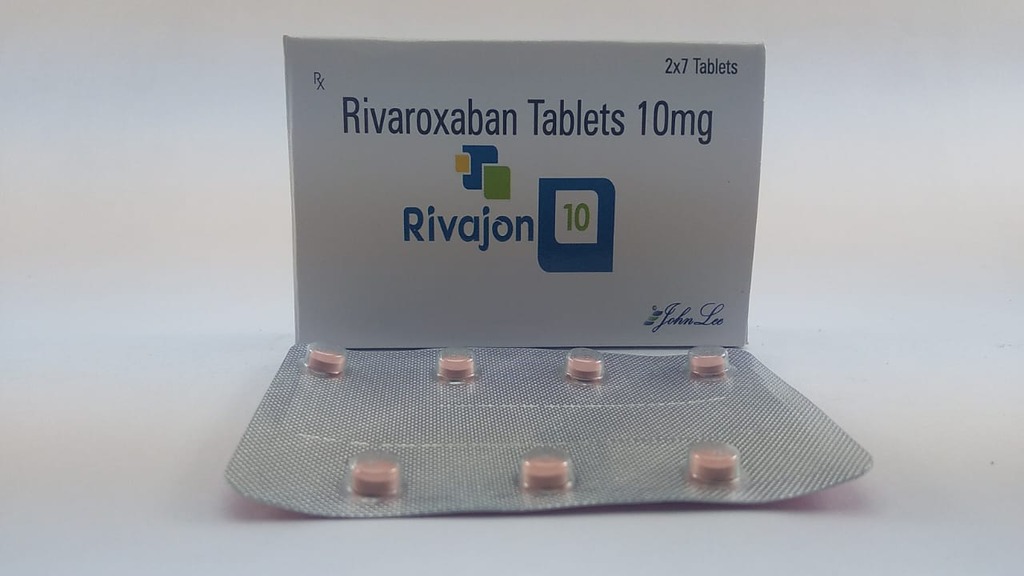
RIVAJON 10MG TABLETS
 Item requires a valid prescription
Manufactured By JOHNLEE PHARMACEUTICALS PVT LTD
Composition Rivaroxaban 10mg
RS 183.09
MRP RS 261.56
(30% OFF)
Includes all taxes
Package SIZE
( 10 tablet er in 1 strip )

100% Authentic
Products

Free
Shipping*

Products
Return Policy
Description:
Rivajon 10mg Tablet (Rivaroxaban 10mg) is a direct oral anticoagulant (DOAC) and selective Factor Xa inhibitor manufactured by Johnlee Pharmaceuticals Pvt Ltd, indicated for the prevention and treatment of deep vein thrombosis (DVT), pulmonary embolism (PE), prevention of stroke and systemic embolism in adults with non-valvular atrial fibrillation (NVAF), and for reducing the risk of recurrent cardiovascular events in patients with acute coronary syndrome (ACS) — in combination with antiplatelet agents. Available from Shabbir Medical Hall at the best price in India, this genuine prescription tablet is available online with fast delivery nationwide.
BENEFITS: Rivajon 10mg offers highly targeted, predictable anticoagulation without the need for routine INR monitoring — a major advantage over older vitamin K antagonists like warfarin. By directly inhibiting Factor Xa, rivaroxaban blocks the conversion of prothrombin to thrombin, preventing clot formation. Large clinical trials (EINSTEIN-DVT, EINSTEIN-PE, ROCKET-AF, ATLAS ACS 2-TIMI 51) demonstrated non-inferior to superior efficacy versus warfarin with comparable or reduced major bleeding risk in key indications. Its once or twice-daily oral dosing without routine monitoring greatly improves patient compliance.
USAGE OVERVIEW: The dose of Rivajon 10mg varies by indication. For DVT/PE prevention post-surgery: 10mg once daily for 14-35 days depending on surgery type. For treatment of DVT/PE: initial phase uses 15mg twice daily (with food) for 21 days, then 20mg once daily — the 10mg dose is used for extended secondary prevention. For NVAF stroke prevention: 20mg once daily with evening meal. Always follow the treating physician's prescription — dose varies by indication and renal function.
SAFETY OVERVIEW: The most common and significant adverse effect is bleeding — ranging from minor bruising to serious internal haemorrhage. Other effects include nausea, elevated liver enzymes, and anaemia. There is no specific antidote widely available in all settings (andexanet alfa available in some centres). Renal function must be assessed before and during therapy. Prescription required — not interchangeable with other anticoagulants without specialist guidance.
Uses / Indications:
- Prevention of DVT (Deep Vein Thrombosis) and PE (Pulmonary Embolism) after elective hip or knee replacement surgery
- Treatment of acute DVT and PE in adults
- Secondary prevention of recurrent DVT and PE (extended secondary prevention at 10mg once daily after initial treatment)
- Prevention of stroke and systemic embolism in adults with non-valvular atrial fibrillation (NVAF) with one or more risk factors
- Reduction of risk of major cardiovascular events (MI, stroke, CV death) in adults with ACS — in combination with aspirin alone or aspirin plus clopidogrel/ticlopidine (rivaroxaban 2.5mg BD dose for ACS; 10mg not used here)
ADDITIONAL USES:
- Cancer-associated thrombosis (VTE in cancer patients — per specialist protocol, rivaroxaban is guideline-recommended)
- Antiphospholipid syndrome: NOT recommended (warfarin preferred per current guidelines)
- Superficial vein thrombosis: some specialist use under guidance
Interactions / Warnings:
BLEEDING RISK — HIGHEST PRIORITY WARNING: Rivaroxaban increases bleeding risk. There is NO widely available specific reversal agent in all Indian hospitals (andexanet alfa is available in limited centres; prothrombin complex concentrate may be used off-label in emergencies). Carry a medication alert card/bracelet identifying you as an anticoagulant user — inform all healthcare providers (dentist, surgeon, emergency doctor) before any procedure.
RENAL IMPAIRMENT: Rivaroxaban is renally excreted. Dose adjustment required based on creatinine clearance (CrCl): CrCl ≥50: standard dosing. CrCl 30-49: reduced dose for some indications (NVAF: 15mg OD); standard dose for DVT/PE prevention. CrCl 15-29: use with caution; not recommended for some indications. CrCl <15: CONTRAINDICATED. Monitor renal function annually or more frequently in elderly/high-risk patients.
HEPATIC IMPAIRMENT: Mild (Child-Pugh A): no dose adjustment required. Moderate-Severe (Child-Pugh B/C) or any hepatic disease with coagulopathy: CONTRAINDICATED.
NEURAXIAL ANAESTHESIA / SPINAL/EPIDURAL PROCEDURES: Risk of spinal haematoma (rare but can cause permanent paralysis) — timing of rivaroxaban dose relative to spinal/epidural procedures must be strictly managed per anaesthetic guidelines.
SWITCHING ANTICOAGULANTS: Switching from/to rivaroxaban must be done under physician supervision to avoid under/over-anticoagulation. Do NOT switch from rivaroxaban to warfarin without bridging strategy.
SURGERY: Stop rivaroxaban 24 hours (low bleed risk) to 48 hours (high bleed risk) before elective surgery. Restart as per surgeon and cardiologist guidance post-operatively.
ELDERLY (≥75 years): Increased bleeding risk; monitor renal function closely.
DRIVING: Dizziness and syncope may occur; assess personal response.
Pregnancy interaction:
- Rivaroxaban is CONTRAINDICATED in pregnancy. It crosses the placenta and is associated with foetal harm, including foetal/neonatal haemorrhage and teratogenicity in animal studies.
- Women of childbearing potential MUST use effective contraception during rivaroxaban therapy.
- If pregnancy is confirmed, switch to LMWH (low molecular weight heparin) under specialist supervision.
- Women who are pregnant should NOT handle crushed tablets without protective gloves.
BREASTFEEDING:
- Rivaroxaban is excreted in breast milk. Breastfeeding is CONTRAINDICATED during treatment.
- A breast milk washout period is required before resuming breastfeeding after stopping rivaroxaban.
CONTRACEPTION WARNING:
- Women on rivaroxaban must use reliable contraception — discuss options with your physician before starting therapy.
Expert advice:
1. CARRY A MEDICATION ALERT CARD AT ALL TIMES:
- Rivaroxaban suppresses your blood's clotting ability. In an emergency or before any surgical/dental procedure, all healthcare providers MUST know you are on an anticoagulant. A delay in this information can lead to life-threatening uncontrolled bleeding. Keep a written card in your wallet and a note on your phone.
2. TAKE 15MG/20MG DOSES WITH FOOD — 10MG DOSE IS FLEXIBLE:
- The 10mg dose (used for DVT prevention post-surgery and extended secondary prevention) can be taken with or without food. However, 15mg and 20mg doses MUST be taken with a meal to ensure adequate absorption. Skipping food with higher doses reduces drug levels and increases clot/stroke risk.
3. NEVER STOP WITHOUT CONSULTING YOUR DOCTOR:
- Abruptly stopping rivaroxaban without medical guidance can cause dangerous rebound clot formation — especially in atrial fibrillation patients (risk of stroke), post-surgical patients, and those with history of DVT/PE. Always consult your cardiologist or physician before making any changes to your anticoagulation regimen.
4. RECOGNISE BLEEDING SYMPTOMS EARLY:
- Immediately report to your doctor: prolonged bleeding from cuts, unusual bruising, blood in urine (pink/red/dark brown), blood in stools (black/tarry/red), coughing blood, or unexplained dizziness/weakness. Go to A&E for severe or uncontrolled bleeding.
5. AVOID NSAID PAINKILLERS WITHOUT DOCTOR APPROVAL:
- Common painkillers like ibuprofen and naproxen significantly increase GI bleeding risk when combined with rivaroxaban. Use paracetamol for pain relief instead — but check dose limits with your pharmacist. Always ask your doctor before starting any new medication.
MONITORING ADVICE:
- Renal function (eGFR/serum creatinine): baseline; then annually (more frequently if elderly, diabetic, hypertensive, or CKD)
- Liver function tests (ALT, AST, ALP): baseline and if symptoms develop
- Full blood count (haemoglobin, haematocrit, platelets): baseline and periodically — detect occult bleeding
- Blood pressure: monitor regularly — hypertension increases stroke and bleeding risk
- Haematuria dipstick: useful for detecting renal bleeding early
- INR: NOT routinely monitored for rivaroxaban (no dose adjustment based on INR) — but may be measured in bleeding/emergency scenarios for guidance
COMPLIANCE TIPS:
- Set a daily alarm at the same time each day
- Do NOT crush, split, or chew tablets — swallow whole with water
- Store in original blister at below 30°C, away from moisture
- Never share tablets with anyone else
- Keep a medication diary with dose times and any unusual symptoms
SAFETY TIPS:
- Use a soft-bristle toothbrush and electric razor to minimise minor cuts and gum bleeding
- Inform dentist, surgeon, and emergency staff about rivaroxaban before any procedure
- Avoid contact sports or high-injury-risk activities — minor trauma can cause disproportionate bleeding
- Maintain all follow-up appointments for renal and liver monitoring
- In women of childbearing age: use reliable contraception throughout treatment
Side Effects:
- Bleeding: the most common and important effect — nosebleeds, gum bleeding, bruising, prolonged bleeding from cuts
- Anaemia (haemoglobin decrease) — fatigue, pallor
- Nausea, vomiting, constipation, diarrhoea, abdominal pain
- Elevated liver enzymes (ALT, AST, GGT, ALP) — usually mild and reversible
- Headache, dizziness, syncope
- Peripheral oedema, hypotension
- Pruritus, rash
SERIOUS SIDE EFFECTS (contact your doctor immediately):
- Major bleeding events: gastrointestinal bleed (tarry/bloody stools), haematuria (blood in urine), haemoptysis, intracranial haemorrhage (sudden severe headache, confusion, one-sided weakness or speech problems), retroperitoneal bleed
- Hepatotoxicity: jaundice, dark urine, severe right upper abdominal pain — DISCONTINUE and seek urgent review
- Agranulocytosis, thrombocytopenia (rare)
- Anaphylaxis, angioedema (rare hypersensitivity)
- Spinal/epidural haematoma (if neuraxial anaesthesia given — potentially causing paralysis)
EMERGENCY SIGNS — SEEK IMMEDIATE MEDICAL HELP:
- Coughing or vomiting blood; blood in stools; unusual prolonged bleeding from any site
- Sudden severe headache, vision changes, slurred speech, one-sided weakness (stroke/ICH)
- Severe abdominal pain with low BP and rapid heartbeat (retroperitoneal bleed)
How to use:
DVT/PE PREVENTION (post hip replacement):
- 10mg once daily for 35 days (start 6-10 hours post-surgery)
DVT/PE PREVENTION (post knee replacement):
- 10mg once daily for 14 days (start 6-10 hours post-surgery)
TREATMENT OF DVT/PE (acute):
- 15mg TWICE DAILY with food for 21 days, then 20mg once daily with evening meal
EXTENDED SECONDARY PREVENTION (recurrent DVT/PE):
- 10mg ONCE DAILY (after at least 6 months of standard anticoagulation treatment)
NON-VALVULAR ATRIAL FIBRILLATION (stroke prevention):
- 20mg ONCE DAILY with evening meal (15mg once daily if CrCl 15-49 mL/min)
ROUTE OF ADMINISTRATION:
- Oral tablet — swallow whole with water
- 10mg dose: can be taken with or without food
- 15mg and 20mg doses: MUST be taken with food for adequate absorption
MISSED DOSE:
- If on once-daily dosing: take as soon as remembered on same day; resume normal schedule next day. Never double up.
- If on twice-daily (15mg BD during acute DVT phase): take the missed dose immediately on same day — both doses can be taken together on same day if needed; resume normal BD schedule next day.
STORAGE:
- Store below 30°C in original blister, protected from moisture
- Keep out of reach of children
- Do not use after expiry date
How it works:
MECHANISM OF ACTION:
The coagulation cascade involves multiple steps. Factor Xa is a critical junction point — it converts prothrombin to thrombin (Factor IIa). Thrombin then converts fibrinogen to fibrin, forming the blood clot.
Rivaroxaban selectively and reversibly inhibits both free Factor Xa and Factor Xa within the prothrombinase complex (Factor Xa + Factor Va + Ca²⁺ + phospholipid), as well as clot-bound Factor Xa.
This results in:
- Prolongation of PT (prothrombin time) and aPTT in a dose-dependent manner
- Reduced thrombin generation
- Prevention of new clot formation without directly dissolving existing clots
KEY ADVANTAGES OVER WARFARIN:
- No routine INR monitoring required
- Predictable pharmacokinetics — fixed once or twice-daily dosing
- Fewer drug and food interactions than warfarin
- Rapid onset of action (~2-4 hours to peak plasma levels)
- No need for bridging with LMWH at initiation (unlike warfarin)
Faq for medicine:
Rivajon 10mg Tablets contain Rivaroxaban, a direct oral anticoagulant (DOAC) used to prevent and treat venous thromboembolism (VTE), including deep vein thrombosis (DVT) and pulmonary embolism (PE). Rivajon 10mg is also indicated for VTE prevention after hip or knee replacement surgery, reducing the risk of serious blood clot-related complications in at-risk adult patients.
2.How does Rivajon 10mg work differently from traditional blood thinners like warfarin?
Rivajon 10mg Tablets (Rivaroxaban) selectively inhibit Factor Xa in the coagulation cascade, preventing thrombin formation and clot development. Unlike warfarin, Rivajon requires no routine INR monitoring, has fewer food interactions, and offers more predictable dosing. It has a faster onset of action and does not require bridging with heparin, making anticoagulation management simpler for patients.
3.Can Rivajon 10mg Tablets be taken with or without food?
Rivajon 10mg Tablets can be taken with or without food for VTE prevention after orthopedic surgery. However, higher doses of Rivaroxaban (15mg and 20mg) require food for optimal absorption. Rivajon 10mg should be taken at the same time each day as directed by the physician. Crushing the tablet and mixing with water is possible for patients who cannot swallow whole tablets.
4.What are the serious bleeding risks associated with Rivajon 10mg Tablets?
The primary risk of Rivajon 10mg Tablets (Rivaroxaban) is bleeding. Serious bleeding events including intracranial hemorrhage, gastrointestinal bleeding, and surgical site bleeding may occur. Risk is higher in elderly patients, those with renal impairment, or on concurrent antiplatelet drugs. Patients should report unusual bruising, prolonged bleeding, blood in urine, or black stools to their doctor immediately.
5.Who should not take Rivajon 10mg Tablets due to safety concerns?
Rivajon 10mg Tablets are contraindicated in patients with active pathological bleeding, severe hepatic impairment, significant renal failure, or hypersensitivity to Rivaroxaban. It should not be used during pregnancy or breastfeeding. Concurrent use with strong CYP3A4 inhibitors or inducers may alter drug levels. Always consult a physician before starting Rivajon, especially if on other anticoagulants.
6.How long should Rivajon 10mg Tablets be taken after knee or hip replacement surgery?
After total knee replacement surgery, Rivajon 10mg Tablets are typically prescribed for 2 weeks. Following total hip replacement, the recommended duration is approximately 5 weeks. The full prescribed course should be completed to minimize VTE risk. Rivajon must not be discontinued abruptly without medical advice, as this may increase the risk of clot formation in post-surgical patients.
Medicine interaction:
- Strong CYP3A4 AND P-gp inhibitors (ketoconazole, itraconazole, ritonavir, clarithromycin): significantly INCREASE rivaroxaban plasma levels → increased bleeding risk — AVOID combination
- Strong CYP3A4 AND P-gp inducers (rifampicin, carbamazepine, phenytoin, St John's Wort, phenobarbital): significantly REDUCE rivaroxaban levels → loss of efficacy — AVOID combination
- Antiplatelet agents (aspirin, clopidogrel, prasugrel, ticagrelor): additive bleeding risk — use only when clinically indicated, with close monitoring
- NSAIDs (ibuprofen, naproxen, diclofenac): increase bleeding risk, particularly GI — AVOID or use with gastroprotection
- Other anticoagulants (warfarin, dabigatran, apixaban, LMWH, heparin): DO NOT combine without specialist direction
- Antifungals (fluconazole): moderate CYP3A4 and P-gp inhibition — use with caution, monitor
- Dronedarone: increases rivaroxaban exposure — AVOID
- SSRIs/SNRIs: modest additional bleeding risk, particularly GI
VACCINE INTERACTIONS:
- No specific vaccine interactions documented for Rivaroxaban; inform your cardiologist of any upcoming vaccinations or procedures during treatment
SUPPLEMENT INTERACTIONS:
- St John's Wort: strong inducer — CONTRAINDICATED
- Fish oil, vitamin E (high dose), ginger, garlic supplements: may add antiplatelet effect — inform your doctor
- Always disclose all OTC medicines, supplements, and herbal products to your prescriber
Available Substitutes