

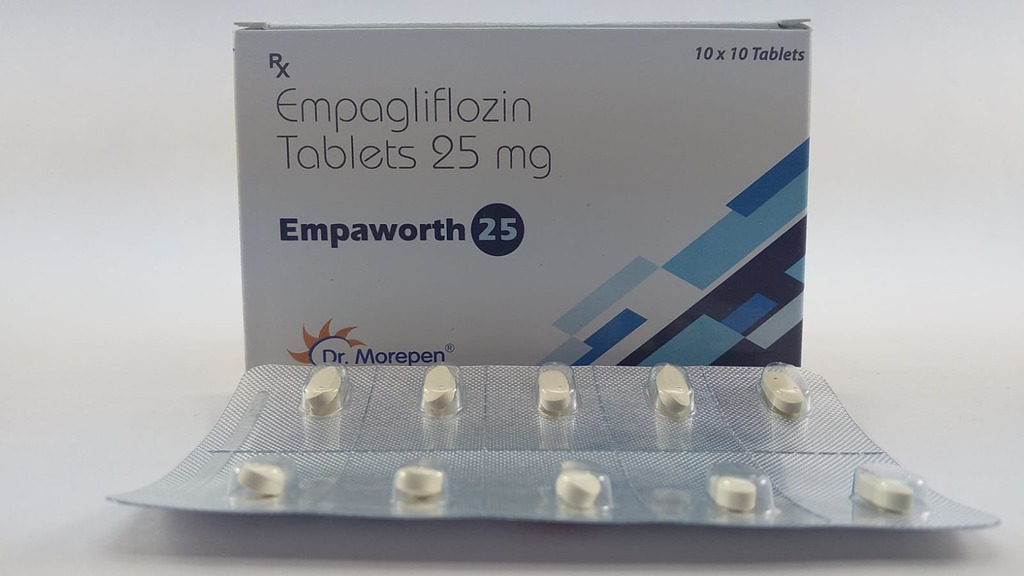
EMPAWORTH 25MG TABLET
 Item requires a valid prescription
Manufactured By Morepen Laboratories Ltd
Composition Empagliflozin 25mg
RS 410.16
MRP RS 585.94
(30% OFF)
Includes all taxes
Package SIZE
( 10 tablet er in 1 strip )

100% Authentic
Products

Free
Shipping*

Products
Return Policy
Description:
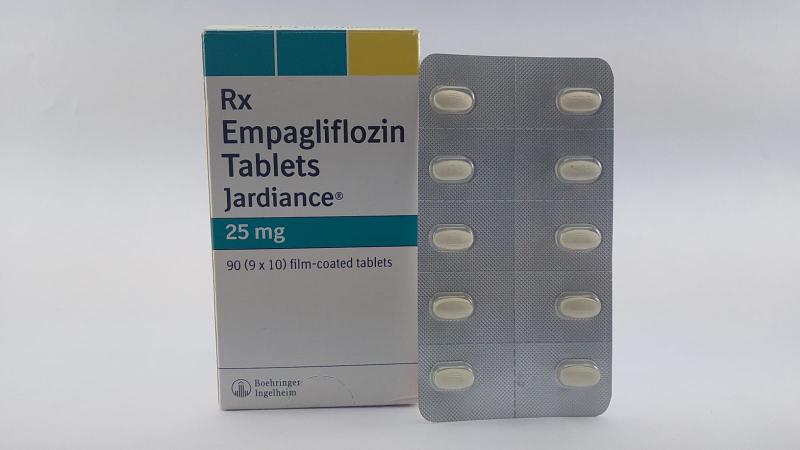
Empaworth 25mg Tablet (Empagliflozin 25mg) is an oral antidiabetic medicine manufactured by Morepen Laboratories Ltd, belonging to the class of Sodium-Glucose Cotransporter-2 (SGLT2) inhibitors. Each extended-release tablet contains 25mg of Empagliflozin — the same active ingredient as Jardiance 25mg — prescribed for adults with Type 2 Diabetes Mellitus (T2DM) who require intensified glycaemic control beyond the 10mg starting dose, or as directed by their physician. Available from Shabbir Medical Hall at the best price in India, this genuine prescription tablet is available online with fast delivery nationwide.
BENEFITS: Empaworth 25mg delivers enhanced blood glucose lowering through a more potent SGLT2 inhibition at the higher dose. By blocking SGLT2 receptors in the proximal renal tubule, Empagliflozin 25mg drives greater urinary glucose excretion (glycosuria of approximately 90–100g/day), achieving a meaningfully lower HbA1c reduction compared to the 10mg dose in patients requiring additional control. Beyond glycaemic benefit, the 25mg dose retains the proven cardiovascular and renal protection established in the landmark EMPA-REG OUTCOME trial — reducing cardiovascular death, hospitalisation for heart failure, and progression of diabetic kidney disease in high-risk patients with established cardiovascular disease.
USAGE OVERVIEW: Empaworth 25mg Tablet is taken orally once daily in the morning, with or without food. It is prescribed when the 10mg dose provides insufficient glycaemic control, or as the starting dose in patients with higher baseline HbA1c as assessed by the treating diabetologist. It may be combined with Metformin, DPP-4 inhibitors, GLP-1 agonists, sulphonylureas, or insulin.
SAFETY OVERVIEW: The side effect and safety profile of Empaworth 25mg is consistent with the 10mg dose — genital mycotic infections, urinary tract infections, and increased urination are most common. Diabetic Ketoacidosis (DKA) — including euglycaemic DKA — remains the most serious rare risk. The medicine must be used only under medical supervision with regular monitoring of renal function, blood glucose, and HbA1c.
Uses / Indications:
- Type 2 Diabetes Mellitus (T2DM) — Intensified Glycaemic Control: Prescribed for adult T2DM patients whose blood glucose remains inadequately controlled on Empagliflozin 10mg, Metformin, or other antidiabetic agents; used as an escalation step when HbA1c remains above target
- Cardiovascular Risk Reduction: To reduce the risk of cardiovascular death and hospitalisation for heart failure in adults with T2DM and established cardiovascular disease — evidence from EMPA-REG OUTCOME trial (25mg dose cohort)
- Heart Failure with Reduced Ejection Fraction (HFrEF): Empagliflozin (both doses) is indicated for reduction of cardiovascular death and hospitalisation in adults with symptomatic chronic HFrEF — per EMPEROR-Reduced trial
- Chronic Kidney Disease (CKD) Progression Prevention: Reduction of sustained eGFR decline, end-stage kidney disease, cardiovascular death, and hospitalisation in adults with CKD at risk of progression — per EMPA-KIDNEY trial
ADDITIONAL USES:
- Combination therapy for inadequately controlled T2DM: Used alongside Metformin, DPP-4 inhibitors, GLP-1 agonists, sulphonylureas, or basal insulin
- Higher baseline HbA1c: May be selected as initial dose in newly diagnosed T2DM with HbA1c significantly above target, at physician discretion
- Modest body weight reduction and blood pressure lowering as additional benefits
Interactions / Warnings:
MANDATORY PRE-TREATMENT ASSESSMENT: Renal function: Serum creatinine + eGFR — 25mg for T2DM glycaemic indication requires eGFR ≥45 mL/min/1.73m²; not recommended for glucose lowering if eGFR <45 mL/min/1.73m² — confirm individual threshold with physician based on current prescribing information. HbA1c, fasting blood glucose — confirm T2DM diagnosis and baseline glycaemic status. Blood pressure, body weight — document baseline for monitoring. History of DKA, ketosis-prone diabetes, Type 1 DM — CONTRAINDICATED; do not use Empaworth 25mg in T1DM or LADA. History of recurrent UTIs or genital infections — counsel patient; consider alternatives if recurrent.
SICK-DAY RULES (MANDATORY EDUCATION FOR ALL PATIENTS): STOP Empaworth 25mg and seek medical advice if: acute illness with vomiting/diarrhoea, unable to maintain oral fluids, fever with reduced intake, any hospitalisation. STOP at least 3 days before: elective surgery, colonoscopy/bowel prep, major dental procedures under GA, CT with contrast, prolonged fasting. Resume only when: eating and drinking normally, medically reviewed, renal function confirmed stable.
MONITORING SCHEDULE: Baseline: eGFR, HbA1c, FBG, blood pressure, body weight before initiation. 3 months: HbA1c, eGFR, blood pressure. Every 6 months: HbA1c, renal function, body weight, signs of genital/urinary infection. Annual: Full metabolic panel, lipids, UACR, foot examination.
AMPUTATION RISK: Routine foot inspection is recommended — report any new foot wounds, discolouration, or pain; maintain good foot hygiene; wear appropriate footwear.
THROMBOEMBOLISM: SGLT2 inhibitor-related haemoconcentration (volume depletion) may theoretically increase thrombotic risk — stay well hydrated; patients with prior DVT/PE should discuss this with their physician.
Pregnancy interaction:
- Empaworth 25mg (Empagliflozin) is CONTRAINDICATED during pregnancy — especially the 2nd and 3rd trimesters
- Animal studies demonstrate adverse effects on renal tubular development in foetuses exposed during late gestation; potential human fetal kidney risk cannot be excluded
- Women of childbearing potential must use effective contraception during treatment with Empagliflozin
- If pregnancy is confirmed during treatment, discontinue Empaworth 25mg immediately and consult the treating physician — Insulin is the preferred antidiabetic agent throughout pregnancy
BREASTFEEDING:
- Empaworth 25mg is NOT recommended during breastfeeding
- It is unknown whether Empagliflozin is excreted in human breast milk; risk to the nursing infant cannot be excluded
- A decision must be made to either discontinue breastfeeding or discontinue Empaworth, considering the importance of the medicine to the mother
CONTRACEPTION WARNING:
- No adverse effects on male or female fertility have been demonstrated in preclinical studies at therapeutic doses of Empagliflozin
Expert advice:
1. UNDERSTAND WHY YOUR DOSE WAS ESCALATED TO 25mg:
- Empaworth 25mg is prescribed when the 10mg dose is not achieving your HbA1c target. The 25mg dose provides incrementally greater glucose excretion through the kidneys. Do not self-adjust between doses — always follow your diabetologist's prescription. If you have recently been escalated from 10mg to 25mg, monitor blood glucose more closely in the first 2–4 weeks.
2. STAY WELL HYDRATED — MORE IMPORTANT AT 25mg:
- The higher dose drives slightly greater glycosuria and osmotic diuresis. Ensure at least 2.5–3 litres of fluid daily, especially during hot weather, exercise, or illness. If you develop vomiting, diarrhoea, or are unable to drink adequately — apply sick-day rules: STOP the tablet and contact your doctor immediately.
3. EUGLYCAEMIC DKA — KNOW THIS RISK AND ACT FAST:
- The most dangerous rare complication is Diabetic Ketoacidosis (DKA) that occurs even with near-normal blood glucose. This is particularly important at the 25mg dose. Warning signs: nausea, vomiting, abdominal pain, rapid breathing, extreme tiredness, fruity breath. STOP Empaworth immediately and go to the nearest emergency department — do NOT wait and do NOT rely on your home glucose reading to dismiss symptoms.
4. MANDATORY WITHHOLD BEFORE SURGERY, FASTING, OR PROCEDURES:
- Empaworth 25mg MUST be stopped a minimum of 3 days before any elective surgery, dental procedure under general anaesthesia, colonoscopy prep, or prolonged fasting. The risk of perioperative DKA with higher-dose SGLT2 inhibitors is real. Inform your surgeon, anaesthetist, and dentist that you are taking Empagliflozin 25mg. Restart only when eating and drinking normally, with medical clearance.
5. MONITOR YOUR FEET AND SKIN REGULARLY:
- SGLT2 inhibitors at higher doses may modestly increase the risk of skin and wound-related complications in susceptible patients. Inspect your feet daily — report any new wounds, ulcers, or discolouration to your diabetologist promptly. Maintain excellent personal hygiene, particularly in warm, moist skin areas prone to fungal infection.
MONITORING ADVICE:
- Baseline before escalation to 25mg: eGFR (must be ≥45 for T2DM glycaemic indication), HbA1c, FBG, blood pressure
- 6–12 weeks post-escalation: HbA1c, eGFR recheck, blood pressure, body weight
- Every 6 months: HbA1c, renal function, weight, assess for UTI/genital infection symptoms
- Annual: Comprehensive metabolic panel, lipids, UACR, foot and skin examination
COMPLIANCE TIPS:
- Take at the same time each morning — set a daily alarm
- Store in a cool, dry place below 30°C; no refrigeration needed; keep in original blister pack
- Keep a blood glucose and symptom diary — especially important during first 8 weeks at 25mg
- Never share your medicine; another person's renal function and medical history may make 25mg unsafe for them
- Carry your doctor's contact and hospital emergency number at all times
SAFETY TIPS:
- Carry a medical information card noting you are on Empagliflozin 25mg — critical for any emergency visit
- Avoid excessive alcohol — raises DKA risk
- Never take ibuprofen or other NSAIDs without your doctor's approval — risk of AKI especially at this dose
- Women: if you experience recurrent vaginal thrush, discuss preventive antifungal strategies with your gynaecologist or pharmacist
- If you switch pharmacy: always confirm you are receiving Empagliflozin 25mg (not 10mg); check the strip label before each new purchase
Side Effects:
- Genital Mycotic Infections (Thrush): Vulvovaginal candidiasis in women; balanitis/balanoposthitis in men — the most frequently reported side effect with SGLT2 inhibitors; glycosuria creates a high-glucose environment favouring fungal growth; usually responds to topical antifungal treatment
- Urinary Tract Infections (UTIs): Increased bacteriuria risk due to glycosuria — burning urination, frequency, cloudy urine; report promptly for antibiotic treatment; recurrent UTIs require physician review
- Polyuria / Pollakiuria: Increased urination frequency due to osmotic glycosuria — more pronounced at 25mg vs 10mg; ensure adequate fluid intake to compensate
- Thirst / Dry mouth: Mild volume depletion from glycosuria and natriuresis — increase fluid intake; resolve with adequate hydration
- Hypoglycaemia (only when combined with insulin or sulphonylureas): Risk is low with monotherapy or Metformin combination; pre-emptive dose reduction of insulin/SU is recommended when initiating 25mg
SERIOUS SIDE EFFECTS — DIABETIC KETOACIDOSIS (DKA) — RARE BUT SERIOUS — MEDICAL EMERGENCY:
STOP EMPAWORTH AND GO TO HOSPITAL IMMEDIATELY if you experience:
- Nausea, vomiting, severe abdominal pain
- Extreme thirst, rapid or laboured breathing, confusion or drowsiness
- Fruity or acetone smell on the breath
CRITICAL: DKA with SGLT2 inhibitors is frequently EUGLYCAEMIC — blood glucose may appear near-normal or only mildly elevated. Do NOT dismiss DKA symptoms because your glucose meter reads normal.
MANDATORY WITHHOLD: Stop Empaworth at least 3 days before any planned surgery, fasting procedure, colonoscopy prep, or hospital admission
FOURNIER'S GANGRENE — VERY RARE — SURGICAL EMERGENCY:
- Sudden severe pain, redness, swelling, warmth in the genital or perineal area, accompanied by fever or feeling very unwell — seek emergency medical care immediately
ACUTE KIDNEY INJURY (AKI):
- Volume depletion (from vomiting, diarrhoea, hot weather, inadequate fluid intake) combined with SGLT2 inhibition can precipitate AKI, particularly in the elderly or those on diuretics — apply sick-day rules; withhold and seek medical attention if severely unwell
HYPOTENSION / DIZZINESS:
- Natriuresis and diuresis can lower blood pressure — increased risk in elderly patients, those on antihypertensives or diuretics; symptoms include dizziness, lightheadedness, or fainting on standing
How to use:
TYPE 2 DIABETES — DOSE ESCALATION FROM 10mg:
- Escalation dose: 25mg orally ONCE DAILY in the morning, with or without food
- Indicated when HbA1c remains above individual target after minimum 12 weeks on 10mg + diet/exercise ± other agents
- Renal function must be checked before escalation: not recommended if eGFR <45 mL/min/1.73m² for T2DM glycaemic control; 25mg dose not typically used in moderate-severe CKD for glucose indication — confirm with physician
TYPE 2 DIABETES — INITIAL DOSE IN HIGH-HbA1c PATIENTS:
- At physician discretion, 25mg may be prescribed as starting dose in patients with markedly elevated HbA1c (e.g., >9%) alongside Metformin — always under close monitoring
HEART FAILURE / CKD:
- The standard dose is 10mg once daily for HFrEF and CKD indications — 25mg is not routinely used for these non-T2DM indications; confirm with specialist
COMBINATION USE:
- With insulin or sulphonylurea: discuss 10–25% dose reduction of insulin/SU before initiating or escalating to 25mg
- With Metformin / DPP-4 inhibitor / GLP-1 agonist: generally no dose adjustment needed — safe combinations
ADMINISTRATION:
- Take orally in the morning with a full glass of water
- May be taken with or without food — consistent timing preferred
- Swallow whole (ER tablet); do not crush, chew, or split
SICK-DAY RULES — WITHHOLD EMPAWORTH 25mg WHEN:
- Patient is vomiting, has diarrhoea, or cannot maintain oral fluid intake
- Before any elective surgery, fasting procedure, or hospital admission — withhold at least 3 days prior
- Resume only when eating normally, well hydrated, and medically cleared by the treating team
STORAGE:
- Store below 30°C in a cool, dry place, away from direct sunlight and moisture
- Keep in original blister pack; protect from humidity
- No refrigeration required; keep out of reach of children; do not use after expiry date
How it works:
MECHANISM — DOSE RELATIONSHIP AT 25mg:
- SGLT2 handles approximately 90% of renal glucose reabsorption; 10mg achieves near-maximal receptor occupancy, but 25mg delivers a modestly higher degree of SGLT2 inhibition, resulting in slightly greater glycosuria (~90–100g/day vs ~70–80g/day with 10mg)
- The additional glucose excretion translates to a clinically meaningful incremental HbA1c reduction of approximately 0.1–0.2% over 10mg in most patients — more pronounced when baseline HbA1c is higher
- Mechanism is entirely insulin-independent — operates regardless of beta-cell function, avoiding the risk of hypoglycaemia as monotherapy or with Metformin
CARDIOVASCULAR AND RENAL MECHANISMS (same as 10mg, confirmed at 25mg in EMPA-REG):
- Osmotic diuresis and natriuresis → reduced cardiac preload and afterload → beneficial haemodynamic effects in heart failure
- Reduced intraglomerular pressure via tubuloglomerular feedback → nephroprotection
- Anti-inflammatory, anti-fibrotic, and favourable metabolic effects on cardiac and renal tissue
- Modest reduction in systolic blood pressure (~3–5 mmHg) and body weight (~1.5–3 kg) — both sustained over time
IN COMBINATION PROTOCOLS:
- When added to basal insulin or sulphonylurea: dose reduction of insulin/SU is often required to prevent hypoglycaemia — dose adjustment should be pre-planned with the treating physician
Faq for medicine:
Empaworth 25mg Tablet is prescribed when the initial 10mg dose of Empagliflozin fails to achieve adequate glycaemic control in adults with type 2 diabetes. The higher dose provides greater SGLT2 inhibition and more significant glucose-lowering and weight-reduction effects. Empaworth 25mg is suitable for patients with preserved renal function (eGFR ≥45 ml/min/1.73m²) and high HbA1c levels.
2.What additional cardiovascular benefits does Empaworth 25mg Tablet provide?
Empaworth 25mg Tablet (Empagliflozin 25mg) offers enhanced cardiorenal protection in type 2 diabetes patients. Clinical evidence shows it significantly reduces major adverse cardiovascular events (MACE), heart failure hospitalizations, and progression of diabetic nephropathy. The higher dose may provide greater natriuretic and hemodynamic benefits, making Empaworth 25mg particularly valuable in high-risk cardiovascular patients.
3.Is Empaworth 25mg safe for patients with mild to moderate kidney disease?
Empaworth 25mg Tablet can be used cautiously in patients with mild-to-moderate chronic kidney disease. For patients with eGFR between 30–60 ml/min/1.73m², the glucose-lowering efficacy may be reduced, but Empaworth still offers renal and cardiovascular protective effects. Dose adjustment or switching to 10mg may be considered. It is contraindicated when eGFR falls below 30 ml/min/1.73m².
4.How does Empaworth 25mg Tablet compare to metformin for type 2 diabetes management?
Empaworth 25mg Tablet (Empagliflozin) and metformin work through different mechanisms. Metformin reduces hepatic glucose production, while Empaworth promotes urinary glucose excretion. Empaworth 25mg offers additional cardiovascular and renal protection not provided by metformin. They are often combined in clinical practice for superior glycaemic control and organ protection in type 2 diabetes management.
5.What are the signs of diabetic ketoacidosis (DKA) to watch for with Empaworth 25mg?
Patients taking Empaworth 25mg Tablet should be alert to symptoms of diabetic ketoacidosis (DKA), including nausea, vomiting, abdominal pain, fatigue, and difficulty breathing, even when blood glucose levels appear normal. SGLT2 inhibitors like Empagliflozin can cause euglycaemic DKA. Empaworth should be temporarily discontinued before surgeries or prolonged fasting to reduce this risk.
6.How does Empaworth 25mg Tablet affect kidney function over time?
Empaworth 25mg Tablet has demonstrated nephroprotective effects in type 2 diabetes patients. Empagliflozin reduces intraglomerular pressure, decreases albuminuria, and slows the decline in eGFR over time. Long-term clinical trials show it significantly reduces the risk of kidney disease progression and end-stage renal disease. Regular monitoring of renal function is recommended while taking Empaworth 25mg.
Medicine interaction:
- Insulin / Sulphonylureas (Glipizide, Glimepiride, Glibenclamide): Clinically important — hypoglycaemia risk increases with 25mg dose; reduce insulin or SU dose by 10–25% before escalation to 25mg; closely monitor fasting blood glucose, especially during first 2–4 weeks
- Loop Diuretics (Furosemide, Torasemide) / Thiazides (Hydrochlorothiazide): Additive diuretic and natriuretic effects — significantly increased risk of volume depletion, dehydration, and hypotension; monitor blood pressure, renal function, and electrolytes; consider reducing diuretic dose
- ACE Inhibitors / ARBs (Ramipril, Enalapril, Telmisartan, Losartan): Complementary renal haemodynamic effects — monitor eGFR and serum creatinine periodically; risk of AKI with concurrent volume depletion
- NSAIDs (Ibuprofen, Naproxen, Diclofenac): Increased risk of renal impairment — avoid concurrent regular use; can precipitate AKI especially with dehydration; use Paracetamol as preferred analgesia
- Rifampicin and Strong CYP3A4/UGT Inducers: May reduce Empagliflozin plasma concentrations by up to 35% — monitor glycaemic control closely; dose escalation to 25mg may be needed
- Lithium: SGLT2 inhibitors may reduce renal lithium excretion — monitor serum lithium levels if combined
- Metformin / DPP-4 Inhibitors / GLP-1 Agonists: No clinically significant pharmacokinetic interactions — safe and effective combinations
VACCINE INTERACTIONS:
- Urine glucose dipstick: ALWAYS POSITIVE while on Empagliflozin — expected and not a sign of uncontrolled diabetes; inform all healthcare providers
- 1,5-Anhydroglucitol (1,5-AG) assay: Unreliable glycaemic marker on SGLT2 inhibitors — use HbA1c or fasting plasma glucose for monitoring
SUPPLEMENT INTERACTIONS:
- Chromium, Berberine, Bitter Melon, Gymnema Sylvestre: May have additive blood glucose-lowering effects — inform physician; increased hypoglycaemia risk with insulin/SU
- Folic Acid, Vitamin D, Omega-3 Fatty Acids: Generally safe periconceptionally and during treatment — continue as directed
- Do NOT use unregulated herbal remedies or unlicensed supplements for diabetes without physician approval
Available Substitutes