


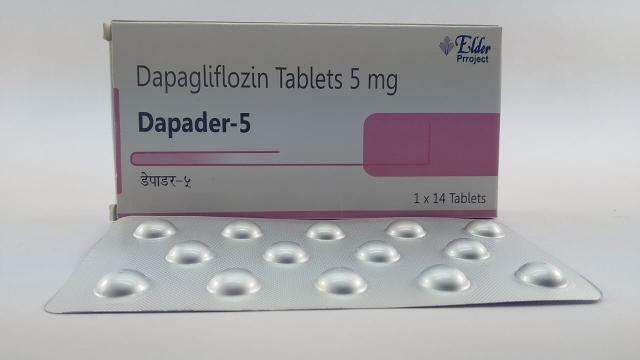
DAPADER 5MG TABLETS
Manufactured By ELDER PROJECT
Composition DAPAGLIFLOZIN 5MG
RS 207.90
MRP RS 231.00
(10% OFF)
Includes all taxes
Package SIZE
( 14`s )

100% Authentic
Products

Free
Shipping*

Products
Return Policy
Description:
Dapader 5mg Tablet (Dapagliflozin 5mg) is a first-line oral antidiabetic medicine belonging to the SGLT-2 inhibitor (Sodium-Glucose Cotransporter-2 Inhibitor) class, manufactured by Eris Lifesciences Ltd. It is indicated as an adjunct to diet and exercise to improve glycaemic control in adults with Type 2 Diabetes Mellitus (T2DM). Dapagliflozin works by blocking the SGLT-2 transporter in the kidneys, preventing glucose reabsorption and promoting its excretion in urine — resulting in lower blood glucose levels through an insulin-independent mechanism. Available from Shabbir Medical Hall at the best price in India, this genuine prescription tablet is available online with fast delivery nationwide.
BENEFITS: Dapader 5mg delivers a multi-system benefit profile unique among oral antidiabetic agents. In the landmark DECLARE-TIMI 58 cardiovascular outcomes trial, dapagliflozin significantly reduced hospitalisation for heart failure and renal progression. The DAPA-HF trial demonstrated a 26% relative risk reduction in worsening heart failure or cardiovascular death in patients with HFrEF (with or without T2DM). The DAPA-CKD trial showed a 44% reduction in the risk of sustained decline in eGFR, end-stage kidney disease, or renal/cardiovascular death. Additionally, dapagliflozin promotes modest weight loss (2–3 kg), reduces systolic blood pressure (2–5 mmHg), and decreases visceral adiposity.
USAGE OVERVIEW: Dapader 5mg Tablet is administered orally once daily, with or without food, at any time of day. It can be used as monotherapy or in combination with metformin, sulphonylureas, DPP-4 inhibitors, GLP-1 receptor agonists, or insulin. The standard starting and maintenance dose for T2DM is 10mg once daily; however, 5mg once daily is used for patients requiring a lower starting dose or with specific comorbidities as determined by the treating physician.
SAFETY OVERVIEW: Most common side effects are genital mycotic infections (thrush) and urinary tract infections (UTIs) due to glucosuria. A risk of diabetic ketoacidosis (DKA) — sometimes euglycaemic — exists. Contraindicated in patients with eGFR <45 mL/min/1.73m² for T2DM. Prescription and specialist supervision are mandatory.
Uses / Indications:
• Type 2 Diabetes Mellitus (T2DM): Adjunct to diet and exercise to improve glycaemic control (HbA1c reduction) in adults. Used as monotherapy or add-on to metformin, sulphonylureas, DPP-4 inhibitors, GLP-1 receptor agonists, or insulin. Provides HbA1c reductions of 0.5–1.0% at 5mg and 0.6–1.2% at 10mg.
• Heart Failure with Reduced Ejection Fraction (HFrEF): Indicated to reduce the risk of cardiovascular death and worsening heart failure hospitalisation in adults with HFrEF (EF ≤40%), regardless of T2DM status.
• Chronic Kidney Disease (CKD): Indicated to reduce the risk of sustained eGFR decline, end-stage kidney disease, cardiovascular death, and hospitalisation for heart failure in adults with CKD at risk of progression.
ADDITIONAL / EMERGING USES (under active investigation):
• Heart Failure with Preserved Ejection Fraction (HFpEF): DELIVER trial showed significant benefit of dapagliflozin in HFpEF — now gaining guideline recognition.
• Non-Alcoholic Fatty Liver Disease / Steatohepatitis (NAFLD/NASH): Trials showing significant reduction in liver fat and fibrosis markers.
• Polycystic Ovary Syndrome (PCOS): Weight and metabolic improvement in insulin-resistant PCOS patients.
• Type 1 Diabetes Mellitus (T1DM): Used off-label as adjunct to insulin for HbA1c reduction and weight loss (with caution due to DKA risk).
Interactions / Warnings:
RENAL FUNCTION — CRITICAL BEFORE PRESCRIBING: Do NOT initiate Dapagliflozin if eGFR < 45 mL/min/1.73m² for the T2DM indication. For the HFrEF indication: can be used down to eGFR ≥ 25 mL/min/1.73m². For the CKD indication: indicated for eGFR 25–75 mL/min/1.73m² with albuminuria. Dapagliflozin's glucose-lowering efficacy progressively diminishes as eGFR falls (less filtered glucose to block) — effectiveness for T2DM markedly reduced below eGFR 45. Monitor eGFR at baseline and periodically during therapy.
DIABETIC KETOACIDOSIS — PERIOPERATIVE / SICK DAY RULE: Hold Dapagliflozin at least 3 days (72 hours) before any planned surgery or prolonged fasting. Hold during acute illness involving vomiting, diarrhoea, or reduced oral intake (sick day rules). Do not restart until the patient is eating and drinking normally and eGFR is stable.
VOLUME DEPLETION — ELDERLY AND DIURETIC PATIENTS: Elderly patients (≥75 years), those on diuretics, or those with low blood pressure are at higher risk of volume depletion and hypotension. Assess volume status before initiating; consider starting at 5mg dose; ensure adequate fluid intake.
LOWER LIMB MONITORING: Perform regular foot examinations; monitor for signs of ischaemia, ulceration, or infection — especially in patients with peripheral vascular disease, neuropathy, or prior foot problems.
HEPATIC IMPAIRMENT: No dose adjustment required for mild or moderate hepatic impairment. Use with caution and reduced starting dose (5mg) in severe hepatic impairment (Child-Pugh C); dapagliflozin exposure is increased and experience is limited.
PAEDIATRIC USE: Dapagliflozin is approved for T2DM in patients aged ≥10 years (per recent regulatory updates). Consult paediatric endocrinologist before prescribing.
URINE GLUCOSE TESTING: Dapagliflozin causes deliberate glucosuria — urine glucose strips will always test positive and are NOT a reliable method for diabetes monitoring in patients on SGLT-2 inhibitors. Use blood glucose monitoring (SMBG) and HbA1c exclusively.
Pregnancy interaction:
• Dapagliflozin is NOT recommended during the second and third trimesters of pregnancy. Animal studies have shown adverse renal effects in the developing foetus during organogenesis (equivalent to the second and third trimesters in humans).
• If pregnancy is detected during Dapagliflozin therapy, it should be discontinued immediately. Women with T2DM who become pregnant should be switched to insulin under endocrinologist guidance.
• Inform your diabetologist/endocrinologist immediately if pregnancy occurs or is planned.
BREASTFEEDING:
• It is unknown whether Dapagliflozin is excreted in human breast milk. Animal studies show excretion in milk. Due to potential harm to the nursing infant (including renal toxicity), Dapagliflozin is NOT recommended during breastfeeding. Discuss risk-benefit with your physician.
CONTRACEPTION:
• Women of childbearing potential should use reliable contraception during Dapagliflozin therapy.
• Unlike GLP-1/GIP agonists, Dapagliflozin does not significantly affect gastric emptying, so oral contraceptive efficacy is not meaningfully impacted.
Expert advice:
1. CHECK YOUR eGFR BEFORE STARTING — RENAL FUNCTION IS NON-NEGOTIABLE:
• Dapagliflozin's safety and efficacy are directly tied to kidney function. Before starting Dapader 5mg, your doctor will check your eGFR (estimated glomerular filtration rate). If eGFR is below 45, Dapagliflozin cannot be used for T2DM blood sugar control (though it may still be prescribed for HFrEF or CKD with different thresholds). Ensure eGFR is checked at baseline and reviewed every 6–12 months, or more frequently if you have CKD.
2. PRACTISE EXCELLENT GENITAL HYGIENE — THRUSH IS PREVENTABLE:
• Genital mycotic infections (thrush/candidiasis) are the most common reason patients feel uncomfortable on Dapagliflozin — but they are entirely preventable with good hygiene. Wash the genital area daily with mild soap and water; dry thoroughly; wear breathable, cotton underwear; avoid scented products. If thrush occurs, it is easily treated with a single dose of oral fluconazole or clotrimazole cream prescribed by your doctor — this is not a reason to stop Dapagliflozin.
3. KNOW THE SICK DAY RULES — HOLD DAPADER WHEN ILL OR BEFORE SURGERY:
• This is critical. If you experience vomiting, diarrhoea, or cannot eat/drink normally (illness, fever, gastroenteritis), STOP Dapader temporarily until you are eating and drinking normally again. Similarly, stop Dapader at least 3 days before any planned surgery or procedure requiring fasting. Continuing Dapagliflozin when dehydrated or fasting dramatically increases the risk of diabetic ketoacidosis (DKA) — even with normal blood glucose levels (euglycaemic DKA).
4. KNOW THE SIGNS OF DKA — ACT IMMEDIATELY:
• Diabetic Ketoacidosis on SGLT-2 inhibitors can be deceptive — your blood glucose may appear relatively normal. Suspect DKA if you experience nausea, vomiting, abdominal pain, fatigue, difficulty breathing, or confusion — even with blood glucose below 200 mg/dL. Go to the nearest emergency department immediately and inform the treating physician you are on Dapagliflozin (SGLT-2 inhibitor). Do not resume Dapagliflozin without physician clearance.
5. STAY WELL HYDRATED — DAPADER INCREASES URINATION:
• Dapagliflozin causes mild osmotic diuresis (increased urination) due to glucose excretion in urine. Drink at least 2–3 litres of water per day to compensate. This is especially important in hot weather, during exercise, or in elderly patients prone to dehydration. Dehydration on Dapagliflozin increases the risk of hypotension (dizziness on standing), acute kidney injury, and DKA.
MONITORING SCHEDULE:
• HbA1c: Every 3 months initially; every 6 months once stable target achieved
• Fasting Blood Glucose & Post-Prandial Glucose: As directed by diabetologist; increase frequency when initiating or combining with sulphonylureas/insulin
• Renal Function (eGFR, Creatinine, Urine ACR): At baseline, then every 6–12 months (more frequently in CKD patients)
• Blood Pressure: At baseline and each visit — dapagliflozin lowers BP; monitor for hypotension
• Body Weight: Every 4–8 weeks — track modest expected weight loss (2–3 kg over 24 weeks)
• Lipid Profile: At baseline and 6–12 monthly — mild LDL increase noted in some patients
• Genital/Urinary Symptoms: Report at each visit; proactively manage recurrent infections
• Foot Examination: At each visit — especially in patients with neuropathy or PVD
COMPLIANCE & PRACTICAL TIPS:
• Set a daily alarm at the same time each morning for consistent dosing — adherence is critical for sustained cardiovascular and renal protection
• Keep a glucose log — date, fasting glucose, post-meal glucose, any symptoms — bring to every diabetologist appointment
• Carry a medical alert card indicating you are on an SGLT-2 inhibitor — crucial for emergency medical personnel
• Do NOT interpret positive urine glucose test strips as poor diabetes control — Dapagliflozin deliberately causes glucosuria; use blood glucose monitoring exclusively
SAFETY REMINDERS:
• Inform ALL treating physicians, dentists, and anaesthesiologists that you are on Dapagliflozin — this is essential for safe surgical planning (DKA risk) and drug interaction management
• Patients who have lost weight on Dapagliflozin may require review of antihypertensive medications — proactively discuss with your cardiologist
• Do NOT restart Dapagliflozin on your own after illness or surgery without physician clearance
Side Effects:
• Genital Mycotic Infections (Thrush / Candidiasis): Most frequently reported side effect — due to glucose in urine creating a favourable environment for yeast. More common in women. Treat with standard antifungal therapy; improve genital hygiene; rotate underwear and avoid tight clothing.
• Urinary Tract Infections (UTIs): Increased frequency of UTIs due to glucosuria. Report symptoms (burning micturition, frequency, fever, loin pain) promptly. Ensure adequate hydration.
• Increased Urination (Polyuria): Expected due to osmotic diuresis from glucosuria; usually improves after the first 2–4 weeks as the body adapts.
• Hypotension / Dizziness: Due to mild volume depletion from osmotic diuresis — especially in elderly patients or those on diuretics; ensure adequate fluid intake and monitor blood pressure.
• Nasopharyngitis / Back Pain: Reported in trials; causality not definitively established.
SERIOUS SIDE EFFECTS (contact your doctor immediately):
DIABETIC KETOACIDOSIS (DKA) — INCLUDING EUGLYCAEMIC DKA:
• Rare but life-threatening. May occur with relatively normal blood glucose levels (euglycaemic DKA) — making it easily missed. Risk factors: fasting/low-carb diet, surgical procedures, alcohol, insulin dose reduction, T1DM use.
• Symptoms: nausea, vomiting, abdominal pain, excessive thirst, difficulty breathing, confusion.
• Hold Dapagliflozin at least 3 days before elective surgery or prolonged fasting.
FOURNIER'S GANGRENE (Necrotising Fasciitis of the Perineum):
• Rare but serious bacterial infection of the genital/perineal area — seek emergency care immediately if severe perineal pain, tenderness, swelling, or fever occurs.
ACUTE KIDNEY INJURY (AKI):
• Secondary to volume depletion from glucosuria/diuresis — ensure adequate hydration; temporarily hold dapagliflozin during illness with vomiting/diarrhoea or before procedures with contrast dye.
HYPOGLYCAEMIA (when combined with insulin or sulphonylureas):
• Dapagliflozin alone does not cause hypoglycaemia. Risk increases significantly when combined with sulphonylureas or insulin — physician will reduce sulphonylurea/insulin dose accordingly.
LOWER LIMB AMPUTATION:
• A class warning exists for SGLT-2 inhibitors (based primarily on canagliflozin data). Risk is low with dapagliflozin but patients with peripheral arterial disease or prior amputation should be monitored.
EMERGENCY SIGNS — SEEK IMMEDIATE MEDICAL HELP:
• Nausea, vomiting, abdominal pain, confusion (possible DKA)
• Severe perineal pain, swelling, fever (possible Fournier's gangrene)
• Decreased urination, ankle swelling (possible AKI)
• Signs of severe hypoglycaemia (shakiness, sweating, confusion)
How to use:
FOR TYPE 2 DIABETES (T2DM):
• Standard dose: Dapagliflozin 10mg once daily (oral tablet).
• Starting dose: Dapagliflozin 5mg once daily — for patients with moderate renal impairment (eGFR 45–59 mL/min/1.73m²) or those requiring a gentler introduction. Physician may up-titrate to 10mg based on tolerability and glycaemic response.
• Take once daily at any time of day, with or without food.
FOR HEART FAILURE (HFrEF):
• Recommended dose: Dapagliflozin 10mg once daily (regardless of T2DM status).
FOR CHRONIC KIDNEY DISEASE (CKD):
• Recommended dose: Dapagliflozin 10mg once daily (consult nephrologist for eGFR thresholds).
HOW TO TAKE DAPADER 5MG TABLET:
• Step 1 — Take orally: Swallow the tablet whole with a glass of water.
• Step 2 — Timing: Take at the same time each day for consistency — morning preferred to allow any initial diuretic effect during waking hours.
• Step 3 — With or without food: Dapader 5mg can be taken before, during, or after meals — food does not affect its pharmacokinetics significantly.
• Step 4 — Missed dose: If a dose is missed, take it as soon as remembered on the same day. If it is the next day, skip the missed dose and resume the regular schedule. Never double dose.
STORAGE:
• Store below 30°C in a cool, dry place away from direct sunlight and moisture.
• Keep in original packaging (strip/blister) until use.
• Keep out of reach of children; discard after expiry date printed on strip.
How it works:
MECHANISM OF ACTION:
• Under normal physiology, the kidneys filter approximately 180g of glucose per day; virtually all is reabsorbed back into the bloodstream — primarily (~90%) via the SGLT-2 transporter.
• Dapagliflozin blocks SGLT-2 → prevents renal glucose reabsorption → glucose is excreted in the urine (glucosuria) → blood glucose levels fall through a completely insulin-independent mechanism.
• This mechanism is unique: it works regardless of insulin secretory capacity or insulin resistance, making it effective at all stages of T2DM and in combination with any other antidiabetic agent.
ADDITIONAL METABOLIC EFFECTS:
• Osmotic diuresis from glucosuria → mild natriuresis → reduction in plasma volume → lowers blood pressure (2–5 mmHg systolic) without reflex tachycardia.
• Caloric loss from glucosuria (50–100g glucose/day = 200–400 kcal/day) → modest body weight reduction (2–3 kg over 24 weeks).
• Reduces visceral and hepatic fat.
• Cardioprotective: reduces cardiac preload and afterload, reduces sympathetic activation, improves myocardial energetics (ketone utilisation), and reduces myocardial fibrosis — explaining HFrEF benefits independent of glucose lowering.
• Nephroprotective: reduces intraglomerular hypertension by inhibiting tubuloglomerular feedback → slows CKD progression independent of glycaemic control.
WHY DAPAGLIFLOZIN OUTPERFORMS MANY ORAL ANTIDIABETICS:
• Unlike sulphonylureas: no hypoglycaemia risk (insulin-independent mechanism).
• Unlike DPP-4 inhibitors: proven cardiovascular (HFrEF) and renal outcomes.
• Unlike metformin: effective even with renal impairment (CKD indication) and directly cardioprotective.
• DAPA-HF: 26% relative risk reduction in worsening HF or CV death.
• DAPA-CKD: 44% relative risk reduction in sustained eGFR decline or ESKD.
Faq for medicine:
Dapader 5mg Tablets contain Dapagliflozin, an SGLT2 inhibitor that blocks glucose reabsorption in the proximal renal tubules, causing excess glucose to be eliminated through urine. This mechanism lowers both fasting and postprandial blood glucose levels independently of insulin. Dapader 5mg is used as an adjunct to diet and exercise in adults with type 2 diabetes for effective glycaemic management.
2.Is Dapader 5mg Tablet used for heart failure treatment beyond diabetes?
Dapader 5mg Tablets containing Dapagliflozin are approved for reducing the risk of cardiovascular death and worsening heart failure in adults with heart failure with reduced ejection fraction (HFrEF), regardless of diabetes status. Dapagliflozin reduces hospitalization and improves functional outcomes in heart failure patients, making Dapader 5mg a valuable option in cardiological care extending beyond blood sugar control.
3.Who is the ideal candidate for Dapader 5mg Tablet therapy?
Dapader 5mg Tablets are suitable for adults with type 2 diabetes who need additional glucose lowering alongside diet, exercise, and metformin, or those requiring cardiovascular and renal protection. It is also indicated in chronic kidney disease and heart failure patients. Dapader is not recommended for type 1 diabetes or in patients with eGFR below 25 ml/min/1.73m² for glycaemic purposes.
4.What kidney-protective benefits does Dapader 5mg Tablet offer?
Dapader 5mg Tablets have demonstrated significant nephroprotective effects. Dapagliflozin reduces albuminuria, slows eGFR decline, and decreases the risk of end-stage kidney disease in patients with chronic kidney disease and type 2 diabetes. These benefits are thought to result from reduced intraglomerular hypertension and renal tubular inflammation. Dapader 5mg is recommended in clinical guidelines for CKD with or without diabetes.
5.What are the common adverse effects associated with Dapader 5mg Tablets?
Common adverse effects of Dapader 5mg Tablets include urinary tract infections, genital yeast infections (more frequent in women), and increased urination. Mild volume depletion may occur, particularly in elderly patients or those on diuretics. Rare but serious risks include diabetic ketoacidosis (including euglycaemic DKA), Fournier's gangrene, and lower limb amputations. Patients should report genital pain, swelling, or fever promptly.
6.Can Dapader 5mg Tablet be used in combination with insulin or sulfonylureas?
Dapader 5mg Tablets can be combined with insulin or sulfonylureas, but this increases the risk of hypoglycaemia. When added to these agents, dose reduction of the insulin or sulfonylurea may be necessary. Dapagliflozin in Dapader 5mg does not independently cause hypoglycaemia, as its glucose-lowering mechanism is insulin-independent. Regular blood glucose monitoring is recommended when combining these therapies.
Medicine interaction:
INSULIN AND SULPHONYLUREAS — HYPOGLYCAEMIA RISK:
• Combining Dapagliflozin with sulphonylureas (Glimepiride, Glipizide) or insulin increases hypoglycaemia risk — physician will typically reduce sulphonylurea or insulin dose by 20–50% when initiating Dapagliflozin. Monitor home blood glucose more frequently during the first 8–12 weeks.
DIURETICS (Furosemide, Hydrochlorothiazide, Spironolactone):
• Additive diuretic/natriuretic effect with Dapagliflozin → increased risk of volume depletion, dehydration, and hypotension — especially in elderly patients. Monitor blood pressure and renal function closely; consider dose reduction of diuretic.
NSAIDs (Ibuprofen, Naproxen, Diclofenac):
• NSAIDs reduce renal blood flow and GFR; combined with the volume depletion from Dapagliflozin, can increase the risk of acute kidney injury. Use with caution; ensure adequate hydration.
ACE INHIBITORS / ARBs (Ramipril, Losartan, Telmisartan):
• Commonly co-prescribed for cardioprotection and nephroprotection — generally safe and synergistic. Monitor blood pressure and renal function (eGFR, creatinine) during initiation.
METFORMIN:
• Safe and highly evidence-based combination for T2DM; complementary mechanisms; no significant pharmacokinetic interaction. Monitor renal function if GI side effects cause dehydration.
GLP-1 RECEPTOR AGONISTS (Tirzepatide/Mounjaro, Semaglutide/Ozempic):
• Safe and evidence-based combination for T2DM with cardiovascular or obesity comorbidities; complementary and synergistic mechanisms (weight loss, HbA1c reduction, cardiovascular protection).
RIFAMPICIN / ENZYME INDUCERS:
• Rifampicin and other strong CYP3A4/UGT inducers (Phenytoin, Carbamazepine) may reduce Dapagliflozin exposure (AUC reduced by ~22%) — monitor glycaemic response and consider dose adjustment if control deteriorates.
SUPPLEMENT INTERACTIONS:
• Herbal diuretics (Dandelion, Juniper Berry, Green Tea Extract): Additive diuretic effect → increased dehydration risk — avoid concurrent use without physician guidance.
• Berberine, Gymnema Sylvestre: Additive glucose-lowering effect → increased hypoglycaemia risk when combined with Dapagliflozin and sulphonylureas/insulin — monitor closely.
Available Substitutes