
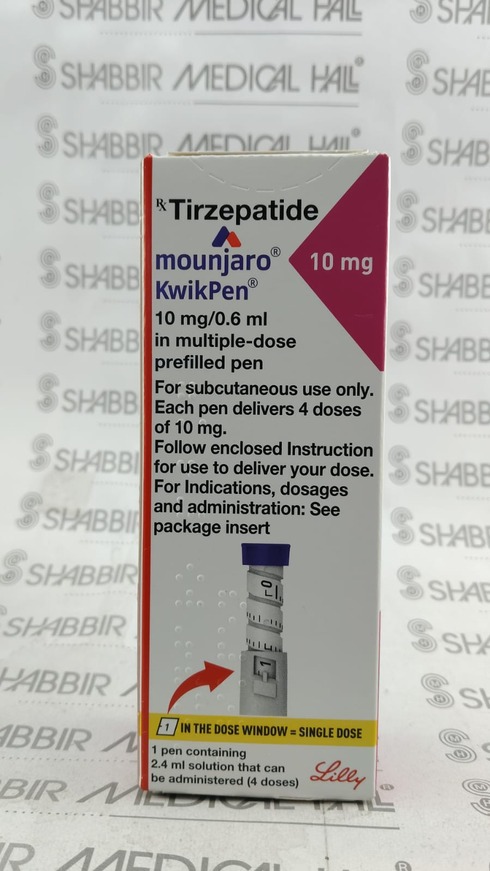
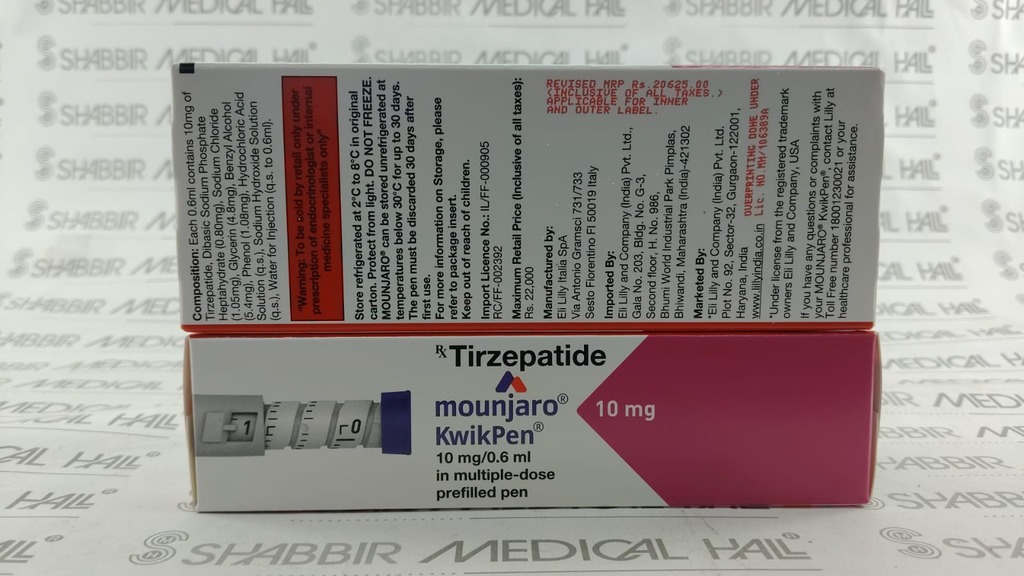
MOUNJARO 10MG KWIKPEN
Manufactured By LILLY PRODUCTS
Composition TIRZEPATIDE 10MG
RS 18562.50
MRP RS 20625.00
(10% OFF)
Includes all taxes
Package SIZE
( 2.4ML )
100% Authentic
Products
Free
Shipping*
Products
Return Policy
Description:
Mounjaro 10mg KwikPen
Mounjaro 10mg KwikPen (Tirzepatide 10mg) is a first-in-class dual Glucose-dependent Insulinotropic Polypeptide (GIP) and Glucagon-Like Peptide-1 (GLP-1) receptor agonist manufactured by Eli Lilly and Company, delivered via a single-dose prefilled auto-injector pen. It is indicated as an adjunct to diet and exercise to improve glycaemic control in adults and children aged 10 years and older with Type 2 Diabetes Mellitus (T2DM). As the world's first and only dual incretin receptor agonist, Tirzepatide simultaneously activates both the GIP and GLP-1 pathways — providing superior HbA1c reduction and body weight loss compared to any currently available GLP-1 receptor agonist, including semaglutide (Ozempic/Wegovy). Available from Shabbir Medical Hall at the best price in India, this genuine prescription KwikPen injection is available online with fast delivery nationwide.
BENEFITS: Mounjaro 10mg delivers a dual-action metabolic benefit profile unmatched in its drug class. In the landmark SURPASS-2 trial, Tirzepatide reduced HbA1c by up to 2.30% versus 1.86% with semaglutide — outperforming it at every dose tested. The SURMOUNT-5 trial demonstrated 47% greater relative weight loss with Tirzepatide (20.2% vs 13.7% at 72 weeks), with nearly three times as many patients achieving ≥30% body weight reduction compared to semaglutide. Additionally, Tirzepatide reduces fasting and post-prandial glucose, lowers systolic blood pressure, improves lipid profiles (triglycerides, HDL), and reduces visceral fat.
USAGE OVERVIEW: Mounjaro 10mg KwikPen is administered as a once-weekly subcutaneous injection — into the abdomen, thigh, or upper arm — on the same day each week, with or without meals. The 10mg dose is a maintenance dose reached after prior dose escalation from 2.5mg (starting dose) in 2.5mg increments every 4 weeks. Maximum dose is 15mg weekly. The KwikPen is a single-use, prefilled, disposable auto-injector — no cartridge or needle attachment required.
SAFETY OVERVIEW: Most common side effects are gastrointestinal: nausea, diarrhoea, vomiting, and constipation — typically dose-dependent and transient. A boxed warning exists for the risk of thyroid C-cell tumours. Contraindicated in patients with a personal or family history of medullary thyroid carcinoma (MTC) or Multiple Endocrine Neoplasia syndrome type 2 (MEN 2). Prescription and specialist supervision are mandatory.
Uses / Indications:
• Type 2 Diabetes Mellitus (T2DM): Adjunct to diet and exercise to improve glycaemic control (HbA1c reduction) in adults and children aged 10 years and older. Used as monotherapy or add-on to metformin, SGLT-2 inhibitors, sulphonylureas, or basal insulin. Among the most potent HbA1c-reducing agents available (up to -2.30% reduction at 15mg)
• Obesity / Weight Management (as Zepbound — same molecule): In adults with initial BMI ≥30 kg/m² (obesity), or ≥27 kg/m² (overweight) with at least one weight-related comorbidity (hypertension, dyslipidaemia, T2DM, cardiovascular disease, obstructive sleep apnea). Note: In India, Mounjaro (T2DM indication) and Zepbound (obesity indication) are the same Tirzepatide molecule from Eli Lilly — physician will prescribe based on primary indication
• Cardiovascular Risk Reduction: Tirzepatide has demonstrated cardiovascular outcome benefits in T2DM patients with established cardiovascular disease (SURPASS-CVOT data)
• Obstructive Sleep Apnea (OSA): FDA-approved (as Zepbound) for moderate-to-severe OSA in adults with obesity — significant reduction in apnea-hypopnea index (AHI)
ADDITIONAL / EMERGING USES (under active investigation):
• Non-Alcoholic Fatty Liver Disease / Steatohepatitis (NAFLD/NASH): SURPASS and dedicated NASH trials showing significant liver fat reduction
• Polycystic Ovary Syndrome (PCOS): Weight loss and metabolic improvement in PCOS patients
• Pre-diabetes / Metabolic Syndrome: Prevention of T2DM progression
• Heart Failure with Preserved Ejection Fraction (HFpEF) + Obesity: SUMMIT trial showing improved outcomes
Interactions / Warnings:
BOXED WARNING — THYROID CARCINOMA: Tirzepatide and all GLP-1/GIP receptor agonists are CONTRAINDICATED in patients with personal or family history of Medullary Thyroid Carcinoma (MTC) or Multiple Endocrine Neoplasia syndrome type 2 (MEN 2). Routine calcitonin monitoring is NOT recommended for the general population on Tirzepatide (insufficient evidence); however, discuss with your endocrinologist if you have any thyroid risk factors. Counsel patients to report any neck mass, hoarseness, dysphagia, or persistent neck pain immediately.
PANCREATITIS — PRECAUTION: Discontinue Mounjaro and do NOT restart if acute pancreatitis is confirmed. Use with caution in patients with a history of pancreatic disease, gallstones, or hypertriglyceridaemia. Elevated triglycerides are a pancreatitis risk factor — tirzepatide reduces triglycerides, which may be beneficial, but periodic monitoring is recommended.
PERIOPERATIVE CONSIDERATIONS: Gastric emptying slowing may increase the risk of pulmonary aspiration under anaesthesia: follow the anaesthesiologist's guidance on fasting before procedures. Some anaesthesia societies recommend holding GLP-1/GIP agonists for at least 1 week before elective surgery (or longer for weekly formulations). Inform your surgeon and anaesthesiologist that you are on Tirzepatide before any planned procedure.
DIABETIC RETINOPATHY: Rapid improvement in glycaemic control (as seen with Tirzepatide) can be associated with transient worsening of diabetic retinopathy — ensure pre-treatment ophthalmology evaluation in patients with known or suspected retinopathy; monitor eye health during the first 6 months.
RENAL IMPAIRMENT: No dose adjustment required for any degree of renal impairment — Tirzepatide is primarily eliminated by proteolytic degradation, not renal excretion. However, severe GI side effects (vomiting, diarrhoea) can cause dehydration → acute kidney injury in patients with pre-existing renal disease — maintain hydration and monitor renal function if GI events are prolonged.
HEPATIC IMPAIRMENT: No dose adjustment required for mild, moderate, or severe hepatic impairment — limited data in severe hepatic impairment; use with caution and specialist guidance.
ELDERLY PATIENTS (≥65 years): No dose adjustment required based on age alone; however, elderly patients are more susceptible to dehydration from GI side effects — ensure adequate hydration and more gradual dose escalation if GI tolerability is a concern.
PAEDIATRIC USE (10–17 years, T2DM): Approved for T2DM in patients aged ≥10 years; dose escalation protocol identical to adults; monitor growth and nutritional status; weight loss targets differ from adults — consult paediatric endocrinologist.
Pregnancy interaction:
• Mounjaro 10mg (Tirzepatide) is NOT recommended during pregnancy and should be discontinued at least 2 months before a planned pregnancy due to its long half-life (~5 days).
• Animal studies with Tirzepatide have shown embryo-foetal toxicity and teratogenicity at exposures above the maximum recommended human dose. The potential risk to human foetuses is unknown but cannot be excluded.
• Women with T2DM who become pregnant while on Tirzepatide should be switched to insulin (the standard of care for glycaemic management in pregnancy) under endocrinologist guidance immediately.
• Weight loss is generally not recommended during pregnancy. If weight management was the primary indication, Mounjaro/Zepbound must be stopped.
• Inform your diabetologist/endocrinologist immediately if pregnancy occurs or is planned during Tirzepatide therapy.
BREASTFEEDING:
• It is not known whether Tirzepatide is present in human breast milk, or whether it has any effect on milk production or the breastfed infant. Due to the potential for serious adverse reactions in nursing infants, Mounjaro is NOT recommended during breastfeeding. A decision to discontinue breastfeeding or discontinue Tirzepatide should be made in consultation with the treating physician.
CONTRACEPTION:
• Women of childbearing potential should use reliable contraception during Tirzepatide therapy.
• NOTE: Tirzepatide (like other GLP-1/GIP agonists) slows gastric emptying. This may REDUCE the absorption of oral contraceptive pills — additional non-oral contraceptive methods (condom, IUD, injectable contraceptive) are recommended for at least 4 weeks after each Tirzepatide dose escalation and for 4 weeks after the final dose.
Expert advice:
1. FOLLOW THE DOSE ESCALATION SCHEDULE EXACTLY — DO NOT SKIP STEPS:
• The mandatory step-up dose escalation (2.5mg → 5mg → 7.5mg → 10mg every 4 weeks) is not optional. It is specifically designed to allow your GI tract to adapt to Tirzepatide's effects on gastric emptying and gut motility. Patients who skip steps or escalate too quickly experience significantly worse nausea, vomiting, and diarrhoea — which is the leading reason people discontinue this otherwise highly effective medication. If GI side effects are intolerable at a particular dose, ask your diabetologist about staying at the previous lower dose for an additional 4 weeks before re-attempting escalation.
2. MANAGE GI SIDE EFFECTS PROACTIVELY — THEY ARE TEMPORARY:
• Nausea, vomiting, and diarrhoea are the most common reasons patients stop Tirzepatide — but they are dose-dependent and almost always improve after 2–4 weeks at each dose level. Practical tips to manage: eat smaller, low-fat meals; eat slowly; avoid lying down for 2 hours after eating; avoid spicy or greasy foods during escalation weeks; stay well hydrated (at least 2L water per day); ginger tea or ginger lozenges can help nausea; if vomiting/diarrhoea is severe, contact your doctor — antiemetics or antidiarrhoeals may be prescribed temporarily.
3. STORE THE KWIKPEN IN THE REFRIGERATOR — COLD CHAIN IS NON-NEGOTIABLE:
• Mounjaro KwikPen must be stored at 2–8°C (refrigerator). Exposure to temperatures above 30°C or below 0°C (freezing) permanently degrades the peptide — a degraded pen will not show signs of spoilage but will be significantly less effective or completely inactive. Once removed from the refrigerator, a pen can be kept at room temperature (≤30°C) for up to 21 days. Never store in the car, near a window, or in direct sunlight. If you travel, use an approved insulin/medication travel cooler with ice packs.
4. KNOW THE SIGNS OF PANCREATITIS — STOP IMMEDIATELY AND SEEK EMERGENCY CARE:
• Rare but serious, acute pancreatitis requires immediate action. If you experience severe and persistent abdominal pain (especially radiating to the back), accompanied by nausea and vomiting that is different from your usual GI side effects — STOP Mounjaro immediately and go to the nearest emergency department. Do not assume it is a GI side effect. Mention to the emergency physician that you are on Tirzepatide.
5. PROTECT THE EFFICACY OF YOUR ORAL MEDICATIONS — TIME THEM CAREFULLY:
• Tirzepatide significantly slows gastric emptying, which affects how quickly your stomach empties food AND medicines. Critically, oral contraceptive pills may be absorbed less reliably — use a non-oral additional contraceptive method (condom, IUD, or injectable) for at least 4 weeks after every dose increase. Similarly, Levothyroxine should be taken on an empty stomach, at least 30–60 minutes before your first meal, and TSH should be monitored more frequently during Tirzepatide dose escalation.
MONITORING SCHEDULE:
• HbA1c: Every 3 months initially; every 6 months once stable target achieved
• Fasting Blood Glucose & Post-Prandial Glucose: As directed by diabetologist; increase home monitoring frequency during dose escalation phases and when combining with sulphonylureas/insulin
• Body Weight: Every 4 weeks — track against expected weight trajectory (typically 1–2% of body weight per month at therapeutic doses)
• Renal Function (eGFR, Creatinine): At baseline, 3 months, then 6–12 monthly — especially if GI side effects cause recurrent dehydration
• Lipid Profile (Triglycerides, HDL, LDL): At baseline and 6–12 monthly — Tirzepatide improves lipid profile significantly
• Hepatic Function (if elevated baseline): ALT, AST at baseline; monitor if fatty liver disease is the concurrent indication
• Ophthalmology: Fundus examination at baseline and 6-monthly in patients with known diabetic retinopathy — rapid HbA1c improvement can transiently worsen retinopathy
• Thyroid: Discuss calcitonin or neck ultrasound with endocrinologist if thyroid risk factors are present; routine screening is not mandatory for most patients
COMPLIANCE & INJECTION TIPS:
• Set a recurring weekly calendar alarm on the same day each week — consistency is critical for steady-state drug levels and optimal glycaemic and weight control
• Rotate injection sites every week within the approved areas (abdomen, thigh, upper arm) — systematic rotation reduces lipohypertrophy and maintains consistent drug absorption
• Keep an injection log — date, site, pen batch number, and any post-injection reactions — bring to every diabetologist appointment
• Remove the pen from the refrigerator 30 minutes before injecting — room temperature injections are more comfortable and improve pen mechanism reliability
• Join an online patient support group or diabetes management programme — social support significantly improves Tirzepatide adherence and weight loss success
SAFETY REMINDERS:
• Inform ALL treating physicians, dentists, and anaesthesiologists that you are on weekly Tirzepatide injection — this is essential for safe surgical planning (aspiration risk) and drug interaction management
• Do NOT use urine glucose strips to monitor diabetes — Tirzepatide does not cause glucosuria; this monitoring method is irrelevant for this drug class
• Do NOT restart Tirzepatide on your own after a period of discontinuation without physician guidance — your dose tolerance will have reduced and re-escalation from 2.5mg is required
• Patients who have lost significant weight on Tirzepatide often require review and reduction of antihypertensive and lipid-lowering medications — proactively discuss with your cardiologist and diabetologist
Side Effects:
• Nausea: Most frequently reported; typically worst in the first 4–8 weeks and at each dose escalation; usually improves as body adapts. Take with a light, low-fat meal to reduce nausea; avoid large, high-fat, or spicy meals when increasing dose.
• Diarrhoea: Loose stools, urgency, frequent bowel movements — especially during dose escalation phases; stay well hydrated; may require temporary dose reduction
• Vomiting: Often accompanies nausea at dose escalation; can lead to dehydration — maintain fluid intake; contact doctor if persistent
• Constipation: Due to slowed gastric emptying and reduced food intake; increase fibre and fluid intake
• Abdominal Pain / Discomfort: Cramping, bloating, heartburn — usually mild and transient
• Decreased Appetite: Expected and often the desired effect; ensure adequate nutrition and do not skip meals entirely
• Injection Site Reactions: Redness, bruising, itching, or minor swelling at injection site — rotate sites weekly to minimise
SERIOUS SIDE EFFECTS (contact your doctor immediately):
BOXED WARNING — THYROID C-CELL TUMOURS:
• Tirzepatide caused thyroid C-cell tumours (including medullary thyroid carcinoma) in rodent studies at clinically relevant exposures. Relevance to humans is unknown, but a class warning applies to all GIP/GLP-1 receptor agonists.
• CONTRAINDICATED in patients with personal or family history of Medullary Thyroid Carcinoma (MTC) or Multiple Endocrine Neoplasia Type 2 (MEN 2)
• Report any neck lump, hoarseness, difficulty swallowing, or persistent neck pain immediately
PANCREATITIS (rare but serious):
• Acute pancreatitis has been reported with GLP-1 receptor agonists. Symptoms: severe persistent abdominal pain radiating to the back, with nausea and vomiting — STOP Mounjaro and seek emergency medical care immediately
• Mounjaro has not been studied in patients with a history of pancreatitis — avoid use in this population
HYPOGLYCAEMIA (primarily when combined with insulin or sulphonylureas):
• Tirzepatide alone rarely causes hypoglycaemia (glucose-dependent mechanism)
• When combined with sulphonylureas or insulin: significant hypoglycaemia risk — dose reduction of the sulphonylurea or insulin is usually required on Tirzepatide initiation
• Symptoms: shakiness, sweating, palpitations, confusion, blurred vision — treat with fast-acting glucose (15g)
HYPERSENSITIVITY / ALLERGIC REACTIONS (rare):
• Anaphylaxis, angioedema, urticaria — seek emergency care immediately if facial swelling, throat tightening, difficulty breathing, or widespread rash occur after injection
ACUTE KIDNEY INJURY (AKI):
• Secondary to severe dehydration from GI side effects (nausea/vomiting/diarrhoea) — ensure adequate hydration during GI side effect periods; monitor renal function in at-risk patients
GALLBLADDER DISEASE:
• Increased risk of cholelithiasis (gallstones) and cholecystitis with rapid weight loss on Tirzepatide — report upper right abdominal pain, jaundice, or fever
EMERGENCY SIGNS — SEEK IMMEDIATE MEDICAL HELP:
• Severe persistent abdominal pain (possible pancreatitis)
• Neck lump, hoarseness, or difficulty swallowing (possible thyroid tumour)
• Facial swelling, difficulty breathing (anaphylaxis)
• Fainting, chest pain (severe hypoglycaemia or cardiac event)
How to use:
STEP-UP DOSING SCHEDULE (to minimise GI side effects):
• Week 1–4: 2.5 mg SC ONCE WEEKLY (starting dose — not for glycaemic effect, purely for tolerability)
• Week 5–8: 5 mg SC ONCE WEEKLY
• Week 9–12: 7.5 mg SC ONCE WEEKLY
• Week 13–16: 10 mg SC ONCE WEEKLY (Mounjaro 10mg KwikPen)
• Week 17–20: 12.5 mg SC ONCE WEEKLY (if additional control needed)
• Week 21+: 15 mg SC ONCE WEEKLY (maximum dose)
• Each dose level is maintained for minimum 4 weeks before escalation; the 10mg maintenance dose is appropriate for many patients with T2DM without further escalation
ROUTE OF ADMINISTRATION:
• Subcutaneous (SC) injection ONLY — into: abdomen (at least 2 inches from navel), upper thigh (anterior/lateral), or upper arm (outer area — usually requires assistance)
• Rotate injection sites within and between areas each week
• Do NOT inject into muscle (IM) or vein (IV)
• Do NOT inject at the site of concurrent insulin injection — choose different sites
HOW TO USE THE MOUNJARO KWIKPEN:
• Step 1 — Prepare: Remove pen from refrigerator 30 minutes before injection (room temperature reduces injection discomfort). Check solution — should be clear, colourless to slightly yellow. Do NOT use if cloudy, discoloured, or contains particles.
• Step 2 — Choose site: Select injection site; clean with alcohol swab; allow to dry fully (do not rub).
• Step 3 — Inject: Remove pen cap; press pen firmly against skin until grey plunger clicks; hold firmly for 10 seconds until full dose is delivered; orange needle cap automatically locks on withdrawal (needle protection).
• Step 4 — Dispose: Discard entire used pen in sharps disposal container — do NOT recap or reuse.
DOSING SCHEDULE FLEXIBILITY:
• Inject on the SAME DAY each week; time of day does not matter (with or without meals)
• If a dose is missed: inject as soon as remembered IF within 4 days (96 hours) of the missed day; otherwise SKIP that week's dose and resume the next scheduled day
• Never take 2 doses in the same week to make up for a missed dose
STORAGE — CRITICAL (COLD CHAIN):
• Store in refrigerator at 2–8°C — do NOT freeze; do NOT store next to the cooling element
• Once removed from refrigerator: can be stored at room temperature (up to 30°C) for up to 21 days
• Keep in original carton; protect from light and heat
• Do NOT shake the pen
• Keep out of reach of children; discard after expiry date printed on pen
How it works:
Mounjaro 10mg contains Tirzepatide — a synthetic 39 amino acid linear peptide based on the native GIP peptide sequence, modified to simultaneously bind and activate both GIP receptors and GLP-1 receptors. It includes a C20 fatty diacid moiety enabling albumin binding, which accounts for its long plasma half-life (~5 days / 116.7 hours), supporting once-weekly dosing.
GIP RECEPTOR AGONISM (Glucose-Dependent Insulinotropic Polypeptide):
• GIP is an incretin hormone secreted by K-cells in the small intestine in response to nutrient ingestion
• Tirzepatide binds GIP receptors on pancreatic beta cells → stimulates glucose-dependent insulin secretion (only when blood glucose is elevated → intrinsically low hypoglycaemia risk)
• GIP receptor activation also acts centrally on hypothalamic GIP receptors → reduces appetite, food intake, and energy intake
• GIP receptors in adipose tissue: promotes fatty acid uptake and lipid storage regulation → contributes to improved lipid profile
• GIP agonism also enhances the anabolic effects of insulin on bone and may contribute to glucagon suppression during hyperglycaemia
GLP-1 RECEPTOR AGONISM (Glucagon-Like Peptide-1):
• GLP-1 is an incretin hormone secreted by L-cells in the small intestine and colon in response to food
• Tirzepatide binds GLP-1 receptors on pancreatic beta cells → stimulates glucose-dependent insulin secretion + suppresses inappropriate glucagon secretion during hyperglycaemia
• GLP-1 receptor activation on gastric smooth muscle → slows gastric emptying → reduces post-prandial glucose spike and extends satiety signals
• GLP-1 receptors in the hypothalamus and brainstem → powerful appetite suppression, reduced caloric intake, and altered food preferences
• GLP-1 receptor activation in the heart and vasculature → cardioprotective effects (reduced CV events, blood pressure lowering)
DUAL SYNERGISTIC ACTION — WHY TIRZEPATIDE OUTPERFORMS GLP-1 ONLY AGONISTS:
• Simultaneously activating both GIP and GLP-1 receptors creates additive/synergistic metabolic effects greater than either pathway alone
• In the SURPASS-2 trial, Tirzepatide 10mg and 15mg produced superior HbA1c reduction and weight loss at every dose compared to semaglutide 1mg
• Mean HbA1c reduction: Tirzepatide 10mg (-2.01%) vs Semaglutide 1mg (-1.86%)
• Mean weight loss: Tirzepatide 10mg (-8.8 kg) vs Semaglutide 1mg (-5.7 kg)
• The SURMOUNT-5 trial demonstrated 47% greater relative weight loss vs semaglutide 2.4mg at 72 weeks
ADDITIONAL METABOLIC EFFECTS:
• Lowers systolic blood pressure (2–5 mmHg)
• Reduces triglycerides and increases HDL cholesterol
• Reduces visceral and hepatic fat (significant reduction in liver fat on MRI)
• Reduces C-reactive protein (anti-inflammatory)
• Improves insulin sensitivity in peripheral tissues
Faq for medicine:
Mounjaro 10mg KwikPen (Tirzepatide 10mg) is a once-weekly injection used to control blood sugar in Type 2 Diabetes Mellitus in adults and children aged 10+. As a dual GIP/GLP-1 receptor agonist, it also produces significant weight loss — the most of any approved injectable antidiabetic.
2. How does Mounjaro 10mg Tirzepatide Injection work?
Tirzepatide simultaneously activates both GIP and GLP-1 receptors — the first dual incretin agonist. This triggers glucose-dependent insulin secretion, suppresses glucagon, slows gastric emptying, reduces appetite, and promotes fat loss. This dual mechanism produces greater HbA1c reduction and weight loss than GLP-1 agonists like semaglutide alone.
3. What is the dosage of Mounjaro 10mg KwikPen?
Mounjaro 10mg is injected subcutaneously ONCE WEEKLY. It is a maintenance dose reached after dose escalation: 2.5mg (weeks 1–4) → 5mg → 7.5mg → 10mg (each step every 4 weeks). Inject into the abdomen, thigh, or upper arm on the same day each week, with or without food.
4. What are the side effects of Mounjaro 10mg KwikPen?
Most common: nausea, diarrhoea, vomiting, constipation — dose-dependent and typically transient. Serious: BOXED WARNING for thyroid C-cell tumours (contraindicated in MTC/MEN 2 history); pancreatitis; hypoglycaemia when combined with insulin/sulphonylureas. Inform anaesthesiologist before any surgery.
5. Can I buy Mounjaro 10mg KwikPen online at the best price in India?
Yes. Buy Mounjaro 10mg KwikPen (Tirzepatide 10mg) online from Shabbir Medical Hall at 10% OFF MRP (Rs 18,562.50 vs Rs 20,625.00 per KwikPen). Genuine Eli Lilly product. Valid prescription required. Cold-chain delivery available across Hyderabad, Bangalore, Mumbai, Delhi, and Chennai.
Medicine interaction:
INSULIN AND INSULIN SECRETAGOGUES (SULPHONYLUREAS) — HYPOGLYCAEMIA RISK:
• Combining Tirzepatide with sulphonylureas (Glimepiride, Glibenclamide, Glipizide) or insulin significantly increases hypoglycaemia risk — physician will typically reduce sulphonylurea or basal insulin dose by 20–50% when initiating Mounjaro
• Home blood glucose monitoring more frequent during the first 8–12 weeks of combination therapy; target pre-meal glucose and adjust under medical supervision
ORAL MEDICATIONS — GASTRIC EMPTYING INTERACTION:
• Tirzepatide slows gastric emptying → may delay absorption of ALL oral medications co-administered with food
• ORAL CONTRACEPTIVE PILLS: Reduced absorption and efficacy — use additional contraception for ≥4 weeks after each dose increase (see above)
• LEVOTHYROXINE (thyroid hormone): Take on an empty stomach at least 30–60 minutes before Mounjaro injection day; monitor TSH levels more frequently during dose escalation
• WARFARIN / ORAL ANTICOAGULANTS: Altered absorption and delayed peak effect — monitor INR more frequently during Tirzepatide initiation and dose escalation; adjust warfarin dose as needed
• ANTIBIOTICS, ANTIFUNGALS, ANTIEPILEPTICS: Potential for delayed absorption if taken around meals on injection day — separate timing where clinically possible
METFORMIN:
• Safe and commonly used in combination with Tirzepatide in T2DM; no significant pharmacokinetic interaction; metformin continued at same dose; monitor renal function if GI side effects lead to reduced oral intake/dehydration
SGLT-2 INHIBITORS (Empagliflozin, Dapagliflozin):
• Safe and evidence-based combination for T2DM with cardiovascular or renal comorbidities; complementary mechanisms; monitor volume status and blood pressure (additive osmotic diuresis effect)
DPP-4 INHIBITORS (Sitagliptin, Linagliptin):
• DO NOT combine with Tirzepatide — both act on incretin pathways; combination provides no additional benefit and is not recommended
SUPPLEMENT INTERACTIONS:
• Herbal weight loss supplements (Garcinia Cambogia, Green Tea Extract, Bitter Orange): Unpredictable interactions with appetite suppression and GI motility; avoid concurrent use without physician guidance
• Chromium picolinate, Berberine: Additive blood glucose-lowering effect when combined with Tirzepatide and sulphonylureas/insulin — increased hypoglycaemia risk; monitor closely